| Home | About | Blu-ray | DVD Reviews | Upcoming DVD Releases | Contest | Podcasts | Judges | Jury Room | Contact |
|
|
|
All Rise...You've got Judge Dan Mancini? Who's got you?! Editor's NoteOur reviews of Superman II: The Richard Donner Cut (published January 22nd, 2007), Superman II: The Richard Donner Cut (HD DVD) (published November 28th, 2006), Superman II: Two-Disc Special Edition (published January 23rd, 2007), Superman Returns: Two Disc Special Edition (published November 20th, 2006), Superman: The Movie (published May 1st, 2001), Superman: The Movie (HD DVD) (published November 28th, 2006), and Superman: The Movie: Four-Disc Special Edition (published February 8th, 2007) are also available. The Charge"We're sitting on top of the story of the century here! I want the name of this flying whatchamacallit to go with The Daily Planet like bacon and eggs…franks and beans…death and taxes…politics and corruption."—Perry White Opening StatementPonder this, whippersnappers: Back in the 1970s, there was no such thing as the superhero movie. Studio executives found the idea of feature films about tights-wearing crime fighters so absurd and juvenile that they refused to bankroll them. That is until, fresh off of their epic two-film adaptation of Alexandre Dumas' The Three Musketeers, French film producing father-and-son team Alexander and Ilya Salkind set their sights on bringing Superman to the silver screen. To be sure, Superman was a massive pop culture icon long before the Salkinds came around. The creation of writer Jerry Siegel and artist Joe Shuster (both the sons of Jewish-American immigrants), the big daddy of all superheroes had been in comic books and newspapers for nearly four decades, and had successfully made the leap to radio serials in the 1940s and television in the 1950s. Superman was as indelible in American popular culture as Mickey Mouse long before the Salkinds got their hands on the movie rights to his story. Still, even in the wake of the fantasy movie success of George Lucas' Star Wars, no one really believed that a Superman movie would fly at the box office.
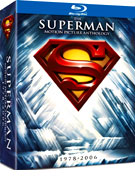
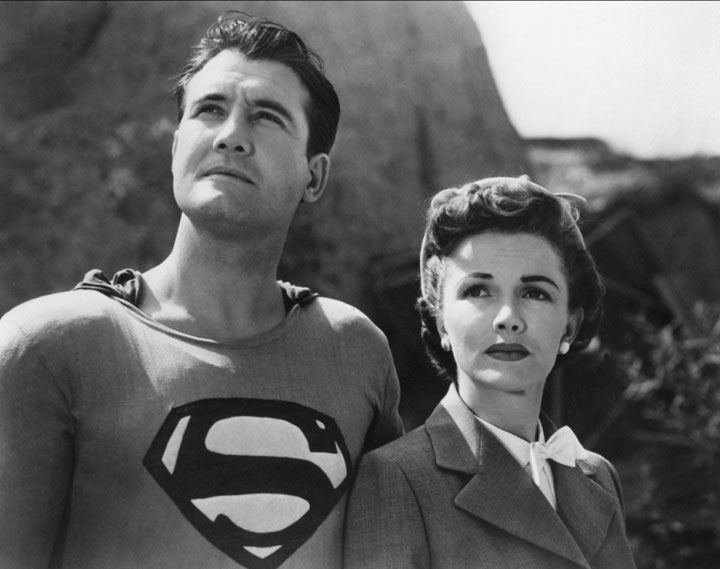
Back then, when we thought of a flesh-and-blood Man of Steel, we thought of George Reeves changing in the Daily Planet broom closet and leaping from a springboard out of the window of a plywood set on The Adventures of Superman television series. The show had been enormously popular among kids during its six-season run in the 1950s, and was still a hit among kids in the '70s (myself included), who watched it religiously in reruns. The idea of someone other than Reeves donning the blue suit and red cape was almost unfathomable—as was the idea of a Superman movie sans Leon Klatzkin's heroic theme music. In the early days of December 1978, we had no clue what the Salkinds and their director, Richard Donner (fresh off of his success with The Omen), were about to unleash on us. We couldn't imagine or anticipate how swiftly and decisively Christopher Reeve would wrench the mantle of Superman away from George Reeves, or how John Williams' amazing score—as indelible as his previous work on Jaws and Star Wars—would become so entwined with the Man of Steel in our cultural imagination that it's now difficult to even remember what Klatzkin's theme sounded like. In addition to revitalizing Superman's popularity, Superman: The Movie became the blueprint for a rash of superhero movies in the decades since its release. The genre has made huge box office bank and remains enormously popular. Reeve and company would go on to make a trio of progressively weaker Superman sequels throughout the decade of the 1980s, but there's no denying that Superman: The Movie is one of the most influential blockbusters of the 1970s. So it is that Warner Bros. serves up this definitive Blu-ray box containing all of Reeve's outings as the Man of Steel, as well as director Bryan Singer's unsuccessful attempt to restart the franchise, Superman Returns. Facts of the CaseSuperman: The Motion Picture Anthology is a mammoth eight-disc Blu-ray box set containing all five Warner Bros. Superman features made between 1978 and 2006, including two versions of Superman: The Movie and Superman II, as well as enough extras to choke Krypto the Superdog.
Discs One and Two: Superman: The Movie (Original 1978 Theatrical Release) Setting up base in Metropolis, Kent lands a job as a reporter at the city's most renowned newspaper, The Daily Planet. There, he meets editor Perry White (Jackie Cooper, The Champ [1931]), young photographer Jimmy Olsen (Marc McClure, Back to the Future), and, most significantly, dogged reporter Lois Lane (Margot Kidder, Black Christmas [1974]), with whom he falls in love (though Lois only has eyes for Superman). The citizens of Metropolis are enthralled with Superman's daring feats, but the Man of Steel attracts an arch-enemy in Lex Luthor (Gene Hackman, The French Connection). From his underground lair and with the help of his bumbling servant Otis (Ned Beatty, Deliverance) and girlfriend Miss Tessmacher (Valerie Perrine, Lenny), Luthor hatches a large scale real estate swindle involving the nuclear destruction of half of California and a large portion of America's east coast. The evil mastermind's discovery of Kryptonite—radioactive remnants of the planet Krypton capable of killing Superman—gives him confidence that he can avoid any troublesome interference from the world's greatest hero. Discs Three and Four: Superman II (Original 1980 Theatrical Release) Disc Five: Superman III Meanwhile, Clark Kent is back in his hometown of Smallville to do a story about his high school reunion (because the citizens of Metropolis are apparently keenly interested in events held in Kansas gymnasiums and attended by middle-class working stiffs). Clark reunites with Lana Lang (Annette O'Toole, Smallville), whose teenage devotion to popular jocks has led to a life of drudgery, single motherhood, and pawning her engagement ring to stay afloat financially. Smallville conveniently happens to be the place where Gorman must go to reprogram the weather satellites that will allow Webster to devastate the Colombian coffee crop and make a bundle of money. When Superman mucks up Webster's plan, the dastardly capitalist has Gorman program a computer to make Kryptonite (because computers are magical devices that can do anything so long as you know how to feed them the proper instructions). Instead of killing Superman, the computer-synthesized Kryptonite turns him into a douchebag who bangs Webster's girlfriend (Pamela Stephenson, History of the World: Part I), wrecks a Metropolis pub by turning beer nuts into projectiles, and devastates an Italian stereotype's livelihood by righting the Leaning Tower of Pisa. Eventually, Superman splits in half, beats his douchey self up, and then flies off to do battle with a computer in order to save the world from coffee shortages and four-dollar-per-gallon gasoline (the combination of which, admittedly, would probably be enough to propel the United States into a second civil war). Disc Six: Superman IV: The Quest for Peace Meanwhile, trouble is brewing at The Daily Planet. Greedy, muckraking mogul David Warfield has bought a controlling interest in the paper and wants to turn it into a sleazy tabloid. Lois, Clark, and Perry White are outraged that someone would have the audacity to think of Metropolis' greatest newspaper as a profit-making business—despite it apparently being a publicly-traded company with shareholders depending on it to increase the value of the mutual funds in their 401(k)'s. The logistics of being Superman become tricky when Warfield's daughter Lacy (Mariel Hemingway, Star 80) falls in love with Clark even as Superman continues to toy with Lois' emotions by doing stuff like revealing his secret identity to her and then wiping her memory with a kiss again, just like he did at the end of Superman II (I'm not convinced he completely defeated his douchebag side in Superman III). As Superman embarks on his quest for peace, Lex Luthor is sprung from prison by his irritating valley boy nephew Lenny (Jon Cryer, Pretty in Pink). Armed with greed and a basic understanding of supply and demand, Luthor realizes that there's money to be had in procuring weapons for the ne'er-do-wells being disarmed by the Man of Steel. But first he'll need to do away with his arch-enemy. Armed with a single strand of Superman's hair—which he somehow manages to snip from a museum exhibit where it was holding up a 1,000-pound weight (Superman's locks are stronger than high tensile steel yet vulnerable to pinking shears, I guess)—he uses the superhero's genetic material and the power of the sun to create Nuclear Man (Mark Pillow), a light-powered clone with a bouffant hairdo who is capable of irradiating Superman with deadly Lee Press-on Nails. Super-powered fisticuffs ensue, during which, to my utter delight, Nuclear Man picks up the Statue of Liberty and tries to drop it on a bunch of Metropolis pedestrians…just because. Also, Superman demonstrates a power that DC Comics somehow forgot to tell us about through nearly five decades of monthly publications up to that point: Wall Repair Vision. Can Superman defeat Nuclear Man and stop Lex Luthor's evil scheme? More importantly, how can the gang at The Daily Planet vanquish the Page Six Girls who are besmirching their revered publication? Disc Seven: Superman Returns As Superman navigates the rocky emotional terrain created by his long absence, Lex Luthor (Kevin Spacey, The Usual Suspects) emerges a fabulously wealthy man from a marriage of convenience to a rich old lady (Noel Neill, The Adventures of Superman), recently deceased. Stunned and outraged by Superman's return, Luthor finds his way to the Fortress of Solitude where he steals Supes' Kyrptonian crystals and formulates a new real estate swindle: use the crystals to create a new continent, destroying the United States and setting himself up as the emperor of the world. If Superman is to save the day, he must rid the Earth of the Kryptonian landmass growing off of America's east coast. But the Herculean feat may cost the Man of Steel his life since the alien continent is laced with Kryptonite. Meanwhile, startling revelations about young Jason White reaffirm Superman's conviction that he truly is a citizen of his adopted homeworld. Disc Eight: In addition to their respective features, each disc is packed with supplements (discussed in detail later in this review). The set's eighth disc contains a ton more extras, including two feature-length documentaries and more deleted scenes. The EvidenceSuperman: The Movie only happened because of the tireless salesmanship of Ilya Salkind, who lobbied for the project despite a general lack of interest by studio decision-makers. To pique the interest of the powerful, he first convinced Mario Puzo, author of The Godfather, to write a screenplay. Puzo's involvement was enough to lend the project credibility, but not enough to sell it. For that, Salkind had to convince Marlon Brando to take on the role of Jor-El. For a well-publicized (and unheard of at the time) sum of $15 million, and after a meeting with Richard Donner during which the director purportedly shot down Brando's outlandish interpretations of Superman's dad (thus earning the actor's respect), Brando signed on. The Salkinds' epic Superman feature instantly became a high-profile object of desire for studio executives all over the world. Warner Bros. snatched up the North American distribution rights, and the project was off to the races.
If the Salkinds deserve the credit for getting Superman: The Movie off the ground, then director Richard Donner deserves the credit for making the movie such an enormous hit. He brought the aesthetic sensibilities that successfully translated Supes from the funny pages to the big-budget, high-profile silver screen. Donner's unifying concept, the idea that he drilled repeatedly into the heads of his entire cast and crew was "verisimilitude." He believed that audiences—adult audiences, even—would buy the fantasy of the Man of Steel if the world around him mimicked reality (Christopher Nolan's recent Batman films follow the same template; people who say they're "realistic" are incorrect—Nolan, like Donner before him, didn't ground his comic book stories in realism but a simulacrum of realism). The result of Donner's experiment is a movie that fully embraces all of the fun of comic book excesses, while also delivering real emotional heft and a plot (absurd as it is sometimes) whose stakes feel real. As a superhero flick, Superman: The Movie is nearly pitch-perfect. Its stumbles are so few and so minor that three decades and countless other comic book adaptations after its release, it remains one of finest entries in the genre, if not the finest entry. A classic superhero origin tale, Superman: The Movie unfolds in three distinct acts, each with its own sense of pace and visual design. The flick opens on the cold, utilitarian world of Krypton, with bottomless canyons, massive skyscrapers that look like crystal formations, and an enormous dome beneath which Jor-El and the planet's council of elders sentence three Kryptonian criminals to eternity in an outer space prison called the Phantom Zone. Act Two moves to the warm fields of Kansas, where, in a delightfully economic scene featuring Glenn Ford, the teenage Clark Kent learns humility and is implanted with the idea to use his powers for a purpose greater than self-aggrandizement. The movie's third act moves to Metropolis, where Donner ratchets up the deliberate pace of the first two-thirds, while paying brilliant homage to His Girl Friday and other fast-talking comedies of Hollywood's past as Clark, Lois, Jimmy Olsen, and Perry White engage in rapid-fire newsroom repartee meticulously blocked by Donner and shot by cinematographer Geoffrey Unsworth (2001: A Space Odyssey). Not only does the third act add comedy, both subtle and broad, but also lots of action as Superman saves airplanes and helicopters, foils robbers, rescues a kitten stranded in a tree, and squares off against Luthor. Sure, some of it is gripping and some of it is silly, but the same can be said for Superman comics of every era. Part of what gives Superman: The Movie its epic heft is Donner's casting decisions. Beginning with Brando, he filled the flick's supporting roles with a laundry list of screen luminaries. Glenn Ford plays Clark Kent's salt-of-the-earth adoptive father; Trevor Howard (Brief Encounter) and Maria Schell (Le Notti Bianchi) turn up as two of the Kryptonian elders who disregard Jor-El's warnings of impending planetary destruction; and Jackie Cooper, who'd been making movies since he was a kid, steps into the role of Perry White. These were big, bold casting choices for an untested genre of which the Hollywood establishment was deeply skeptical. The payoff was huge. Along with the vast landscapes of Krypton, the golden wheat fields of Smallville, and the bustle of Metropolis, the screen charisma and textured performances of these actors make the world of Superman feel vast, rich, and minutely detailed. There was a period after I saw Superman again for the first time as an adult that I considered Lex Luthor to be the film's weak link. I retract that assessment. Taking into account that Donner's movie came out years before Luthor was reinvented by DC Comics as an evil billionaire industrialist, Gene Hackman's turn as the villain is inspired. Ditching Luthor's mad scientist comic book origins, Hackman plays Superman's arch-enemy with playfully fiendish flair. Ned Beatty's bumbling Otis is sometimes criticized for being an element of overly broad comedy, but I've come to appreciate what Donner and screenwriter Tom Mankiewicz were going for. Otis is there to allow Hackman to plow through the sort of expository dialogue that is almost unavoidable in the genre. His idiocy allows Hackman to chew through the scenes with gleeful, sarcastic abandon. All of that preening scenery chewing would be for naught if Luthor was a weak opponent for the Man of Steel, but when it comes time to turn on the evil, Hackman comes across with a surprisingly subtle menace that maintains the character's caustic sense of humor while adding and undertone of remorseless, cold-hearted cruelty. Hackman's Lex Luthor is a supervillain with style. One need only look as far as Kevin Spacey's more conventional interpretation of the character in Superman Returns to recognize Hackman's creativity and control.
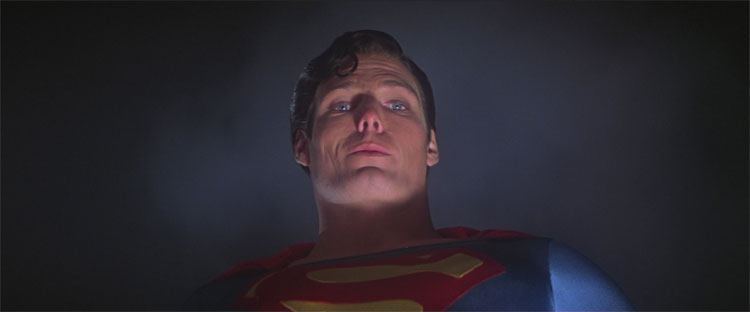
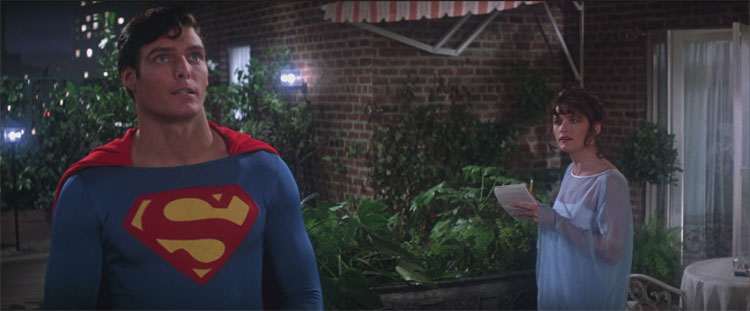
But let's get down to brass tacks. Christopher Reeve is the glue that holds Superman: The Movie together. His performance as the Man of Steel is unbelievably perfect. Superman/Clark Kent is a tricky dual role to negotiate, but Reeve delivers a caped hero who is earnest without being corny, and who oozes decency, honor, and a variety of middle-American humility that places a check on his enormous power. Based on the screwball comedy performances of Cary Grant (particularly in Bringing Up Baby and Monkey Business), Reeve's Clark Kent is bumbling and comedic, while sharp enough to keep up with (or at least remain only a step behind) the quick banter in The Daily Planet newsroom. On top of all that, Reeve just looks like Superman. He would appear to grow bored with the superhero shtick in later entries in the series, but in Superman: The Movie he's absolutely perfect. His best scenes are playing opposite Margot Kidder as Lois Lane. In them, the full weight and depth of the character blossoms, despite the wrap on Superman that he's so powerful and godlike a character that it's difficult for audiences to relate to him. A major weakness of many comic book movies is that their female leads are often two-dimensional damsels in distress who serves no clear purpose in the plot other than a being a grudging acknowledgement that a little over half of the human population is women. Not so Superman: The Movie. Lois Lane is a fully formed character, wonderfully played by Kidder, whose attraction to the Man of Steel is the emotional core of the movie. Despite all the derring-do, fiendish villainy, and travels through outer space, Superman: The Movie is, at its heart, a romance—and that's one of the many things that continues to set it apart from its scores of imitators. Discs One and Two of this set offer two different versions of Superman: The Movie: the 1978 theatrical edition and an expanded edition created by Donner at the behest of Warner Bros. in 2000. The expanded edition incorporates eight minutes of hit-or-miss footage previously seen on network television broadcasts of the movie. Expanded action on Krypton is cool, as is the addition of Superman foiling the machine gun and flamethrower defenses outside Luthor's lair. But added dialogue that reveals that a little girl who witnesses young Clark Kent racing a Smallville train on foot is Lois Lane is unnecessarily cutesy, while a scene of Martha Kent setting out a box of Cheerios for Clark's breakfast comes off as unnecessary product placement. Both versions of the movie look great on Blu-ray, though the 2000 cut edges out the 1978 version by a hair due to the tender loving care that it's received in various home video releases over the years. Each 1080p/AVC transfer is minted from a brand new master that improves slightly on the earlier stand-alone Blu-ray release of the movie. Geoffrey Unsworth shot much of the movie with filters to diffuse the lighting and make everything soft around the edges. The transfer handles the challenges of such an approach with aplomb, though digital noise is occasionally visible. Detail is excellent throughout. Colors are perfect. Superman's boots and cape, for example, are rendered in vivid reds that never bleed. Superman: The Movie doesn't look quite as good as the later entries in the series, but given its age, it probably never will. Audio for both cuts is a fairly robust DTS-HD Master Audio track in 5.1 surround. Dialogue is slightly cramped (not surprising given the movie's age), but John Williams' score and the movie's many audio effects are spread effectively across the entire soundstage, creating a bold and immersive aural experience. Use of directional panning is aggressive without being gimmicky. As with their Three Musketeers duology, the Salkinds originally intended to shoot two Superman movies simultaneously and then release them a year apart. Donner proceeded along those lines, but with about 80 percent of Superman II in the can and the budget beginning to dry up the decision was made to complete the first film and then pick up production on the second when and if the box office profits began rolling in. But when Superman: The Movie was a massive hit, the Salkinds opted to cut Donner out of the process, replacing him with Richard Lester, who'd directed the two Musketeer movies. Despite the production shake-up, Superman II was also a huge box office hit, though it's not as epic or artistically satisfying as the first film.
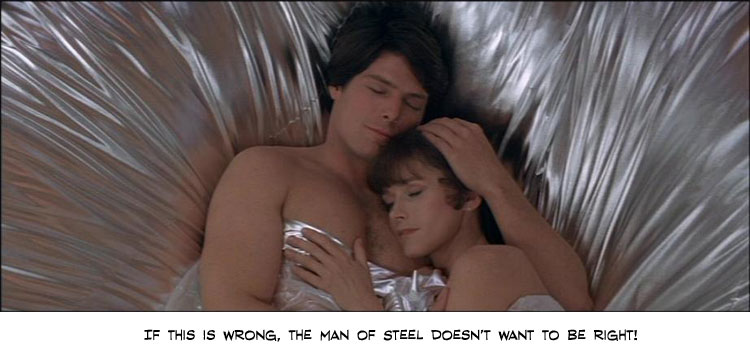
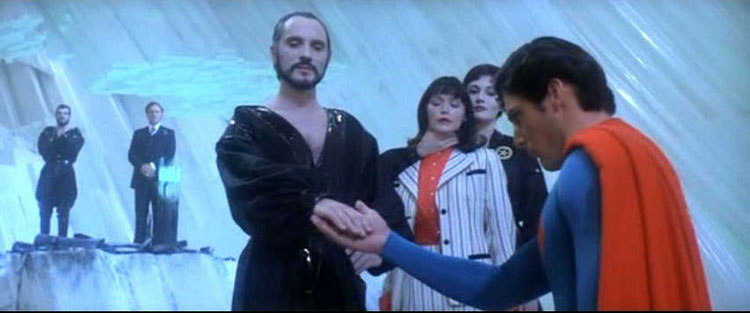
Chief among the movie's problems is its sullying of the chaste romance established between Superman and Lois in the first film. Superman recklessly surrenders his powers and becomes a mortal man in order to nail Lois in his bachelor pad Fortress of Solitude (which includes a space age bed with shiny silver sheets). While he's doing the dirty deed, the Earth is under assault from General Zod, who delights in demanding that everyone kneel before him, and generally acts as badass as possible while wearing thigh-high boots and a v-neck blouse with puffy sleeves. Terence Stamp is iconic in the role of Zod, providing the film with a genuine threat to Superman as well as some incredibly entertaining scenery chewing. Superman II also benefits from action that is doled out in greater quantity and a much more elaborate scale than in the first film (particularly when Superman throws down against the Kryptonians). I loved the movie as a kid, but it is rife with problems, many of which were the result of Lester's last minute takeover of the project. Either because the Salkinds didn't want to pay or because he threatened to sue them for breach of contract because he'd only signed on to make a movie directed by Donner, all of Brando's scenes for Superman II were replaced by scenes with Susannah Yorke as Superman's mother Lara. Also displeased with the change in directors was Gene Hackman, who refused to finish the shoot with Lester. As a result, plot elements had to be tweaked to accommodate some gaps, brief sequences shot with a body double, and some ADR performed by a voice double. Hackman's limited involvement means that Luthor is primarily a joke in the movie, a buffoon trying to cut a ridiculous real estate deal with Zod and his cohorts. Superman II also has serious tonal problems. It often stumbles over its broad moments of comedy in ways the first film did not. And, worst of all, it fails to pay off some of the most interesting pieces of set-up from the first movie, as when Superman interferes with human history despite Jor-El's warnings not to do so. The result is a movie in which Superman makes more than one selfish decision, yet pays no serious consequence for his foolishness. Superman II entertains as an action movie, but fails to fully satisfy as a Superman adventure.
Fans of the series were abuzz in 2006 when Warner Bros. gave Richard Donner the opportunity to assemble his intended version of Superman II. The Donner Cut, included on this set's fourth disc, offers an improvement over Lester's compromised version but not the definitive cut of the movie that fans had been wanting for over two decades. For one thing, Donner hadn't finished shooting everything he needed for the second movie at the time he was replaced, so it was impossible to assemble a cut completely free of Lester's material. More importantly, some of the changes are flat-out inferior to what's in the original theatrical cut. Most notably, Donner originally intended to save the sequence in which Superman turns back time by reversing the rotation of the Earth until the finale of the second movie. In the rush to assembling a stand-alone cut of Superman: The Movie for theatrical exhibition, they moved that sequence to the end of the first. In Donner's cut of the second film, he simply repeats the gag but with far less narrative and emotional power. Placed at the end of the first movie, the sequence has real emotional heft despite its outlandish premise (so much so that it's one of the most memorable and beloved sequences in the franchise). As the climax of the second film, it's pure gimmick, a corny deus ex machine that so thoroughly undoes everything that happened previously in the flick that you're left wondering why Superman didn't save you two hours and just turn back time as soon as things started going squirrely. Also of note is that much of the movie's lamest humor, which has traditionally been blamed on Lester's slapstick sensibilities, actually derives from Donner. The indescribably stupid scene in which Superman returns to a diner to beat up a truck driver who bullied him when he was a powerless Clark Kent? Donner shot it. The irritatingly broad gags featuring Clifton James playing basically the same bumpkin sheriff he played in the James Bond adventures Live and Let Die and The Man with the Golden Gun? Donner's. One of the unintended revelations of Donner's do-over is that Richard Lester didn't muck things up nearly as badly as everyone assumed over the years. Despite the weaknesses that remain in Donner's version of Superman II, and despite the fact that it doesn't quite feel like a fully-formed replacement of Lester's movie, the 2006 edit is superior to the 1980 theatrical edition. The inclusion of all of the Brando footage shot by Donner fills in a plot hole or two as well as making the movie a more coherent sequel to the original. Gene Hackman is a more forceful presence in the movie, despite the use of some of the voice dubbing created by Lester. The movie's first act flows more naturally from the end of the original movie as it is one of the Luthor's nuclear missiles, not a bomb used by terrorists in an attempt to blow up the Eiffel Tower, that releases Zod, Ursa, and Non from the Phantom Zone. And despite the rickety re-use of the turning-back-time gag, Superman's wiping of Lois' memory of their romance carries significantly more emotional weight in Donner's cut. Where Lester treats it like a plot device meant to assure the audience that Superman's secret identity is once again safe, Donner gives us a Man of Steel who maintains a stiff upper lip while subtly revealing a pain in his eyes that says he wishes he could erase his own memory as well as Lois'. When you combine all of these elements with scenes that include Jor-El saying a final goodbye to his son, and Superman destroying the Fortress of Solitude, Donner's version of Superman II feels like the conclusion of the story begun in Superman: The Movie. Lester's does not. Despite warnings about the quality of some film elements at the beginning of Donner's cut of Superman II, the two versions of the film look about equal on Blu-ray—which is to say both look excellent. Even a sequence that had to be sourced from one of Christopher Reeve's screen tests because Donner hadn't yet shot it when he was fired looks great (though Reeve is leaner than he was during the shoot, and doesn't wear the same glasses). Superman II sports all of the fine detail and bright, accurate colors seen in the original movie, but benefits from having few scenes that take place on Krypton, which, from a technical perspective, is the most troublesome part of the transfers of the original movie (because of the prevalent use of miniatures shot with high-speed film, and other optical effects, there is more density variation and instances of minor dirt and damage during the Krypton sequences than in the rest of the movie). Both movies are presented in the 2.40:1 aspect ratio. Lester's cut is 1080p/AVC, while Donner's is 1080p/VC-1. Audio on both cuts is a full-bodied DTS-HD Master Audio mix in 5.1 surround.
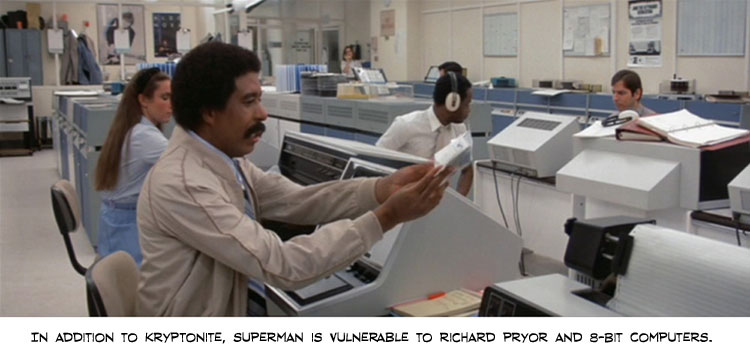
With Superman III we get the first fully fledged Richard Lester Superman movie, and it is truly awful. After the bad blood between the Salkinds and Donner poisoned the water, there was no hope of getting Hackman to sign onto the project and Margot Kidder was only interested in collecting a paycheck for a cameo. The result is a movie that feels oddly disconnected from everything that came before. Clark/Superman spends most of his time in Smallville, where he interacts with former crush Lana Lang, though there's no substantive romantic chemistry between the two. Robert Vaughan joins the cast as a Lex Luthor type who is so drab and ineffectual that he only succeeds in making you miss the real Luthor even more. The movie's greatest sin, though, is how diligently it works to divide its energies equally between Superman and Gus Gorman, the amoral working stiff/computer genius played by Richard Pryor. Given Lester's comic tendencies, it becomes quickly evident that he was more interested in working with Pryor than making a Superman adventure. From the chintzy opening credits sequence, which involves Supes flying into a slapstick tableau that includes a blind man mistaking a road paint machine for his seeing-eye dog, an old man getting yellow paint spilled on his bald dome, and a workman with an extension ladder accidentally stealing a bag of bank loot from a robber, it's abundantly clear that the movie has no intention of maintaining the tone of the first two entries in the series. Things only get worse from there. In one scene, Richard Pryor snow skis down the side of a skyscraper while wearing a pink tablecloth as a cape. In another, he's able to reprogram traffic signals so that the pedestrian walk/don't walk lights get into a fistfight with one another. Meanwhile, Superman basks in the glory of all the former cool kids from his Smallville High graduating class having turned into working class losers and alcoholics, until some computer-synthesized Kryptonite turns him into a jerk. The entire movie vacillates wildly from inanity to incomprehensibility. It's a pretty solid unintentional comedy, though. Superman III takes flight on Blu-ray in a 1080p/AVC transfer even better than the ones for Superman II. While previous DVD releases of the picture have only had stereo audio mixes, Superman III has been treated to a full DTS-HD Master Audio 5.1 expansion on Blu-ray. The track is clean and solid. Dialogue is slightly cramped due to source limitations, but imaging is excellent across the entire soundstage.
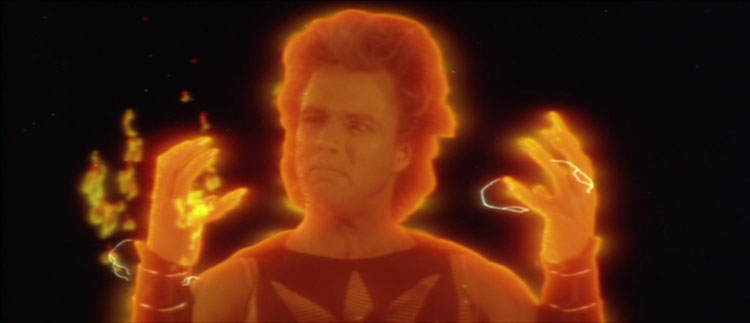
Superman III appeared to be such a franchise-killing bomb (I was 13 years old when it came out, and didn't see it in the theater even though I'd loved the first two flicks) that the Salkinds sold their Superman movie rights to Israeli producers Menahem Golan and Yoram Globus, who thought they might give the franchise a go under the banner of their Cannon Films production house. They enticed Reeve to join the project with promises of story input as well as a deal to make some non-Superman movies of his choosing. Once Reeve was onboard, they had no trouble getting Kidder, McClure, Hackman, and Cooper to reprise their supporting roles. Still, once production began, Cannon Films proved too strapped financially to make a movie of the epic proportions that Reeve and the others had envisioned. Superman IV: The Quest for Peace is at once a more natural and familiar sequel to the first two movies due to the use of the same cast, and an exercise in low-budget absurdity that makes Superman III look coherent and well-made. The movie's anti-nuke story is hectoring, lame-brained, and…totally hilarious. Superman turns fascist at the behest of a snotty fifth-grader, and every leader of every country in the world is thrilled to knuckle under to his utopian demands. And Lex Luthor creates an evil clone of Superman who looks nothing like the Man of Steel and instantly becomes comatose if he's not standing in direct sunlight (an Achilles' heel that Superman doesn't seem quite bright enough to take advantage of). And, finally, we're treated to an extended sequence (and by "extended" I mean "it goes on about five minutes longer than it should") in which Superman and Clark Kent go on a double date with Lois Lane and Lacy Warfield, fabricating all sorts of contrivances that allow him to leave the room and reappear as his alter ego second later. Let's just say that the movie, which was directed by Sidney J. Furie (Lady Sings the Blues), is more similar in tone to Lester's work than Donner's. To put it as bluntly as possible, Superman IV: The Quest for Peace is awful…and, man, do I have fun every time I watch it. Presented in a 1080p/AVC transfer at its original 2.40:1 theatrical aspect ratio, Superman IV: The Quest for Peace looks about as good on Blu-ray as its predecessor. Audio is a different matter. Unlike Superman III, the last of Christopher Reeves' red caped adventures has only been treated to a DTS-HD Master Audio upgrade of its stereo track. The mix is crisp, clean, and brighter than the Dolby stereo track on the old DVD, but it doesn't hold a candle to the uncompressed surround tracks for the rest of the movies in this set.
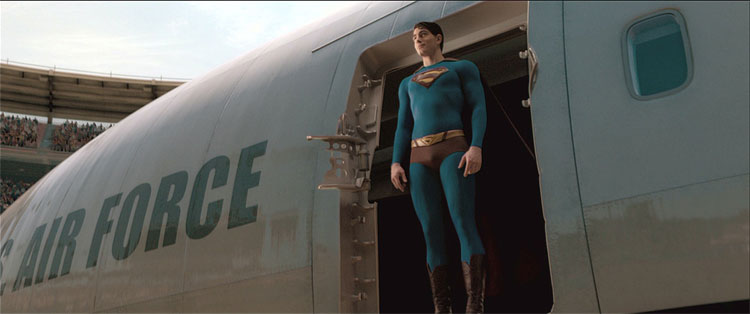
After the dismal financial failure of Superman IV: The Quest for Peace (not to mention the fact that it was treated like a bad joke by fans and critics alike), everyone assumed Warner Bros.' Superman franchise was dead. And for 19 years, they were right. But shortly after Christopher Reeves' death in 2004, director Bryan Singer abandoned his X-Men trilogy for the opportunity to make a new movie about the Man of Steel. The result, 2006's Superman Returns, is an homage to Richard Donner's films by way of being a loose sequel to Superman II that ignores the continuity in the third and fourth films. Slick, sleek, digitally-enhanced, and running a bloated 20 minutes longer than Donner's original film, Singer's stab at Superman continues to leave me of a mixed mind. Given my antipathy to the whole Superman-boning-Lois aspects of Superman II, I'm not keen on the idea of making a direct sequel to that movie, but accepting that Singer opted to take on that task, he tells the story as it needs to be told. Superman Returns uses the events of Superman II to bring the theme of fatherhood, so central to Superman: The Movie, full circle. After the character's 19-year absence from movie theaters, and his seeming irrelevance in the wake of the popularity of darker heroes like Batman and Wolverine, Singer was also wise to make his film about the poignancy of a world that believes it has permanently lost the Man of Steel. I also absolutely love some of the large scale action in Superman Returns. An airplane rescue near the film's beginning is far beyond anything Donner could have realized in the late '70s. Some have groused about some physics-defying CGI that doesn't quite look realistic, but I like that Singer appears to have modeled many of Superman's in-flight acrobatics on the action in the old Max Fleischer Superman cartoons from the 1940s. Fleischer's cartoons are thin on story, but they remain some of the most spectacular Superman action ever realized in moving pictures. It was a nice touch that Singer managed to slip in some homage to Fleischer even as he was paying homage to Donner. The problem with Singer's homage is that his movie matches Superman: The Movie almost beat for beat. The airplane rescue in Superman Returns is meant to evoke the helicopter rescue in the earlier movie; both films include central scenes in which the Man of Steel takes romantic flight with Lois Lane; and Superman hurling an entire continent into outer space is purposely as grand and outlandish as his reversing the rotation of the Earth. Singer's full-throttle love-fest for Donner's movie is touching and nostalgic, but it has the unfortunate side-effect of constantly reminding the viewer how much better Superman: The Movie is than Superman Returns. Stepping into the red cape and boots for the franchise restart must have been daunting for Brandon Routh, but he does a decent job. He doesn't erase Reeve from the pop culture collective consciousness, but he had little chance of doing so and shouldn't be held to that high a standard (neither should any other actor who takes on the role). Routh is a solid Superman and an even better Clark Kent, evoking Christopher Reeve's Cary Grant-infused take on the character while also playing him with subtle differences. While Christopher Reeve played Clark as an entirely false creation of Superman's, custom-designed to make the bespectacled reporter the last person in the world anyone would suspect was secretly Superman, Routh plays him like a separate side of Superman's personality—a disguise, yes, but a disguise based more closely on the true Clark Kent known only to his adoptive parents. The problem is, regardless of Routh's qualities, he's entirely wrong for the story that Singer is trying to tell. Superman Returns is a story about the Man of Steel in mid-life crisis. Gone on a mission to Krypton for five years, he returns to Earth to discover that the love of his life has a child and fiancé. He must come to grips with regrets that may be impossible to resolve because life only happens once and if you're not careful time will get the better of you. At 26, Routh was incapable of credibly shouldering the movie's weighty emotional themes (don't even get me started on Singer's casting of then-23-year-old Kate Bosworth as Lois Lane). In the hands of an actor 10 or 15 years older, Superman's plight might have been weighted with poignancy. With a cast so young, it is not only implausible but comes off as self-indulgent and melodramatic. Superman Returns is presented on this Blu-ray in the same 1080p/VC-1 transfer included on the standalone BD released in 2008. It's a fine looking transfer that has been unfairly criticized for excessive digital noise reduction that has rendered an image that is sometimes too smooth and lacking in sharp detail. I suspect two things are going on here: Singer may have intentionally softened the image a tad (even for theatrical exhibition) in order to more seamlessly blend live action material with CGI, and some critics may actually be confusing digitally rendered shots with live action. There are numerous shots of Superman flying in which, even in medium shots that give you a good look at his face, the character is a digital double and not Routh filmed on a green screen. It's fantastic digital work, but definitely smoother, less detailed, and more rubbery than a well-lighted shot of Routh would have been. Granting some leeway for those sequences, Superman Returns looks superb in high definition. Colors are bold and rich. Depth is excellent. Detail is frequently sharp and satisfying. The original Blu-ray release of the movie came with a lossy Dolby Digital 5.1 surround track, which was eventually upgraded to a Dolby TrueHD track in a second pressing. The version in this box set has been lavished with a DTS-HD Master Audio 5.1 track. It handles dialogue and subtle effects with aplomb, and thunders when it needs to during big special effects sequences. Superman: The Motion Picture Anthology wouldn't be much of a box set if it only came with the films themselves. No worries there. The set is packed to the rafters with supplemental material. Each disc contains feature-specific extras, plus there's an eighth disc stacked with some high-quality content. Let's take a look. Disc One Extras: The theatrical cut of Superman is accompanied by a feature-length audio commentary by producers Pierre Spengler and Ilya Salkind. A true producers' commentary, the track covers the origins of the picture and the array of incredible talent employed to bring a truly epic version of The Man of Steel to the silver screen. The Making of Superman: The Movie (51:50) Superman and the Mole Men (58:05)
Superman and the Mole Men is treated to a spiffy full frame presentation in standard definition. Contrast is attractive, and the print is mostly clean and in great shape. Audio is a two-channel presentation of the movie's original analog mono track. The set's first disc also contains a trio of Superman-based Merry Melodies and Looney Tunes cartoons: Super-Rabbit (1943) Snafuperman (1944) Stupor Duck (1956) Theatrical Trailers and TV Spot Disc Two Extras: The extended cut of Superman is accompanied by a feature-length audio commentary by Richard Donner and screenwriter Tom Mankiewicz. In contrast to the commentary for the theatrical cut, this track delves more into the details of the shoot, the work of the cast and crew, the story development, and the movie's themes and narrative structure. Taking Flight: The Development of Superman (30:14) Making Superman: Filming the Legend (30:41) The Magic Behind the Cape (23:45) Screen Tests (22:25) Restored Scenes (11:14) Additional Scenes (3:23) Additional Music Cues (35:44) Music Only Track Disc Three Extras: The theatrical cut of Superman II is accompanied by a feature-length audio commentary by producers Pierre Spengler and Ilya Salkind. The duo discusses the transfer of directorial control from Richard Donner to Richard Lester and the resulting production hassles. The details are fascinating, though a bit of a white-wash, to be sure. Still, taken with a grain of salt, it's an interesting commentary, valuable for the way it airs the Salkinds' side of the story. The Making of Superman II (52:15) Superman's Soufflé Deleted Scene (:40) First Flight: The Fleischer Superman Series (12:55) The Fleischer Studios Superman (79:29)
This is a collection of the first nine animated Superman shorts produced by Max Fleischer. These are the shorts produced by Fleischer Studios (the remaining eight shorts were released by Famous Studios). They are: • "Superman" The shorts are individually accessible from a sub-menu, or can be streamed together using a Play All option. They're all beautifully restored (though not pristine), and presented in full frame, standard definition transfers with mono audio. Theatrical Trailer Disc Four Extras: The alternate cut of Superman II is accompanied by a feature-length audio commentary by Richard Donner and screenwriter Tom Mankiewicz. Like their commentary for the first film, this track delves into the details of the shoot, as well as the movie's themes and narrative structure. It also provides Donner's side of his removal from the project and replacement by Richard Lester. At times the track is blunt and caustic, but the two men mostly enjoy reliving their time working on Superman and Superman II. Introduction by Richard Donner (1:54) Superman II: Restoring the Vision (13:20) Deleted Scenes (8:44) Famous Studios Superman Cartoons • "Japoteurs" The shorts are individually accessible from a sub-menu, or can be streamed together using a Play All option. The video and audio presentation is in keeping with the Fleischer Studios shorts on the previous disc. Disc Five Extras: Superman III is accompanied by a feature-length audio commentary by producers Pierre Spengler and Ilya Salkind. The duo traces the movie's origins and production, while offering an apologia for its evolution from an otherworldly adventure featuring the villainous Brainiac to a comedy vehicle for Richard Pryor. Salkind's defense is that the third movie in the franchise is just an episodic adventure…like on television. Okey-dokey. The Making of Superman III (49:08) Deleted Scenes (19:43) Theatrical Trailer Disc Six Extras: Superman IV: The Quest for Peace is accompanied by a feature-length audio commentary by screenwriter Mark Rosenthal, who is brutally honest about the movie's shortcomings while also providing a lot of production information. He makes particular note of how the movie was cut from 134 minutes to 90 minutes, making it incomprehensible. Aside from some lengthy gaps of silence, it's a great track. Superman 50th Anniversary Special (48:10) Deleted Scenes (31:02) Theatrical Trailer Disc Seven Extras: Requiem for Krypton: The Making of Superman Returns (173:41) Resurrecting Jor-El (4:00) Bryan Singer's Video Journals (82:00) Deleted Scenes (21:27) Trailers Disc Eight Extras: As if all that weren't enough, the set also contains an eight disc with a few additional supplements. Look, Up in the Sky! The Amazing Story of Superman (115:00) The movie is presented in full 1080p/AVC high definition in the 16:9 format. The image is sleek and clean. Audio is Dolby 5.1 surround. You Will Believe: The Cinematic Saga of Superman (89:24) The Science of Superman (51:01) The Mythology of Superman (19:34) The Heart of a Hero: A Tribute to Christopher Reeve (18:00) The Adventures of Superpup (21:34) Closing StatementWith all five of Warner Bros. Superman features (including two cuts of Superman: The Movie and Superman II), and hours upon hours of really excellent supplements (including a George Reeves Superman adventure, and all of the Max Fleischer Superman cartoons), it's hard to imagine what more Superman fans could want. If you love these movies as much as I do (and, granted, I love Superman III and IV for entirely different reasons than I do the first two movies), then this set is a must-own. The VerdictUp, up, and away! Give us your feedback!Did we give Superman: The Motion Picture Anthology (Blu-ray) a fair trial? yes / no Other Reviews You Might Enjoy
• Hard Rain (Blu-Ray) |
|
DVD | Blu-ray | Upcoming DVD Releases | About | Staff | Jobs | Contact | Subscribe | | Privacy Policy
Review content copyright © 2011 Dan Mancini; Site design and review layout copyright © 2015 Verdict Partners LLC. All rights reserved.