| Home | About | Gift Guide | Blu-ray | DVD Reviews | Upcoming DVD Releases | Contest | Podcasts | Judges | Jury Room | Contact |
|
|
|
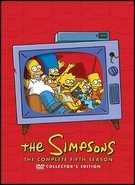
All Rise...Judge Patrick Bromley got passed over as Verdict Critic of the Month in favor of an inanimate carbon rod, but he doesn't allow his disappointment to influence his review of this stellar release. Editor's NoteOur reviews of Christmas With The Simpsons (published October 30th, 2003), The Simpsons: The Complete First Season (published September 19th, 2001), The Simpsons: The Complete Third Season (published December 15th, 2003), The Simpsons: The Complete Fourth Season (published July 12th, 2004), The Simpsons: The Complete Sixth Season (published August 29th, 2005), The Simpsons: The Complete Seventh Season (published January 16th, 2006), The Simpsons: The Complete Eighth Season (published August 21st, 2006), The Simpsons: The Complete Ninth Season (published January 22nd, 2007), The Simpsons: The Complete Tenth Season (published August 29th, 2007), The Simpsons: The Complete Thirteenth Season (Blu-Ray) (published September 6th, 2010), The Simpsons: The Complete Fourteenth Season (Blu-ray) (published December 19th, 2011), The Simpsons: The Complete Fifteenth Season (published December 24th, 2012), The Simpsons: The Complete Twentieth Season (Blu-Ray) (published January 21st, 2010), The Simpsons: Bart Wars (published June 30th, 2005), The Simpsons Christmas 2 (published December 24th, 2004), The Simpsons Gone Wild (published December 8th, 2004), The Simpsons: Kiss And Tell (published March 29th, 2006), The Simpsons: The Complete Twelfth Season (published September 9th, 2009), The Simpsons: The Fourteenth Season (published December 22nd, 2011), The Simpsons: The Seventeenth Season (Blu-ray) (published December 29th, 2014), and The Simpsons' Treehouse Of Horror (published November 20th, 2003) are also available. The ChargeHomer: I am so smart! I am so smart! I am so smart! S-M-R-T! Opening StatementI can summarize the genius of The Simpsons: The Complete Fifth Season with two words: The Rakes. Facts of the CaseAll 22 episodes of Season Five are here, presented in their entirety for the first time since their original broadcasts over ten years ago. The shows that make up this set are some of the finest the series ever produced. They are as follows: • "Homer's Barbershop Quartet" • "Cape Feare" • "Homer Goes to College" • "Rosebud" • "Tree House of Horror IV" • "Marge on the Lam" • "Bart's Inner Child" • "Boy Scoutz N' the Hood" • "The Last Temptation of Homer" • "$pringfield (or: How I Learned to Stop Worrying and Love
Legalized Gambling)" • "Homer the Vigilante" • "Bart Gets Famous" • "Homer and Apu" • "Lisa vs. Malibu Stacy" • "Deep Space Homer" • "Homer Loves Flanders" • "Bart Gets an Elephant" • "Burns's Heir" • "Sweet Seymour Skinner's Baadasssss Song" • "The Boy Who Knew Too Much" • "Lady Bouvier's Lover" • "Secrets of a Successful Marriage" The EvidenceIt happens about halfway through "Cape Feare," the second episode of The Simpsons: The Complete First Season: Sideshow Bob has tracked the Simpsons all the way to their new witness relocation destination by clinging to the underside of their car (à la Robert De Niro in Scorsese's Cape Fear). He waits until the coast is clear, then crawls out, stands up, and takes a step—right onto a rake, sending the handle flying toward him and smacking him dead in the face. He shudders, half injured, half annoyed. It's a fairly lame gag but basely amusing, lifted straight out of a Wile E. Coyote or Tom and Jerry cartoon. But then he takes another step, stepping on another rake with the exact same results: Step, Smack, Shudder. Then another. And another—until it's happened a total of eight times—and something magical happens: It becomes the funniest thing you've ever seen. It's my favorite rule of comedy—something's kind of funny, then repeated until it's not funny anymore, and then repeated even more until it's funny again—and "Cape Feare" might provide the best example of that I've seen. It's also a shining example not only of the lengths the show will go to for a laugh, but also of how just one gag can work on so many levels: What is on the surface the lowest of lowbrow gags (guy gets hit in the face over and over) actually becomes a self-reflexive comment on the joke itself. Such is the endless sophistication of the show's humor. Unlike, say, Seth McFarlane's occasionally funny cult favorite, Family Guy, The Simpsons has a heart and a soul; as one-dimensional as these two-dimensional characters may seem, they're surprisingly three-dimensional. They have moved beyond being just the Types they were in earlier seasons, and can finally live and breathe; the humor of the show comes just as much out of the characters' personalities and behavior as it does out of whacked-out sight gags and pop-culture references. Speaking of references, The Simpsons remains the king. Once again, unlike Family Guy (not to pick on that show, but the comparison holds), the references incorporated into The Simpsons are always given a context—they're more than references for their own sake. They also demand a level of intelligence and awareness—not just of pop culture, but of history, politics, and religion—on the part of the viewer. Every book you read, every movie you see, every obscure piece of history or trivia you learn means another joke you're likely to get. The Simpsons rewards you for being smart. The Golden Age of The Simpsons began with Season Four and lasted through the next two seasons (if you think about it, nearly every great episode the series had to offer appeared somewhere in the span of those three seasons), meaning that The Complete Fifth Season finds the show at its peak. Having finally found its true voice—the mixture of the sublime and the absurd that would endear the show so strongly to its diehard fans—in the previous season, Season Five really lets it rip. This is the season where Homer totally ceases to act in any way that even remotely resembles anything human; where his humor extends beyond the occasional choking of Bart and into the finest non sequiturs ever to make their way onto a network series. This is the season that opens up the scope of storylines to Springfield's supporting and peripheral characters. This is the season that (for the most part) eschews sentimentality in favor of fearlessness and the best satire on television. This is The Simpsons at its very best. Credit the new direction the show takes in Season Five to a changeover in staff; the first two episodes of the season, "Homer's Barbershop Quartet" and "Cape Feare" (both actually holdovers from Season Four), mark the final outings for the series' original group of writers. It's fitting that these two episodes showcase that staff at the top of their game, and, as such, also allow for an almost seamless transition into the newer stuff—the writing is of such a high quality all around that, except for a push toward a new kind of humor, one hardly notices a difference. From episode three onward, the new class applies the groundwork laid by their predecessors and builds off of it, while at the same time twisting and bending and reshaping its legacy—the voice that the series finds in Season Five is the one that is influencing it even still, eleven years later. Fox has always paid special attention to their Simpsons season-length sets, and their efforts on The Complete Fifth Season are the finest yet. All 22 episodes are presented in their original full-frame aspect ratio and look extremely bright and vibrant; despite the occasional source issue (blurring or color timing issues are visible but rare), these transfers are a significant improvement over their broadcast counterparts. Every episode also boasts a Dolby Digital 5.1 audio track, which, while not exactly breaking new ground, is surprisingly effective in delivering the show's dialogue and music (that great, great music) clearly and directly. Even the extras included on the Season Five set are both more plentiful and more rewarding than on past sets (all of which were excellent in their own right). There are 22 commentary tracks—that's one for each show—recorded by a complete cross-sampling of the creative forces behind the series: We get writers, directors, animators, producers, actors, creator Matt Groening, and even Jon Lovitz (Trapped in Paradise) for good measure. This time around, many of the talks focus less on what went into writing or animating the shows (which many of the commentaries in previous sets tended to focus on—especially the animation) and are more historical, anecdotal, and contextual in nature. Plus, with input from a wider variety of cast and crew, one gets a better idea of how the shows come together and who makes what contributions (not to mention that it makes a room full of funny people even funnier). In addition to the excellent and endlessly entertaining commentary tracks, Fox has included a boatload of supplemental material that delves even further into the actual makings of the show—the logistics and technical aspects—and yet has found a way to present the information in way that's not at all dry. There are some original sketches included, allowing one to see just how far the animation has come (and after seeing those clips from The Tracy Ullman Show, we know it's a long way), as well as some animatics and illustrated commentaries (the animators draw on the screen as they talk—picture John Madden's trademark football squiggling-during-the-replay) that create a comprehensive look at how the drawings are brought to life; for as occasionally crude and simplistic as much of it seems, it's pretty sophisticated stuff. Also included in the set are about twenty minutes' worth of deleted scenes, many of them just as funny as what was left in but cut out for pacing purposes; a commercial gallery; a "special language" feature that allows the viewer to watch the show in a number of Eastern European languages (only available on one episode); an introduction by Matt Groening that helps to set up the changes made to the show in Season Five; and a "Look Back" segment, narrated by producer James L. Brooks and designed to reflect on the series as a whole, but which really just talks about when the show originally exploded into the public consciousness. Closing StatementI'm the first to admit that The Simpsons, now in its 16th season, has lost some of the inspiration and demented spark that it once had—it plays more like it's been written by folks who watched the show in its heyday and are trying to recapture or imitate that rather than letting it evolve or push it in new directions. It's no longer the funniest show on television—that honor now belongs to the show that follows it Sunday nights on Fox, Arrested Development—but with a decade and a half of brilliance behind it, it remains the Funniest Show of All Time. Not everyone will champion Season Five over The Simpsons's other outings—there are those that might prefer the simplicity of Season One or the warmth of Season Two—but there's no denying its incredible quality or its significance in the maturation of the series. It's like my friend Doug—an even bigger fan than me—used to say: "Every Beatles album is good. Some you just like better than other ones." I guess that would make The Simpsons: The Complete Fifth Season the Sgt. Pepper of the series—a comparison that's okay by me. The VerdictI rest my case. Oh, wait—I thought that was just a figure of speech. Case closed. Give us your feedback!Did we give The Simpsons: The Complete Fifth Season a fair trial? yes / no Other Reviews You Might Enjoy
• Everybody Hates Chris: The Final Season |
|
DVD | Blu-ray | Upcoming DVD Releases | About | Staff | Jobs | Contact | Subscribe | | Privacy Policy
Review content copyright © 2005 Patrick Bromley; Site design and review layout copyright © 2015 Verdict Partners LLC. All rights reserved.