| Home | About | Gift Guide | Blu-ray | DVD Reviews | Upcoming DVD Releases | Contest | Podcasts | Judges | Jury Room | Contact |
|
|
|
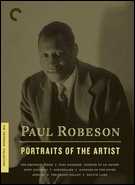
All Rise...While his movies range from well-meaning to mediocre, there is no doubt about Paul Robeson's lasting legacy. Judge Bill Gibron recommends that all true film fans and motion-picture historians give this amazing chronicle from Criterion their full aesthetic attention. The ChargeA marginalized man reborn! Opening StatementIt's so easy to name all the things Paul Robeson was: son of an ex-slave who himself went on to graduate from college and become a minister; only the third black student ever accepted at Rutgers (and the only one on campus at the time); astar athlete and All-American; valedictorian; law school graduate and practicing attorney; singer; concert virtuoso; writer; thinker; activist; Socialist; Broadway star; Shakespearean actor; enemy of the United States; self-exiled expatriate—that it's easy to forget what he's not. A superstar. Granted, he's a well-worn icon in the world of ethnic entertainers, a premier example of stoicism and skill overcoming some of the most tenuous and tumultuous times in American history. Yet no matter how many degrees he hung on his wall or battles he chose to fight for both himself and his people, the films he made are not the missing masterpieces in the overall history of African-American cinema. Instead, they are obvious examples of one amazing human figure being improperly pigeonholed within a horribly racist entertainment dynamic. That's the chief revelation to be gleaned from the Criterion Collection's new box-set release, Paul Robeson: Portraits of the Artist. His body of work may be impressive for what it means, given the background of when and where it was created. But this is a clear case of the whole being much more valuable than the many pieces that comprise it. Facts of the CaseHe only made 11 films in his lifetime, mostly because he was disgusted by the kinds of roles Hollywood offered minorities. He also lent his name to a well-meaning documentary about the plight of justice and equality in the United States. Of his creative canon, only a few select titles stand out. As part of this Criterion Collection box set, six of Robeson's starring roles are present. Missing of course are Show Boat, Song of Freedom, King Solomon's Mines, Big Fella, and Tales of Manhattan. While this might disturb some purists, it's also worth noting that this compilation contains his earliest silent films as well as his best0known performance in the Eugene O'Neill narrative The Emperor Jones. Specifically, here is what this impressive package has to offer: Body and Soul (1925) Borderline (1930) The Emperor Jones (1933) Sanders of the River (1935) Jericho (1937) The Proud Valley (1940) Native Land (1942) Paul Robeson: Tribute to an Artist (1979) The EvidenceIt's all about the voice. Paul Robeson was not a great dramatic or comedic actor. He didn't have the obvious performance chops of latter-day masters like Sidney Poitier, James Earl Jones, or even contemporary figures like Denzel Washington. While he managed the material well and never let his obvious sense of dignity drop for a particular problematic part, Robeson is best described as a potent personality, not the African-American Olivier. No, where his impressive on-screen presence made its biggest impact was with that amazing bass voice of his. It resonates across the speakers, soaking up as much of the bottom-level frequencies as an old tinny mono recording can manage. If Nat King Cole was smooth, sophisticated urbane cool, Robeson was his rural, rustic blood brother. Within their combination of vocal genius lays the entire legacy of antebellum black music. Where other movie stars manipulated their image to continue their careers, all Robeson had to do was open his mouth and speak—or better yet, sing. By doing so, he blotted out dozens of despicable stereotypes foisted upon the minority populace by a white race uneasy with the group's growing stature. But there was more to Robeson than just strong personal pipes. There's an indefinable "it," a sort of incomprehensible charisma that carries across even the most melodramatic or ridiculous cinematic storyline. It may be nothing more than pure magnetism, a conceivable chemistry that hits anyone who comes in contact with it. The existence of this flummoxing facet to Robeson's persona is something easily experienced in the new Criterion Collection box set. By having an opportunity to watch the performer grow from silent-screen archetype to mid-'40s myth, we can view the creative constants that made the man an instant star and sense the fleeting auras that resulted in his confusing status as a cinematic afterthought. Some will say that his desire to promote Socialist views amid America's post-war worries about Communism created the cloud that hangs around his legacy today. Others will point to the 11 major motion pictures he made and state, with some certainty, that they are the reason behind his rejection as anything other than a significant social icon. There is much more to Robeson than highly publicized political views, a profound singing voice, and a presence that argued against the scurrilous segregation practiced as part of the entertainment industry and the country at large. Indeed, he could be the kind of old-school actor who would experience a certified aesthetic resurgence should the right context come along. And this Criterion Collection offering may very well be that framework. When presented alongside his other well-known works (Show Boat and Mines, in particular), one can see the immense growth of the man as a performer and a pioneer. Robeson never once falls into the standard clichés of the early 20th Century. Certainly there are times when he is forced into the demeaning vernacular of the Caucasian concept of black speech, and no single human was capable of completely washing away the massive cultural stain created by decades donning mammy rags and referring to white folks as "massa." Still, unlike other minority actors of the era that have to be apologized for and retrofitted to avoid the tag of racist, Robeson never catered to the evils of eugenics. His was a voice for total equality, a powerful call that was both his import and his eventual downfall. By looking at each film in this set individually, we can see Robeson grow as an artist. Of special significance are the films he made during a self-imposed exile to Britain in the late '20s and '30s. These movies make invaluable strides into showcasing the black man as an undeniably equal and worthy member of mankind. Considering the time frame in which this message was featured, to call these films controversial is an understatement. Even several decades later, they play as worthy wake-up calls to a generation unswerving in its "prejudice is passé" sentiments. Let's begin with the earliest effort offered here: Body and Soul (1925) Score: 75 Borderline (1930) Score: 89 The Emperor Jones (1933) Score: 81 Sanders of the River (1935) Score: 80 Jericho (1937) Score: 85 The Proud Valley (1940) Score: 82 Native Land (1942) Score: 78 As a matter of fact, if there is one main criticism that can be welded onto Robeson's strangely scattershot career, it's the belief that he, as one man, could change the cultural dynamic of Hollywood—and by vicarious interaction, the world. His departure for Europe to pursue his goals is more than noble, but seems rather self-serving. This is not meant to be a criticism. Without a forum from which to function (and Tinseltown wasn't bowing to his needs), Robeson would be an ineffectual spokesman. But the films he made didn't have a fraction of the impact that his concerts and singing recitals did. When we do get a chance to see the man sing (either within a motion-picture storyline or as part of the bonus features offered here), it is clear that the stage was his best cultural catalyst. In and amongst the people, with the falsifying glare of the limelight off his formidable persona, Robeson was real and revelatory. In some ways, these films are merely visual representations of an otherwise unknowable human hero. It's the sum, not just the many movable parts, which stands out here. From churlish con man to man mountain against all forms of oppression seems like a mighty big leap, but you have to remember everything that Paul Robeson was—including the actor who had to make these movies to solidify his stance. From a purely historic standpoint, this Criterion Collection box set will seem like an important motion-picture monument. Individuals enamored with technical specifications, however, will probably complain about the lack of pristine prints and nominal added content. Indeed, most of these movies look less than stellar—and the company admits as much. The 1.33:1 transfers provided are loaded with scratches, dirt, faded sequences, and mangled editing flaws. This does not render the movies unwatchable—far from it. But for motion-picture purists who want their monochrome imagery to be an artistic celebration of black-and-white, the shades of gray presentation here will be rather underwhelming. Again, this is not a rationale reason for avoiding this collection, just a caveat. Similarly, the flat and tinny Dolby Digital Mono mixes will leave audiophiles cold. Thank God for Robeson's bravado bass. It gives many of these soundtracks a decided lift in aural atmosphere. If you listen closely, you will hear some occasional hiss and a fair share of age-influenced popping. But overall, these ancient cinematic artifacts sound and look just fine. As for the added content, Criterion does the best it can with limited access to material on the actor (his estate does a wonderful job of maintaining Robeson's legacy). First up are a pair of commentaries, one for The Emperor Jones (by historian Jeffery C. Stewart), the other for Body and Soul (from scholar Pearl Bowser). The latter is really more of a love letter to Oscar Micheaux than a clear dissection of the film. Bowser does fill in narrative gaps and give Robeson his due, but her obvious attention to the directorial details may miff some who want a concise discussion of the actor and his influence. Stewart's take on Jones is far better, since it focuses on the play, Robeson's influences on it, and the eventual leap to the big screen. He does tend to go overboard with the well-meaning minutiae, but overall, the conversation is genial and very engaging. Not quite as successful are the new jazz scores—offered in Dolby Digital 2.0 Stereo—commissioned for Body and Soul and Borderline. Granted, an old-fashioned piano or organ soundtrack would appear wildly out of place. But only Courtney Pine understands the logistics of silent film. While Wycliffe Gordon's take on Body and Soul is somewhat discordant with what's happening on screen, Pine's pitch-perfect sonic supplement helps the feel of Borderline's bare-bones storytelling. The first really significant contextual piece comes on the "Pioneer" disc (containing Sanders and Jericho). There you will find the mini-documentary on Robeson's time in Britain, and it's fascinating stuff. Because of its colonialist past, the United Kingdom had a much more complex handling of race relations than the United States, and the scholars who discuss the actor's time in their country all give the man his unquestioned due. They also have some very insightful things to say about the two films featured and their comments help us to place these otherwise odd efforts into perspective. In addition, on the Icon DVD (where The Emperor Jones is located), a 30-minute documentary called Paul Robeson: Portrait of an Artist is featured. With Sidney Poitier giving the voiceover narration, we are walked through Robeson's acting and singing career. His past as an athlete, intellectual, and lawyer are glanced over in favor of the story surrounding the artist's problems with the U.S. Government. Denied a passport when his pro-Socialist stance rubbed a McCarthy-era country the wrong way, Robeson used his legal background to fight. The juxtaposition of this battle and the many different lyrical changes he made to "Ol' Man River" are the highlights of this otherwise incomplete overview. There is also a brief discussion with Robeson's son, Paul Jr., and a conversation with Ruby Dee, James Earl Jones, and William Greaves. Both featurettes give us great anecdotal evidence of Robeson's influence and, along with the accompanying 76-page booklet (with an essay from the man himself), they help provide a modern link to Robeson's lengthy heritage. Closing StatementSo why is it that a collection of films, none of which earn anything higher than an above-average rating, can suddenly become a must-own DVD set. The answer lies in who is being celebrated here, not necessarily the movies that contribute to his myth. Just one look at Paul Robeson on the silver screen and you instantly understand the appeal—the imposing power, the genial glint in the corners of his wise and watchful eyes, the voice that soared like a rocket right up to Heaven, and the conviction that won him as many critics as curtain calls. To put it another way, Robeson the man transcended Robeson the star or Robeson the struggling minority actor to become Robeson the emblem. Had it been any old actor playing the part of Jericho Johnson, David Goliath, Brutus Jones, or the Reverend Jenkins, we probably wouldn't be discussing these films. They would merely be rare exceptions to prejudice both in America and elsewhere. But because Paul Robeson the star, because he imbued every one of these performances with his own personal sort of spectacle, we watch and wonder—wonder what he could have accomplished in a more enlightened time; wonder why he had to fight so hard to gain so very little; wonder how an entire populace could pride themselves on calling individuals like Robeson all manner of mindblowing epithets. He may not have been a superstar, but that didn't matter. Paul Robeson was a man, an African-American man at that, and, at least in his eyes, that was far more important. The VerdictNot guilty. Though the films included are inconsistent in their artistic status, the overall box set from Criterion offers an important cinematic service. It preserves the memory of a man who deserved better than he received. Case closed. Give us your feedback!Did we give Paul Robeson: Portraits Of The Artist: Criterion Collection a fair trial? yes / no Other Reviews You Might Enjoy
• Bergman Island: Criterion Collection |
|
DVD | Blu-ray | Upcoming DVD Releases | About | Staff | Jobs | Contact | Subscribe | | Privacy Policy
Review content copyright © 2007 Bill Gibron; Site design and review layout copyright © 2014 Verdict Partners LLC. All rights reserved.