| Home | About | Blu-ray | DVD Reviews | Upcoming DVD Releases | Contest | Podcasts | Judges | Jury Room | Contact |
|
|
|
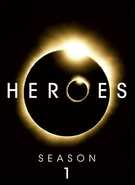
All Rise...Appellate Judge Mac McEntire wears his horned-rimmed glasses at night, so he can, so he can, review one of the year's hottest DVDs. Editor's NoteOur reviews of Heroes: Season 1 (Blu-Ray) (published September 8th, 2008), Heroes: Season 1 (HD DVD) (published August 30th, 2007), Heroes: Season 2 (published August 26th, 2008), Heroes: Season 2 (Blu-ray) (published September 1st, 2008), Heroes: Season 3 (published September 3rd, 2009), Heroes: Season 3 (Blu-Ray) (published September 1st, 2009), and Heroes: Season 4 (Blu-Ray) (published August 2nd, 2010) are also available. The Charge"Save the cheerleader, save the world." Opening StatementWelcome to the television phenomenon of the season. Even with all the hype, Heroes blasted expectations and became the most talked-about show around. Folks with little interest in the superhero genre tuned in to see the interesting characters and the many plot twists. Dorks, meanwhile, exploded with never-before-seen levels of dorkiness, discussing the many comic book archetypes and homages seen throughout, not to mention the many freeze-frame details and inside jokes. Given the show's popularity, the Heroes: Season One DVD box set has become one of the most anticipated releases of the year. Does it fly, or is it a sinister mirror image of itself? Facts of the CaseEvents all around the globe converge, including the mapping of the human genome and a solar eclipse, as a select handful of individuals discover they have amazing superhuman powers. These people, the "heroes," eventually cross paths with one another. They also learn they have great destinies, which may or may not have to do with a bomb destroying New York City and "the end of the world." Avengers assemble! Uh, I mean, Titans, go! That is, I mean, Schema Mode Initiate! Er…the hell with it, just meet the cast: • Peter Petrelli (Milo Ventimiglia, Rocky Balboa), a male nurse in New York City who believes there's more to his troubled life, and that he can fly. It turns out that he does have both great power and a great destiny, but not in the way he initially imagined. Nathan Petrelli (Adrian Pasdar, Profit), is Peter's older brother, who is running for Congress in New York and hopes to eventually make it to the White House. He also has a super power, as well as many other secrets. • Hiro Nakamura (Masi Oka, an ILM digital effects artist), an office worker in Tokyo who believes he can manipulate the space-time continuum with his mind, allowing him to freeze time, teleport great distances, and more. Before long, he and his pal Ando (James Kyson Lee, Moola) end up in Las Vegas in search of an ancient sword. • Mohinder Suresh (Sendhil Ramamurthy, Thanks to Gravity) is a teacher and scientist in India, who strives to complete research started by his father, a recently deceased renowned geneticist. Mohinder later finds a list of all the superhumans, making him a key player in these events, even though he has no powers—that we know of. • Claire Bennett, (Hayden Panettiere, Bring It On: All Or Nothing) is a high-school cheerleader in Odessa, Texas. She has regenerative powers, making her indestructible. This discovery sets her on a path to find her biological parents. Her adopted father, known by many as "Horn-Rimmed Glasses" (Jack Coleman, Dynasty), or "HRG" for short, has many secrets of his own. Like Mohinder, he's searching for others with powers, but for what purpose? • Niki Sanders (Ali Larter, Jay and Silent Bob Strike Back) appears at first glance to be nothing more than a stripper entertaining paying dopes on a live Webcam. But she's a single mom devoted to her son Micah (Noah Gray-Cabey, Lady in the Water), working hard to make ends meet. When Niki looks into a mirror, though, she sees an alternate version of herself staring back at her, one that could be dangerous. • Matt Parkman (Greg Grunberg, Alias) is an L.A. cop who hopes to advance in the ranks. Marital strife at home isn't helping matters. When he develops the ability to read minds, it solves some of his problems but creates a lot more. • Isaac Mendez (Santiago Cabrera, Love and Other Disasters), back in New York, is a painter and comic book artist, as well as a drug addict. When not battling his personal demons, he's able to paint images of the future that are sometimes inspiring and sometimes frightening. Complicating his life even more is that his ex-girlfriend Simone (Tawny Cypress, Bella) has found romance with Peter Petrelli, which brings us back to the beginning. The EvidenceThis episode list is actually coded into each person's DNA: • "Genesis" • "Don't Look Back" • "One Giant Leap" • "Collision" • "Hiros" • "Better Halves" • "Nothing to Hide" • "Seven Minutes to Midnight" • "Homecoming" • "Six Months Ago" • "Fallout" • "Godsend" • "The Fix" • "Distractions" • "Run" • "Unexpected" • "Company Man" • "Like Any Parasite" • ."07 Percent" • "Five Years Gone" • "The Hard Part" • "Landslide" • "How to Stop an Exploding Man" The above episode list obviously isn't comprehensive, but more of a list of highlights then a detailed summary of the entire season. This is for two reasons. One is because I don't have all freakin' day, and two, because part of the enjoyment of Heroes is being surprised by all the twists and turns in the plot. Sure, you could go through the show taking notes and freeze-framing every bit of background text on screen for all the clues and small details, but at the end of the day, Heroes is all about people with super powers running around having crazy adventures. This show is fun, and part of the fun is just going along for the ride. Comic book-reading dorkfaces like me often throw around the word "archetype" while discussing this show, and not without good reason. It's easy enough to classify the characters in Heroes alongside their sequential art counterparts. There are plenty of other superheroes who fly, who heal, who teleport, etc. But I'd argue that the heroes of Heroes fit into deeper archetypes, one that speaks to heart of heroism and superheroics. Peter Petrelli—The "Chosen One" Classic stories of heroes are rife with chosen ones. This is when an ordinary person, who believes there's nothing special about him or herself, discovers that he/she has a great destiny to fulfill. This speaks to a hidden desire in a lot of us. As we wander aimlessly through life, we hope for a Gandalf or an Obi Wan to tell us what our great destiny is and how we can fight to vanquish evil and make the world a better place. Unfortunately, most of us have no such destiny. We're too busy paying bills, shopping for groceries, reading comic books, etc. In the first episode, Peter Petrelli has no problem busying his way into his brother's office and saying "I think I can fly." It doesn't occur to him that maybe he sounds crazy. He absolutely believes it. Later in the same episode, he has a conversation with Mohinder about evolution, which turns around to the topic of destiny—Mohinder believes there is a connection between the two. Peter is so committed to his belief that he jumps off a building to fly. We're not told where this belief comes from, except that Peter just "knows" it's true. But his power is only one part of Peter's obsession with his own destiny. Through Isaac's paintings, and then through a vision of his own, Peter is convinced that he has an important role in saving the world. He's determined to learn more of his own future, in order to save the world. Imagine his surprise, then, when suddenly he has reason to doubt this destiny. This is his crisis of faith. He's faced with the thought that instead of saving the world, it's he who destroys it. Is it any wonder that Peter spends a good part of the season wandering about unsure of himself? Some fans and critics have taken to calling the character "whiny" as he goes about this process. I, however, see the shattering of Peter's belief as his own version of Kryptonite. When he fears that he's the cause of New York's destruction, his instinct is to run. Doing so, however, only puts him at odds with his brother and with his new girlfriend at a time when he could use their help the most. Once Peter discovers the true nature of his abilities—this is revealed bit by bit throughout the season—he becomes one of the biggest powerhouses in the Heroes universe. Not once does he entertain selfish thoughts like bank robbery or world domination. He's driven by his belief in his destiny, yes, but also by a desire to help others. In "Six Months Ago," we see a happier Peter as he becomes a nurse, fulfilling a dream of his to help others. Some heroes, as we'll see below, have to be taught a lesson before they turn to heroism. Others, like Peter, are simply driven to do good at the start. Most "chosen one" heroes have ambiguous reasons for being a chosen one, usually some nonsense about birthrights or bloodlines. But if evolution and destiny are linked, as Mohinder hypothesizes, then perhaps Peter was "chosen" because of his innate desire for doing right. Claire Bennett—The "Origin Story" When Claire, the teen cheerleader hero, first discovers her invulnerability, her initial reaction isn't about good or evil; it's to find out how and why. She enlists a friend to videotape her as she performs death-certainty stunts. Part of this might merely be research, but Claire later alleges that she's doing this "for her parents." It's not that huge a leap to assume she means her biological parents and not HRG and her dog show-obsessed adopted mom. By searching for her biological parents, Claire hopes to understand why she is the way she is. I'm not an expert, but I'm assuming thoughts like these are why many young adoptees feel the pull to learn of their origins. Hey, there's a funny word: origin. Comic book dorkalongs like me are more than familiar with the term "origin story." It's the tale of where the hero came from, who he or she was before becoming a hero, and how the transformation to hero took place. When Claire encounters a roaring fire, her first thought isn't to aid the firefighters, but to use the blaze to test her powers. It's only once inside that she sees the opportunity to rescue someone. Even with that act behind her, Claire's road to heroism is a long one. Another girl takes credit for the fire rescue, and Claire's search for her parents leads to a few dead ends before it actually gets somewhere. Her first attempt to fight "evil," in the form of a horny quarterback (is there any other kind?) seems like awesome retribution at first, but it almost has disastrous consequences for her afterward. But Claire's journey is a shared one. Her adopted father, known mostly by the nickname "HRG," is one of the series' most mysterious and complicated characters. At first, he comes across as entirely villainous, acting like the kind suburban father on the surface, but keeping secrets from his family and coldly hunting down other heroes as his day job. After Heroes tantalizes us with ambiguities all season long, we finally get some solid answers in "Company Man," one of the season's standout episodes. Along with the exposition, though, we also get a major turning point in the father-daughter relationship. This is the episode that changes Claire's perception about HRG, and it sets her on the path to heroism, all the way to New York and her key role in the season finale. As Claire, Panettiere does an excellent job of appearing sad and troubled. When Claire is on the verge of tears, the audience can feel it, too. But it's Jack Coleman as HRG who almost steals the series away from the others. He walks a fine line between charming and likable to cold and calculating. You might never be sure where the character is going, but Coleman makes you believe he knows where he's going. He even makes the glasses work. Hiro Nakamura—The Hero as "Geek Empowerment" Of all the crazy characters running around in this series, it's Masi Oka as Hiro who has become the "face" of the show. There's a good reason for that. In many ways, Oka represents the Heroes target audience. Like with Peter, we're never told how Hiro knows he has powers, he just does. And how does he describe his powers? By comparing them to Star Trek and X-Men comics. Hiro is one of the few heroes whose powers don't bring him misery. He's overjoyed to be able to do what he does. While some of the others, such as Claire, long for a "normal life," Hiro longs to not be normal. Normal, for him, means wearing a short-sleeved white shirt and a tie while typing away inside a cubicle underneath a spastic fluorescent light all day long. Hiro's powers offer him a chance to improve himself; to be something more than what he is. Unlike Peter, Hiro benefits from knowing his both his powers and his mission almost right from the start. But, similarly to Peter, Hiro too faces a crisis of faith along the way to his goal. After using his powers for selfish reasons at a casino instead of noble, heroic reasons, Hiro feels cut off from abilities. He falls farther into despair after his flirtation with Charlie the cute waitress comes to an abrupt end. To get back to full strength, Hiro believes he has to bear an ancient sword once owned by an ancestor of his. Maybe I missed it, but how Hiro knows this, exactly, is unclear. Forgetting for a moment what Dr. Freud might say about a hero longing for a sword, I feel Hiro doesn't see his sword as some sort of mystical power battery or other such silliness, but as a symbol for him to stay on the right path. Finally, Masi Oka has earned "breakout star" status for another reason: He's very funny and charming. His performance combines wide-eyed innocence with occasional slapstick buffoonery to create a character that can be hilarious and heroic at the same time. We like the character because he provides the "sense of wonder" feeling that modern fantasy and sci-fi often lacks. When Hiro is amazed and excited by the world around him, we the audience see a little of ourselves in him, and then enjoy his character all the more. Mohinder Suresh—The "Science Hero" I don't know if Alan Moore created the term "science hero," but he brought it into popularity with his "America's Best Comics" line, often choosing it as a descriptor instead of the more common "super hero." Mohinder might not be in the same league as Moore's Tom Strong, but, with no powers other than his brilliant-but-still-human intellect, Mohinder is far more "science" than "super." In some ways, Mohinder lives an idealized life for a scientist. He travels all over the world conducting tests and having adventures, with the betterment of mankind as his goal. He doesn't sit in front of the computer all day, he's not spending all his time in some lab, and he doesn't have his face constantly buried in a book. If all the heroes ever do form some sort of "team" (which I doubt) it's Mohinder who will likely lead them. He knows where they all are, and he has the smarts to unlock the use of their powers. Mohinder is also our narrator. Most episodes begin and end with him waxing philosophically in voiceover. Some fans have flat-out hated this, but, honestly, the narration hasn't bothered me. Maybe what he's saying isn't terribly profound, but it usually does emphasize a common theme linking any given episode's many plot threads. At the season's midpoint, Mohinder goes through a crisis of faith much like Peter's and Hiro's (look at that, a common thread). But his crisis has him returning to his home for an intriguing subplot about mysterious dreams. It's interesting, but it does slow down the momentum for a few episodes. Matt Parkman—The "Everyman" Hero Parkman is probably the least heroic hero. Not because he's tempted to join the ranks of villainy, but because he's so flawed. He fails to climb the ranks in the police department. When his powers kick in, it leads to a lot of embarrassment and conflicts with other cops. At home, he is at first estranged with his wife, then they start to get back together, then they're on the outs again, and then they're back together. Parkman's brief stint as a bodyguard is exciting, but doesn't go as well as he would have liked. Life just keeps getting worse and worse for this guy. It's hard to root for a hero who screws up as often as Parkman. I feel the creators are loosely basing him on Spider-Man's alter ego, Peter Parker. Do I really need to point out the similarities in their names? Whereas Spidey has his flaws and doesn't always make the right decision, he keeps a positive attitude (mostly) and remains a charming, likable guy. Parkman hasn't quite yet reached that point. It's too easy to view him as a screw-up. The desire and the potential for a hero exists in this character, but he hasn't reached it yet. Isaac Mendez—The "Artist as Hero" Isaac is a troubled soul. When we first meet him, drug abuse has crippled his life. He's a complete mess. His "gift," the ability to paint the future, frightens him. Not only does he not know how he can do it, but he believes he can only do it while high. He wants to see the future, in the hopes of saving New York, but he can't do it without more self destructive behavior. Simone only further complicates Isaac's life. She leaves him due to his substance abuse, but still cares enough about him to want to help him. But when she falls into Peter's arms, the tension between Isaac and Peter understandingly increases, to the point where they have their own superhero slugfest. A lot of artist types like to talk about being tortured by their own art, but that's truer than most in Isaac's case. Early in the season, one of the first hints as to a "bigger picture" for the series is a fictional comic book called "The 9th Wonders," that seems to connect several characters. We're quick to learn that this is Isaac's self-published comic book, (and how about a round of applause for the Heroes creators for acknowledging independent comics?). Isaac says he enjoys writing and drawing it because of its "black and white" nature. This doesn't refer to the artwork, but to the simple good guys versus bad guys dynamic. Later in the season, after Isaac finds a little more direction in his life, he takes on a heroic role. Perhaps Isaac represents another type of hero, one that fights for a better world not with action and laser beams, but with words and ideas. It's always fascinating to discover artwork that is prescient in some way, like a story that gets described as "years ahead of its time." Most artists hope to reach others in some way, whether through an emotional connection, or by generating enthusiastic applause. Some artists, though, prefer to use the power of art to spark discussions and enact societal change. Watching Isaac as he furiously crafts painting after painting in his loft, I can't wonder if he is a metaphor for this kind of artist, one who sees the canvas as a means to make the world a better place. Nathan Petrelli—The "Forward Thinking Hero" OK, show of hands. Who's been reading most of the Marvel Comics output for the last two years or so? Good; lots of you. Then you know Iron Man used to be a millionaire industrialist and former alcoholic who put on a futuristic suit of armor and fought crime. Recently, however, Iron Man has been cast in a "leadership" role, where he's decreed that all heroes must reveal their identities or be arrested. It's incredibly difficult to see things from his point of view. He alleges that although he looks like a bad guy for doing this now, it will lead to a better world years or even decades from now. I can't help but wonder if the conflicted Nathan Petrelli is a similarly forward-thinking. He's running for Congress with only one goal on his mind: Win at any cost. This is why he tries not to show an interest in his own super-power, not to mention a potentially crazy brother and a Japanese geek with a sword. And yet, why is he running? Is it nothing but a lust for power, or does Nathan feel he can do more good as a politician then as a superhero? As we learn more about Nathan, we get to know his extended family, most notably his wife and mother, who both have their manipulative sides, as well as Nathan's relationship with Linderman. What does Nathan want? How much of what he says and does is him and how much is "the campaign?" The season finale gives us a hint at the "real" Nathan, and yet I feel there is more to be explored with the character when (if?) he returns in Season Two. Niki Sanders—The Antihero Niki is perhaps the most unusual and ambiguous of the heroes. It's about a third of the way into the season before we get any real sense as to who or what her "mirror image" is. Once the season concludes, there's still little definite explanation as to the rules of how her powers work, and the back-and-forth interactions between the two. Niki spends a lot of the season worrying about her son and trying—sometimes hopelessly—to protect him. That gives her a clear motivation, which is good, but it gives us little information as the mechanics of her abilities, how they work, etc. Niki is also somewhat non-heroic in that she spends long chunks of the season on the wrong side of the law. If her encounter with Nathan in Las Vegas isn't morally debatable, then the ending to her confrontation with Parkman certainly is. But even though she spends a lot of her time on the other side of the law, she does so with that one singular goal in mind—to protect her son. Niki is this show's version of an anti-hero, a character with her own moral code and her own way of seeing justice done, but still heroic in her own bizarre way. After reading all of the above, some of you are no doubt saying, "Hey, Dorkasaurus Rex, we get it, already! What about the action? What about the effects?" And so on. I have a hard time calling Heroes an "action" show, since the action scenes and big special-effects set pieces are doled out sporadically. The writers save the big "holy crap!" moments for when the story really calls for it. Otherwise, the emphasis is on the characters, their interactions, and on the twisty-turny plot. For a recently made high-profile series, there was little question about the tech specs here. The series looks fantastic on DVD, making use the many colors on display, such as cold blues representing New York, warm yellows and oranges representing Texas, and so on. The 5.1 sound both well-balanced and robust. On the unaired pilot, when the music starts, the sound of the drums came out of the rear speakers with such sharp clarity, it felt like the musicians were playing on either side of my chair. Speaking of that unaired pilot, it's the highlight of the extras. It's mostly the same as the first episode, but with a few plot threads that didn't make it into the final version, including a superhuman terrorist and an alternate Sylar. The terrorism angle was more like something out of 24, a hit series that ran opposite Heroes this season, and added a little too much gritty realism to what is otherwise a fantasy show. The 50 deleted scenes are also good ones, with a lot of nice character pieces that add to the series as a whole. The commentaries vary, appearing on eight episodes, with actors and producers doing the speaking. These mostly cover production anecdotes, with little attention paid to the stories and the writers. There's a lot of obnoxious self-congratulation here, especially from the actors. Speaking of obnoxious, I like Greg Grunberg's acting, but, geez, the guy is hyperactive on these tracks. The commentaries were also recorded during production, long before the episodes aired, making them embarrassingly dated. In one, the actors wonder if Linderman will ever appear on screen, and in another, producers refer to "these rough effects" when we the audience are looking at the final version. The featurettes on Disc Seven cover a lot of ground, from stunts to effects to the score. The "making of" featurette is short, and mostly talks about the show's casting. Another featurette profiles superstar comic book artist Tim Sale, who created Isaac's paintings, and there's a cheesy "Mind Reader" game that's worth skipping. The Rebuttal WitnessesYou want plot holes? We got plot holes. Any story about time travel has to try to deal with the whole "paradox" thing, and Heroes sets up paradoxes galore. Like, if the heroes save the day, then "Future Hiro's" world would cease to exist. And if that were the case, how could "Future Hiro" ever come back and give a message to the heroes for them to saving the day? Isaac, meanwhile, paints what he sees in the future. But a lot of what he paints only comes true after people see the paintings and act on them. Does that mean his paintings are altering the future somehow? If he chose not to paint, would what he see when he paints not come to pass? I'm sure people smarter than me can come up with even better examples. A lot of the "mechanics" of the heroes' powers are suspect as well. I've shared my concerns about Niki's abilities above, but there are others. Like, Claire's weak spot might be her brain, but wouldn't her brain have been irradiated at the end of "Company Man," killing her permanently? As Peter gets more and more powerful as the season progresses, there are plenty of opportunities to ask, "Why doesn't he just use [name of super-power] to get himself out of this situation?" Finally, the season finale ends up a mixed bag. On the plus side, it neatly pays off a lot of what has been foreshadowed throughout the season. Everything we expected to happen happened. On the other hand, for a show famous for its insane plot twists, the finale's set piece seemed a little too low key. The show's creators prepped us for something truly over-the-top in the finale, and instead they went for a more intimate approach. What we got was good, but it just wasn't big enough. Closing StatementOne of the documentaries that accompanied the 14-disc Superman box set in 2006 showed Richard Donner holding up a "verisimilitude" sign. What applied to Supes applies to Heroes as well. It might look like it takes place in the "real world," but we as viewers must remember where the divide between fantasy and reality is, so that we may truly enjoy the show. And truly enjoyable it is. The VerdictThe cheerleader has been saved. Not guilty. Give us your feedback!Did we give Heroes: Season 1 a fair trial? yes / no Other Reviews You Might Enjoy
• Tortilla Soup |
|
DVD | Blu-ray | Upcoming DVD Releases | About | Staff | Jobs | Contact | Subscribe | | Privacy Policy
Review content copyright © 2007 Mac McEntire; Site design and review layout copyright © 2015 Verdict Partners LLC. All rights reserved.