| Home | About | Blu-ray | DVD Reviews | Upcoming DVD Releases | Contest | Podcasts | Judges | Jury Room | Contact |
|
|
|
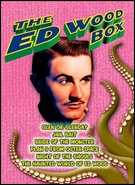
All Rise...And remember, my friends, future reviews such as Judge Bill Gibron's of this craptacular box set will affect you in the future! Editor's NoteOur reviews of Big Box Of Wood (published August 12th, 2011), Plan 9 From Outer Space (published July 10th, 2002), and Plan 9 From Outer Space (In Color) (published June 27th, 2006) are also available. The ChargeThe worst director of all time? You see? You see? Your stupid minds! Stupid! Stupid! Opening StatementLook, let's get one thing straight. Listen carefully, because it's about to be made perfectly clear to you. Facts are going to be offered, opinions formulated and posited. If you need to continue to function under the misguided belief being bandied about by the current popular culture, then perhaps this in-depth diatribe is not for you. Best pick up a copy of some standard faux-fancy fish wrap and regale in their ridiculous positions. Though he's held this reputation for so long that it's hard to imagine a time when it didn't seem true, the reality is far more refreshing, and even a little invigorating. Are you paying attention yet? Okay? Good, 'cause here we go (deep breath): ED WOOD IS NOT THE WORST DIRECTOR OF ALL TIME. There, it's been said. This critic did it, and he's damn proud. Oh, you're not convinced? You need proof? Nothing will subvert your media-fed bias against Edward and his innocent nods toward simpleton cinema. Still got those Golden Turkey tirades in your head, those misguided, pre-VHS versions of the borders of badness? Well, in light of the recent archeological aspects of the digital revolution, where any anti-entertainment atrocity can find its way onto the aluminum disc medium, Wood should be set aside as some incredibly worthy, woefully inept entities rise up to take his muddled movie mantle. Anyone who's sat through Red Zone Cuba (a.k.a. Night Train to Mundo Fine), The Skydivers, or The Beat of Yucca Flats will acknowledge that, when it comes to directorial skill, Coleman Francis sure was fat. His non-linear, exposition-absent motion picture abscesses are enough to give film fans the shite cinema shingles. Better yet, boil your bottom in a non-stop brew of Arch Hall Sr. celluloid for once. Between Eegah! (which he actually directed) and such scribbled sputum as Wild Guitar, What's Up Front, and The Nasty Rabbit, he tried to turn his Betsy Wetsy boychick of a son into a meaningful matinee idol. He couldn't even manage a fallen, forgotten has-been. From the urban nightmare of Dale Resteghini to the plethora of indie kiddies camcordering the very soul out of film, there are many more defective offenders who could wear the crown of crud. Why anyone still considers Wood the worst is just a mystery, especially after perusing Image's new collection The Ed Wood Box. Was Edward haphazard, scattered, and more than a little lame? Sure. Is he the most dreadful director of all time? Hardly. Facts of the CaseThough it does not represent every film Wood ever directed or was even closely associated with (some sensational classics like The Sinister Urge, The Violent Years, and Orgy of the Dead are missing), Image's box set of five of the fellow's best-known films (and one compendium DVD featuring a documentary and other Wood rarities) is quite an accomplishment. Unless your name is Scorsese, Chaplin, or Cassavetes, it's rare to get this kind of career retrospective in a single set of discs. Sure, one could point out that this assemblage is merely a set of previously issued discs with the inclusion of another DVD, and that all the films are available separately, but that would destroy the drama of the point, so let's just skip it, shall we? Instead, let's focus on the films actually offered here, a queer quagmire of quintuplets that prove, conclusively, that Wood was a daft—but not dreck-filled—filmmaker with his heart—if not necessarily his tenuous talent—in the right place. In chronological order, let's begin with: • Glen or Glenda? (1953) • Jail Bait (1954) • Bride of the Monster (1955) • Plan 9 From Outer Space (1959) • Night of the Ghouls (1959) The EvidenceWhen viewing the Ed Wood oeuvre, one has to take a few things into consideration. First, there must be some reason why these films have lasted as long as they have. With some passing the half-century mark, it's amazing that we can still witness their wild, weird beauty in a postmillennial medium. Had Wood truly been a talentless turd, pumping out the poop like a dieter indulging in sugar-free low carb candy, his fetid features would have been placed in the cosmic commode, like the vast majority of the meretricious offal of the time, and flushed right down into the sewer of sameness with the rest of the hacks. No, timelessness is measured in impact, not incompetence, and no matter how amateurish his films feel, there is an infinite quality to Wood's work that is hard to deny—the vision of "Glenda" doing some scandalous window shopping; pie pan space ships skirting the Hollywood hills; Tor Johnson trying his best to mobilize his massive girth around some cardboard sets; Bela Lugosi's last gasp for some manner of dignity. All of these issues are present in the endearing Ed Wood catalog. True, every time Dolores Fuller shows up on screen, millions of hack actors around the world feel better about their own forced performances (this woman wouldn't understand the notion of naturalistic line reading if mandated to her upon penalty of torture!). And the rest of Wood's creative cinematic film company was mostly comprised of the forgotten, the failed, or the foolish. Yet somehow, channeled through Ed's distorted viewfinder, old cowboys became swamis, wrestlers became detectives, and dead superstars could make movies from beyond the grave. No one will ever mistake Wood's productions for the professional, or even the passable. But they are passionate, and filled with a love of simple storytelling. The fact that such elements get increasingly eccentric in practice is part of Wood's charm. Something like Jail Bait is a basic, bungling cops-and-robbery romp—that is, until Ed inserts some bizarre minstrel show sequence into the mix. Who else would pepper his personal plea for transvestite tolerance with a mondo bizzaro dream sequence condemning his proclivity? Or better yet, heighten his narrative with random stock footage shots, complete with a superimposed Bela Lugosi ranting like a retarded Rotarian? Bride of the Monster infuses its mad scientist melodrama with even more pointless subplotting than a soap opera, while Night of the Ghouls tries to be a sequel without actually incorporating any element from the previous film. And then there is Plan 9, a woefully underappreciated amusement that wants to be all things to all pictogram patrons, but can't muster the mediocrity to do so. No, like most of Wood's works, this twisted tale of grave robbers from outer space functions in its own vacuum of meaning, preaching to the perverted in a manner more mesmerizing than misplaced. Perhaps it's better to look at each film separately, to see where Wood succeeds and when his vision violates even his own arcane attributes, beginning with what is, perhaps, Wood's most complicated creation. • Glen or Glenda? (1953) Glen or Glenda? is part docudrama, part private plea, and the very antithesis of what Weiss was looking for. By dealing with the dilemma of gender confusion in a more or less upfront way, Wood created more questions for an early '50s audience than he ever dared answer. Calling up God (both in reference and reality, through the mischievously miscast Lugosi) and science simultaneously, Wood suggests that cross-dressing is an individual choice that can be cured by the love of a good woman. Using a suicide storyline to delve into facts, fallacies, and freak-outs (some PhDs will make names for themselves trying to untangle that Act III dream sequence of familial and social condemnation), Wood walks us through more tranny turmoil than most Americans could conceivably consider. The closing conceit of having Alan metamorphose into Anne (though, frankly, the actor essaying the role is just a really ugly woman throughout) is everything a grindhouse gadfly could wish for—except that Wood wants sympathy, not sensationalism, for his character. Indeed, all of Glen or Glenda? plays like a journal entry gone goofy. Like a car wreck covered in marital aids, Glen or Glenda? is a milestone in the misapplication of private penchants. Wood would never work this close to his own home bone ever again. • Jail Bait (1954) Most crime thrillers from the '40s and '50s were a mixture of personality, performance, and peculiarities, a chance to take law and order into a more menacing, sinister direction. Sadly, Wood supplants the suspense by adding a shirtless Steve Reeves (how homocentric of him) and commits his own crimes against humanity by including a really random, horribly racist blackface number. Though Timothy Farrell (a grade-Z stalwart who appeared in such memorable off-title treats as Racket Girls, The Violent Years, and Test Tube Babies) tries his best to impersonate a streetwise hoodlum, he comes across more like a pissed-off insurance adjuster. And the dreary Clancy Malone just can't seem to breathe life into his black sheep son Don Gregor. Instead of unctuous, he comes off as unconscious. When dopey Dolores Fuller and the Confederate colonel-ness of silent star Herbert Rawlinson are the best things about your felony film cast, you know you're in trouble. Jail Bait is definitely the worst movie in this set. • Bride of the Monster (1955) With Monster, one can now begin to see the freaky formula Wood relied on when crafting his crazy screenplays. First, the police are always the heroes in his films, be they breaking up a racket of pornographers (The Sinister Urge) or trying to figure out the phantasmagoric happenings in an old house (Night of the Ghouls). It's rare when law enforcement fails to make an appearance in a Wood narrative, and Monster is no different. It is just loaded with loony coppers. Secondly, at the center of each story is a misunderstood man, someone hounded for his weird wardrobe issues (Glen) or desire to take over the world (Eros from Plan 9). Monster has Dr. Varnoff, who just wants to create his master race in relative peace. Finally, God seems to find his way into the issue resolution business whenever Wood needs a narrative out. His influence, via Lugosi, "cures" Glen, guides Dr. Gregor's scalpeled hand (though this is more or less inferred), gives us Americans the strength to destroy the aliens, and subverts Dr. Acula's sham séances (some pissed-off phantoms return to enact revenge). Indeed, it is a bolt of lightning that ends Varnoff's reign of terror, and puts Monster firmly in its place in Ed's eclectic pantheon. • Plan 9 From Outer Space (1959) Plan 9 is a movie that only works within its limitations, though. Had a big budget been imposed onto Wood's wonky script, the film would have truly been an exercise in excrement. But thanks to the lack of budget, the need to improvise, and the peculiar vision of its creator, Plan 9 sings like a slightly soiled songbird, treating us to images we won't long forget. Not so much a narrative as a series of strung-together sequences about the strange shizzle going on in a local cemetery, Plan 9 percolates like a wonderfully aromatic pot of java, just waiting to fill your crackpot cup until it runneth over. It is a film that is better experienced than described, a work of bruised bravado that just doesn't understand where, when, and how it's stumbling. Someone with a more conscious consideration for the constants of cinema would have made this movie intolerable. But thanks to Wood's genial zaniness, Plan 9 becomes its own enticing entity. • Night of the Ghouls (1959) Ex-big screen cowpoke Kenne Duncan makes a less than intriguing Dr. Acula, coming across more like a middle manager than a mentalist. Part of the problem with his performance is that one can easily see Lugosi chewing up the scenery as the swindling psychic. The other aspect is that Wood hasn't given Duncan much to do. He mostly sits around and recites some rather inane paranormal patter. As for the rest of the cast, it's filler, not name fame time, as many of the more ancillary actors in the Wood repertoire get a chance to strut their stunted stuff. And they do so sheepishly. Though it's all Orson Welles compared to Jail Bait's badness, Night of the Ghouls just can't reach Glenda, Monster, or Plan 9's level of lunacy. Not even the bumbling bloated brilliance of Johnson—or his counterpart in portliness, the hilarious Harvey B. Dunn—can save this film from itself. Night of the Ghouls tried to recapture the magic in Wood's other works. Too bad the director didn't realize what an incredibly limited supply actually existed therein. The final DVD in this set is a grab bag of sorts, a collection of odds and sods that both supports and subverts Wood's place in the pantheon of pictures. Crafted in 1996 as a response to Tim Burton's highly fictionalized take on the filmmaker's life, The Haunted World of Edward D. Wood, Jr. is an amazingly effective documentary, a chance to hear the people who knew and worked with Ed defend and/or destabilize his legacy. Most are here to praise Edward, not destroy him, but a few obviously feel taken or trivialized by being associated with his films. Those butting up against Wood's world are Gregory Walcott and Bela Lugosi Jr. The son of the fabled fallen idol has every right to feel hurt. More people probably know his Pop from his mediocre work with Wood than for the amazing movies he made in the '30s and '40s. Walcott is an anomaly, someone who can't wait to undermine Plan 9 every chance he gets, though he obviously has benefited from being part of Wood's hack pack. Though it would have been nice to hear more about Wood's later years (just like Burton's biography, one would never really know that Ed died an alcoholic pornographer) The Haunted World of Edward D. Wood, Jr. is a strangely moving experience, like watching some secret celebrities finally get their just recognition. Brett Thompson's near-definitive take on Wood's life and times makes The Ed Wood Box a must-own memento for any true film fan. Wood's career demanded something as salient as this documentary, and The Haunted World pulls very few punches. On the technical side of the issue, don't expect some manner of Criterion retrofitting of the titles in this set. Each disc here represents a previous release of an Ed Wood film and sticks very closely to the specs originally offered. On Glen or Glenda, Jail Bait, and Bride of the Monster, we are treated to a trailer-only DVD presentation. Night of the Ghouls gives us a choice of bad movie ads, none of which focus on the film in question. Plan 9 contains the campy complement Flying Saucers Over Hollywood: A Plan 9 Companion, a slapdash bit of ballyhoo that combines a wealth of detail, mired by some unfortunate production issues (the host, for example, is less than engaging). The vastness of the bonus material arrives on the Haunted World DVD. Included here you will find the sole commentary tracks (for the documentary itself, the newly discovered Ed Wood "feature" Crossroads of Laredo, some reunion footage from a Palm Springs film festival and the premiere of Haunted World), a bunch of behind-the-scenes and celebratory material, a gaggle of photo galleries, and even some bloopers / making of mischief. The commentaries are a mixed bag, incorporating individuals involved in the production and those who've studied Wood for a long time. On these tracks you will find director Brett Thompson, Bela Lugosi Jr., Pat Thomas—who was married to the now-deceased Wood associate Crawford John Thomas—producer Alan Doshna, and authors Kent Adamson and Charles Phoenix discussing, in intricate detail, the trials and tribulations of trying to bring Haunted World to the screen. They share several anecdotes about some of the diva tactic taken and generally provide insight into how something like this gets made. Many of these people appear on the other alternative narrative tracks and, for the most part, they add depth and delight to the discussions. As for the value of these various bonuses, you truly get a cocktail mix of necessary and novelty nuts. The Palm Springs reunion and the premiere footage are fine, each one offering the chance to see several of Wood's wonders in one setting (and sitting). The unedited interview footage of director Thompson and Mike Gabriel from an A&E Biography on Wood is also interesting, giving us a better understanding of the communal feel of their Wood obsession. Vampira herself also gets a few more feet of Q&A in the behind-the-scenes featurette. She fumbles a few times, but also provides some catty, conceited quotables. Dolores Fuller and Rev. Dr. Lynn Lemon are also present, stumbling and stuttering through their individual sit-downs. And the added content continues. There is a segment from the old Sci-Fi Channel Buzz program about the documentary, dozens of images in the various picture galleries and a nice "In Memoriam" section in tribute to those performers and persons associated with the film that passed away since it was made. But the biggest bonanza for film fans will be the discovery, restoration and presentation of Crossroads of Laredo, Wood's woefully dull 23-minute Western. With a brand new, rather bland soundtrack and some of the worst voiceover acting imaginable, this simple story of unrequited cowboy love and wrongful accusations is more or less a curiosity for the completist only. Others will be simple dumbstruck by how boring it all is. On the sound and image front, The Ed Wood Box is a true mixed bag. Plan 9 looks the best, but that's because of the recent Special Edition treatment the movie received. Its monochrome is magnificent, with minimal defects or mastering mistakes. Night of the Ghouls also looks brand spanking new, because it basically is. The 1983 transfer keeps the black and white elements in beautifully correct contrasts. Moving down the acceptability meter, Jail Bait is next in line. Somewhat soft, occasionally grainy, and lacking the real vibrancy of Plan 9 or Ghouls, this is still an acceptable version of this film. Getting the short end of the cinematic stick are Bride of the Monster and Glen or Glenda?, with the cross-dressing epic taking first prize for worst transfer. Filled with scratches, dirt, splicing errors, and dropouts, this DVD presentation is a near-VHS version of mixed media malfunctions. Bride is not quite as bad, but does still have grit and grime issues. For Full Frame films almost 50 years old, the majority of The Ed Wood Box is made up of decent, acceptable prints. But they are by no means definitive or reference quality. As for the image presented on The Haunted World of Edward D. Wood, Jr., there are good points and bad points. The print sings of the low-budget attributes under which it was created, with less-than-correct color and some horribly faded facets. While the incorporation of older footage works out well, and overall the picture is presentable, this title could use a complete makeover remaster ASAP. The Dolby Digital Stereo sounds wonderful, especially the incredibly evocative score by Louis Febre. This moody movie music really helps to sell the bygone era ideal of the film. All of the old movies are examples of Dolby Digital Mono at its most mediocre. Most of the aural aspects are shrill, flat, and without much real atmosphere (with Plan 9 the sole exception). Closing StatementOkay, look: No one is claiming that Ed Wood is some manner of forgotten auteur who made a series of sensational movies that were incorrectly categorized as compost by a few closed-minded critics. While Wood's reputation is indeed the direct result of a narrow examination of the available video vomit on the market at the time (woefully insufficient to judge him justly), he does have his hard spots. Frankly, anyone who could declare Ed and his Plan 9 as the bottom of the barrel after witnessing something like Manos: The Hands of Fate, The Attack of the the Eye Creatures (yep, the second "the" is there on purpose), or The Wild, Wild World of Batwoman needs to have his or her cinematic credentials checked, pronto. Over the course of The Ed Wood Box, we can see that a singular vision, filled with lawmen, lunacy, and the occasional logic leap, drove most of Wood's weird output. But another aspect to his career is also evident. Ed was in love with the idea of making movies, of creating something that would hopefully stand the test of time and live on for decades after he left the Earth. It wasn't about the money or the fame—it was about the idea of filmmaking and the notion of bringing dreams to life on screen. So how about giving the guy a break, huh? Channel all that negative entertainment energy onto someone who really deserves it. After all, Akiva Goldsman sleeps on a big stack of cash and an Oscar, and the movies he writes are the celluloid equivalent of a colostomy bag. Shoot some shame that hack's way. Let Ed rest in peace. He deserves it. The VerdictEd Wood, his Box, and the highly original output therein—Jail Bait excluded—are all found not guilty and are free to go. Image is applauded for giving us a healthy slab of Ed's endearing eccentricity. Here's hoping the rest of his unusual oeuvre makes it to DVD soon. Give us your feedback!Did we give The Ed Wood Box a fair trial? yes / no Other Reviews You Might Enjoy
• Resident Evil: Superbit Edition |
|
DVD | Blu-ray | Upcoming DVD Releases | About | Staff | Jobs | Contact | Subscribe | | Privacy Policy
Review content copyright © 2005 Bill Gibron; Site design and review layout copyright © 2015 Verdict Partners LLC. All rights reserved.