| Home | About | Blu-ray | DVD Reviews | Upcoming DVD Releases | Contest | Podcasts | Judges | Jury Room | Contact |
|
|
|
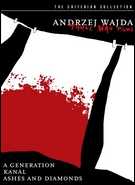
All Rise...While Resistance may be "futile," Judge Bill Gibron finds it fascinating in this trilogy of magnificent films by the landmark Polish director. The Charge"The good Lord God gave the director two eyes—one to look into the camera, the other to be alert to everything that is going on around him."—Andrzej Wajda Opening StatementWhenever World War II is discussed, Poland ends up as a punchline. Not on purpose, mind you, and not because of an already redolent association with slanderous ethnic humor. No, it's just that, with so many other high profile facets of this mythical international conflict demanding consideration, it's hard for this tiny nation to get the proper amount of acknowledgement. When its struggles are shown alongside Pearl Harbor, the Holocaust, D-Day, and the bombing of Hiroshima, the seemingly simple invasion and conquest of Poland plays like an afterthought. In many people's minds, it wasn't a defining moment as much as an ancillary cog in Hitler's wicked war machine. Make no mistake about it, though. The citizenry of this tiny, culturally diverse country suffered mightily during the aggression between the Allies and the Axis. As well as playing pawn, and place of seeming policy and political importance, Poland was also a benchmark of sorts—a metaphysical starting point for the Nazis, and an actual ending point for the Russians. By the time the war was over, the nation had moved from free, to occupied, to almost brokered out of existence. For decades afterward, it would be a victim, an unfortunate link in the lowering Cold War Iron Curtain. Few filmmakers dared pick up the cause of Polish pride, but one of the first—and best—was Andrzej Wajda. Using the Resistance as a backdrop for his initial forays into feature filmmaking, Wajda created a trio of landmark films, often called the War Trilogy. Starting with A Generation (1955) and moving through Kanal (1957) and Ashes and Diamonds (1958), this daring filmmaker was determined to show Poland in a new, more meaningful and militaristic light. Instead of a peasant country that easily acquiesced to its foes, Wajda painted a Poland filled with pride and passion, willing to fight—and die—for the cause of its own autonomy. That such a stance never truly succeeded continues as one of the nation's hardest histories. But in the legacy of these magnificent movies, the truth of Poland's importance in the web of World War II lingers, and demands respect. Facts of the CasePresented as a trilogy describing Poland and its people's place during the occupation of WWII, the Criterion Collection brings us a set of uncompromising films that capture the very essence of life during wartime. Dealing almost exclusively with the Resistance, and the rise of Communist sympathies, we begin with A Generation, which highlights how youthful idealism led to the Underground Movement, up and through Ashes and Diamonds, which illustrates the Resistance's rather pointless ends. In between, Kanal describes the hardships, and the hell, that befell these ferocious freedom fighters. Individually, the films play like parts of a symphony, a concerto to conflict, if you will. When put together, they become a triptych as powerful as any set of modern motion picture masterpieces can be. Looking at each film's storyline individually, we begin to see how Wajda sets up his scope and narrative tone. We begin with: • A Generation (1955) Score: 92 • Kanal (1957) Score: 98 • Ashes and Diamonds (1958) Score: 95 The EvidenceWar on film is usually depicted from the armory up, a glorious statement of blood and valor where artillery and rifles do most of the grandstanding. People are secondary to the story, almost always draped in the melodramatic drones of formula and archetype. It is rare when a story actually centers on a person, or a group of individuals. This is because most movies are desperate to focus on and illustrate the bigger, less introspective picture. But landmark Polish filmmaker Andrezej Wajda understood the power in the tale of singular struggle. Indeed, over the course of his commendable, compelling Three War Films trilogy (A Generation, Kanal, and Ashes and Diamonds), he paints the horrors of conflict through the eyes of people, not tanks or airplanes. With his first feature (1955's A Generation) and even up to his honorary Oscar in 1999, Wajda has stood and spoken for an almost silent section of the international film community. Poland was never considered a bastion of cinematic artistry until Wajda came along, but after he came onto the scene—and won a couple of awards at Cannes—the Eastern European nation was suddenly ground zero for a whole new wave of filmmaking. Wajda would even go on to lead the "Moral Anxiety" film movement of the early '80s, often cited as an important element in Poland's eventual break from Soviet control. While creative forces often act as a catalyst for social or political change, Wajda was at the forefront of two of his homeland's most significant artistic and philosophical victories: WWII and the Solidarity movement. It is easy to see why. All three of the War Films are remarkable works of antagonistic art. Each one expresses its ideas and intents with divergent directorial and expositional facets: A Generation is the coming of age tale; Kanal is the trial by fire; Ashes and Diamonds represents the ennui-inspiring aftermath of the struggle. Together, they give us not only the realities of the Resistance (and the Warsaw Uprising) but they offer up a distinct impression about the impact of war on life, love, and living. Wajda never tries to paint pretty or prosaic pictures. His is a cinema founded in truth, a sense of filmic duty based in a belief of freedom over fascism. While he can occasionally muddle his message with an equal enthusiasm for Marxism (A Generation) and straight-ahead terrorism (Ashes and Diamonds), the basic sentiments are still the same. Wajda wants to proves that conflicts are not won or lost by stratagems or planning. They are carried on the backs of the citizenry. Only they have the capability to actually turn the tide and influence events. Viewed independently, we can see how Wajda weaves his vision throughout the trilogy, using each film as a building block to the next. Beginning with A Generation, we can also learn the themes that Wajda wants to play with, and the manner in which he realizes them: • A Generation (1955): This is really a film about youth, about how new ideas and fresh faces can literally lift a nation. Under the old guard, Wajda argues, Poland was sold short and left hanging out to dry and helpless. They still feel more dedication to their creature comforts and social status than to the war waging all around them. Those who take up the call to arms are viewed with a jaundiced, almost criminal eye. Their names are sullied and they are instantly connected with the hated Communist carpetbaggers. But the truth is a little more complicated. Just like Stach's job as an apprentice in a furniture factory, these new "bosses" are out to show the newcomers the resistance ropes. Since Wajda makes it very clear which side of the dogma his philosophies ride (Karl Marx is praised incessantly), we are supposed to understand the overriding nobility in the cause. Just because they champion the workers and spit on the bourgeoisie doesn't make the opposition and their mouthpieces bad. Instead, they are often seen as the reasonable response to the inaction of the regular Polish citizenry. A Generation is much more than a potent political manifesto. Wajda loves to play with the theme of normalcy of life rubbing up against the epic struggle of nations at war. Indeed, when Stach falls for Dorota, the voice of the Student Party, they actually take time out from their meetings and strategy sessions to muse on what it might be like to be an actual, common couple. They even spend the night together, as if to suggest that pretending like a real-life partnership would make the rest of the world melt away. That reality comes crashing through their door the next morning is really the message of A Generation, an argument that the cruelness of the outside world is never too far away. Wajda wants to also point out that, in extreme circumstances, people will dig deep inside themselves, mustering up the courage and the hate to defend what they believe in. When Stach wants to get even with a guard helping the Nazis, it is his friend Jacek who ends up with the gun—and the dead body at his side. Jacek is on the fence throughout the film (compared to Stach who is a reluctant resistance fighter, and Dorota who is all business) wavering between commitment and cowardice. It takes a plea from a Jewish friend, and a final confrontation with what seems to be an entire regiment of Germans, to prove his character and conviction. Wajda argues that it was the youth who were meant to save Poland (including a very young Roman Polanski in a key role), but as his trilogy continues, we realize just how shortsighted such a response would actually be. • Kanal (1957): This is really a film of contrasts, a way of extending the themes of A Generation without jumbling the story with pro-Communism or irregular revolutionary propaganda. Kanal is more concerned with the day in and day out elements of armed resistance, about how the ragtag become an army, and how desperation spawns discipline. It would be easy to dismiss this movie as an exercise in extremes were it not so expertly helmed. During the big battle that opens the film, Wajda never lets us forget how quickly the tide can turn, for both good and bad. Part of the disparity here is that our freedom fighters are vastly outnumbered and greatly outarmed. They really stand no chance of surviving, let alone winning, but throughout the combat, as comrades fall and hard fought territory is lost, we still feel like we're on the side of right. This may stem, naturally, from the "Nazis as evil entities" angle that has become our shorthand for all WWII enemies. But since Wajda barely shows us the German troops (they get a single scene toward the end), there is a strange, almost allegorical feel to the fighting. It's almost as if the Polish people are battling with themselves, or worse yet, and unseen demon that threatens to undermine their entire country. The moral conflict connected to being Hitler's doormat may have finally manifested itself in the bombs and gunfire of the Uprising. Once we enter the sewers, however, Kanal becomes almost macabre in atmosphere. Wajda really piles on the suspense, adding potential dangers (there are rumors of poisonous gas, and bodies strewn everywhere) and the fear factor of the unknown to really keep us guessing. This is also an incredibly gory film, especially in a scene where a grenade is tossed onto an escaping refugee. While it may just be muddy, shitty water that ends up covering our heroes, there's a very telling moment before the bilge actually splashes. The first spray is dark and dense. The second seems like a retroactive rinse. As he builds toward his heart-wrenching climax, Wajda eases our guilt by giving his actors a lot of grandiose lines to speak. Almost everyone, from our hesitant rebel to the stoic gal who loves him, spouts out slogans of sacrifice and reconciliation. And still we hope…and pray. The individuals responsible for the Warsaw Uprising—that cobbled together group of volunteers—felt a need much stronger than survival. They wanted to fight for their country and their heritage, and proved they were willing to literally travel through the Underworld for both. • Ashes and Diamonds (1958): Ashes and Diamonds is also the first movie to answer the previous films' call to hope. In A Generation, we got a final shot that seemed to indicate a world of possibilities. In Kanal, even with all of our cast dead or dying, we understood how the fight would continue, and maybe succeed. But Ashes and Diamonds seems to argue that Poland has lost its place in the fight for freedom and may be doomed to outsider occupancy for decades to come. While there are still glimmers of optimism to be gleaned from the narrative, Wajda really is saying that the old Poland, the traditionalistic pre-War nation, is more or less dead. In its place is a new, almost foreign landscape, littered with dead bodies, garbage heaps, and broken dreams. That Maciek and Krystyna think they can have a life among these ruins is indicative of Wajda's idealism. But when we learn the eventual fate of our characters, we clearly see that the director is split, unsure if there will be happiness or hate, contentment or resentment. With assassinations that somehow seem pointless and futile, along with political battles that are now being fought in the banquet hall, not the field of conflict, Ashes and Diamonds suggests the shifting sovereignty paradigm. Might no longer makes right. In the new world post-WWII order, connections create the command. A great deal is made out of Zbigniew Cybulski's star-making turn as Maciek. Often referred to as the Polish James Dean, there is definitely a mild resemblance, but in reality, the similarities stop there. Certainly Cybulski is a brooder, delivering his lines with a kind of downward cast and highly casual gaze. But he is more along the lines of Alain Delon, combining the patented pretty boy with an inner turmoil that bravely bubbles up to, but never through to, the surface. There is no doubt that the ending is over the top, with Cybulski pouring on the thespian pyrotechnics in what is a strangely stark finale, but there is also a method behind Wajda's matinee idol madness. By making our would-be assassin someone who looks more modern, more vivacious and invincible, the director heightens the horror of such a brutal act. He also makes us care about Maciek, wanting him to end up with Krystyna because they seem to make a perfect, iconic couple. They could easily represent the Poland of the future—cosmopolitan, attractive, yet filled with moral ambiguity and doubt. Instead, Wajda is there to remind us that there is much more to the reconstruction of his country than a pair of pretty faces and a romantic walk in the sunset. War is a dirty business, and he wants to make sure we see it, stains and all. Thematically, all three films focus on the effectiveness, or lack thereof, of resistance, about how easily it is sidetracked and corrupted. Wajda never once condemns those who fought in the Underground, and does his best to make those who were part of the Uprising into reluctant sacrificial victims. But true to the tenets of the subject he is dealing in, the director finds all the facets of war—the bad, the brave, the good, and the grotesque. There is a strange sort of surreal sci-fi feeling to these movies, like looking at an alien locale so devoid of recognizable life signs that we could never imagine anyone actually residing therein. Stach's ghetto is like an elaborate tent city, with citizens living in boxes and in between piles of garbage. The troops who hole up in the bourgeois estate realize that it is a respite from the filth and the foulness they have yet to face (which become literal, when they end up in the kanal). Ashes and Diamonds starts allowing the universe to reshape itself—city blocks are no longer bombed out, roadways aren't strewn with rubble or the swaying bodies of hanged traitors. But it is still an arcane vista, devoid of what we recognize as real, city life. Perhaps the biggest area explored by Wajda is the realm of conviction. It is something that the modern mind rarely thinks about. Even after the fateful events of 9/11, people are still fairly passive about their desire to defend. Instead of ardor, there is a kind of acknowledged atrophy. They recognize how reluctant they are to stand up and be counted (or sacrificed), but at least feel they can rationalize their own resistance. In each of the three films, Wajda's characters face a similar crisis of conscious. The price they and their comrades have had to pay has been far too steep and more excruciating than they could ever have imagined. An easy avenue of escape seems just around the corner—be it in the bed of a willing woman, or the words of an elderly traditionalist. Since death is also an inevitability, the director makes his players face their fears and determine the function of their makeup. It's no surprise that any and all heroics found in Wajda's films are almost anticlimactic in nature. As if to suggest the unavoidable truth about suffering being an everyday occurrence, these films prove that bravery is also not some Olympian attribute, but a part of the regular regiment as well. Individually, or in order, these are remarkable films, filled with the textures and the tone of a wartime Poland. Wajda always seems to find the right details to cement his drama, and even when a small amount of artifice steps in, the director always brings us back to reality. Along with The Battle of Algiers, it is impossible to watch these movies and not see the possible influences from past, and on future, filmmakers. From the amazing compositions that combine faces with background action, or distant vistas with barely identifiable figures marching along the horizon, A Generation, Kanal, and Ashes and Diamonds have definitely defined modern moviemaking. As a matter of fact, it is almost impossible to witness the claustrophobic dread of Kanal and not see elements of the modern horror/action film, or associate Ashes and Diamonds as a direct counterpoint to the Italian neo-realists. But all authority aside, these are great films because they are true to their stories and their stances. In war, freedom is the first aspect to be missed. It is also the quickest item dismissed during peace. Andrzej Wajda never wants us to forget how important our independence is. His Three War Films make his argument in amazingly moving ways. Considering their age, their relative rarity, and the manner in which they were treated by the Polish government over the years, it is amazing that we can see these films in the first place, let alone witness them as part of a substantial Criterion remastery. That being said, the preservation perfectionists have struck again, offering up three prints of amazing clarity and crispness. While each one does suffer a little from both age and original stock elements (Polish filmmakers weren't working with Hollywood grade product 50 years ago), each print is as pristine as you can expect from half century old Eastern European cinema. Both Kanal and Ashes and Diamonds are more of less faultless. Kanal, with its full frame, 1.33:1 transfer really resonates with its deep, dark blacks and brilliant daytime whites. Ashes and Diamonds is even better, utilizing a 1.66:1 anamorphic image to portray its pristine shadows and light. A Generation is a little muddy and worse for wear. While it still provides a pretty potent picture, complete with detail-deriving contrasts and a lot of excellent atmosphere, we do get some washed out moments and a couple of rather rough bits. Still, in the long Criterion tradition of exceptional transfers, Wajda's Three War Films do not really disappoint. As far as sound it concerned, Kanal stands out once again. The film uses music as a motif (as one of the main characters is a composer), and all throughout the film we hear an amazing collection of classic, atonal, and ambient pieces. Both Ashes and Diamonds and A Generation are a little more indistinct in their scoring, though the former does boast a long party scene with a delightfully decadent dance band. The Dolby Digital Mono mixes are all superb, allowing us to hear the Polish dialogue perfectly, and the English subtitles don't resort to slang or modernization to translate the text. Together with the visuals, Criterion has made these movies a joy to watch and listen to. But it is the bonus features that demand the most attention. Each DVD in this set (one film per disc) contains a literal treasure trove of added content, material bent on giving us the necessary background and history to truly enjoy and appreciate these films. On each disc there is a separate 30-minute interview with director Wajda, along with input from critic Jerzy Plazewski. Second Director Janusz Morgenstern also appears to add his comments on Kanal and Ashes and Diamonds. The Q&As, totaling almost 90 minutes in length, are stellar. A Generation is, perhaps, the most basic, since it deals not only with the film, but Wajda's education and life before and after the war. While it is not surprising that Wajda wanted to be an artist (his framing and compositions definitely illustrate this), what is interesting is how much he hated film school and how he more or less stumbled into his first film. On Kanal, the conversation is more pointed, discussing aspects of the production and the desire to literally depict the dark side of resistance. Wajda also explains that his participation in this film was a semi-coincidence. The original filmmaker went down into the sewers, and after determining that is would be impossible to use it as a set, he quit. Naturally, Wajda found a way. Finally, when we reach Ashes and Diamonds, we get the obligatory discussion of Zbigniew Cybulski's casting as well as the interesting costuming choices the actor demanded. From the reliance on film noir as a reference point, to the way in which the filmmaker got the less-than-flattering script past government censors, this conversation, along with the others, gives us great insight into Wajda as a creative and a political force. Individually, each disc also offers extras that help supplement the storyline or subject matter being discussed. On A Generation, we get a 1951 short by Wajda entitled Ceramics from Ilza. As one of the director's student films, we begin to see the style he would incorporate in his feature debut. Additionally, we get a great gallery of production stills, posters, and original artwork for the film (indeed, each DVD features a similar sensational scrapbook). Kanal offers an intriguing interview, conducted by Wajda, with Warsaw Uprising survivor Jan Nowak-Jezioranski. Filled with fascinating details, as well as a lot of devastating realities, it is an essential aspect of this presentation. Like the similar historical material offered on The Battle of Algiers DVD, this discussion is necessary to understand the circumstances that Kanal was chronicling, as well as the sacrifice required to fight for freedom. Ashes and Diamonds offers, perhaps, the most important bonus features, as a commentary by film scholar Annette Insdorf, as well as vintage newsreel footage from the making of the movie, add insight and explanation to many of the movie's mysterious charms. Insdorf is excellent, if a little disengaged, during the course of her alternate narrative track. Providing point-by-point articulation on Wajda's themes, as well as interpreting certain shots and symbols, her comments make an already amazing movie come magically to life. As for the archival material, it's always a treat to see a director, young and vital, manning and manipulating a production. In addition to all this data, we are treated to three excellent essays (contained in colorful, complementary inserts) that help us appreciate while they illuminate the importance of these films to Polish, and world, cinema. Closing StatementWorld War II was not just a conflict between Germany and Russia, or the USA and Japan. It was dozens of nations interwoven into a bloody ballet that choreographed its strategies in human blood and personal sacrifice. Every country between the Atlantic and the Pacific, from the largest superpower to the smallest kingdom felt the sting of Hitler's hegemony, and each has their own tales of tragedy and triumph to tell. Poland is lucky in some ways. While other nations are still struggling to bring their sagas to the fore, the Poles had Andrzej Wajda to expose their stories. Taken together, A Generation, Kanal, and Ashes and Diamonds make an intoxicating testament to the role of resistance, in all its forms, in the rise and fall of a country's fortunes. Poland may not be the nation it is today if it weren't for those in the underground movement. Indeed, some may argue it may have been better off. But the spirit of rebellion, that desire for self determination, can be felt from the sewers where those in the Uprising met their fate, to the 1980s loading docks where the Solidarity movement found its footing. Poland has longed for recognition of their efforts. Andrzej Wajda has given it to them, in the form of three fantastic films. The VerdictAndrzej Wajda—Three War Films: Criterion Collection is found not guilty by the Court and is hereby free to go. All charges are dropped, and Criterion is once again commended for bringing such substantive, sensational movies to the modern film fan. Give us your feedback!Did we give Andrzej Wajda: Three War Films: Criterion Collection a fair trial? yes / no Other Reviews You Might Enjoy
• Pursuit |
|
DVD | Blu-ray | Upcoming DVD Releases | About | Staff | Jobs | Contact | Subscribe | | Privacy Policy
Review content copyright © 2005 Bill Gibron; Site design and review layout copyright © 2015 Verdict Partners LLC. All rights reserved.