| Home | About | Blu-ray | DVD Reviews | Upcoming DVD Releases | Contest | Podcasts | Judges | Jury Room | Contact |
|
|
|
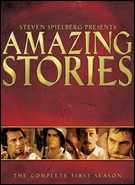
All Rise...Appellate Judge Mac McEntire would like to tell you his own amazing story. It's about that special weekend he spent with his pet turtle and a giant pair of rubber clown shoes. Actually, maybe we shouldn't let him tell that story. The ChargeAs one experience ends, another adventure begins. Opening StatementAlthough today's film fans like to debate the merits of the world's most successful filmmaker, during the mid-1980s Steven Spielberg could do no wrong. Still riding high off the unbelievable success of E.T.: The Extra-Terrestrial, Spielberg had his name attached as producer to almost every big family-friendly fantasy adventure to hit theaters. Always an idea man, Spielberg had so many script ideas in the air at one time, that instead of financing them all as features, he turned to television. Amazing Stories, named after the classic sci-fi magazine, was something of a novelty on TV in 1985. It had been several years since an anthology series had aired, and critics often dismissed them as failures, seeing as how they don't have regular characters for viewers to return to every week. But with Spielberg behind the wheel as executive producer, bolstered with movie-quality production values, how could it fail? Backed up by insane amounts of hype, the debut of Amazing Stories was huge, but viewer numbers dropped thereafter, just as the critics predicted. This would have meant cancellation for most series, but Spielberg and his team had enough clout to contract a deal with the network that not only guaranteed production of two full seasons, but also a guarantee that every episode would air. (This meant that during the second season, hardly any viewers and no promotion gave the creators the freedom to be as completely nut-ball insane as they wanted to be. But we'll deal with that once that season is released.) Now, years have passed and Amazing Stories has been given a new life on DVD. Want to find out what you were missing in the '80s? Facts of the CaseYou find yourself transported back in time, sitting around a campfire with a group of primitive cavemen. One elder member of the tribe starts to tell a story, and the others listen carefully, caught up in the power of his words. You then feel yourself lifted up into the air, carried along with the sparks from the fire. Now you're in an ancient temple, with a scroll unrolling in front of you. Moving upward still, you're in a gigantic library, perhaps the one lost at Alexandria. Books fly overhead like birds, with their covers serving as wings, leaving behind an enchanted, glitter-like substance as they disappear into the sky. Next, you travel down a dark path with a human skull floating in mid-air on one side of you, and a painting of a haunted house on the other. Just as a glowing green ghost emerges from the painting, you turn your head away in fear. The ghost dissipates when a magician's hat flies by, with cards and a wand spilling out from within. Then, you're looking at another book, one with an illustration of a knight in shining armor. He suddenly springs to life, swinging his sword furiously at an unseen enemy. The two swords clash in explosion of bright white light, out of which sours a gleaming silver spaceship. You're in outer space now, following this ship as it approaches the Earth. When you break through the Earth's atmosphere, you think you're hovering over the lights of a city at night, but it's actually a piece of computer circuitry, magnified to hundreds of times its original size. Electricity bursts through the computer's inner workings, and, with a flash, you're back where you began, listening to that caveman conclude his story. Only now, he's doing it on a television screen, and you're watching him in a suburban living room with a family of mixed ages. The elder patriarch—you assume he's a grandfather—turns to the rest of the family with a kindly look on his face that seems to say, "Well, wasn't that something?" What is this journey you have just taken? It's no more than the opening title sequence of Amazing Stories, and it sets the stage for what's to follow. The EvidenceSome strange lights appeared outside of my bedroom window last night. When I looked into them, I saw this episode list: • "Ghost Train"
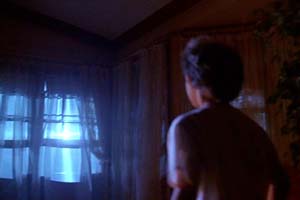
With this debut episode, Spielberg revisits the mood he created with Close Encounters of the Third
Kind. It starts off with a fractured family dynamic, and concludes with a
big, magical event, laying on thick the childlike sense of wonder that Spielberg
does so well. Like most episodes of Amazing Stories, it's easy to see how
this one could have been stretched into a feature-length movie. Whether it would
have been a good movie is wide open to debate, but getting it in this half-hour
size makes for some nice economic storytelling. When the entire plot builds up
to one major event at the end, it's best to get to the big moment directly, and
without a lot of unnecessary filler. But then, Spielberg will put that idea to
the test in another episode later on. • "The Main Attraction" This is a real "love it or hate it" episode. I personally think
it's hilarious, but I can still see why others are annoyed by it. John Scott
Clough's "popular guy" shtick gets old fast, I'll admit, but his skill
at physical comedy during the second half of the episode is a sight to see. Some
won't like this, or the overall "nerds vs. cool kids" stereotypes all
over the place, not to mention the '80s teen fashions run horribly amok, but I
say the over-the-top feel of the episode is what makes it so funny. And, hey,
this one was written by future animator Brad Bird, who also appears on screen as
a scientist. Bird would later win an Oscar for The Incredibles, so I think it's safe
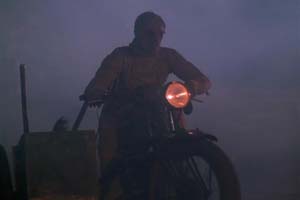
to say he knows a thing or two about storytelling. • "Alamo Jobe" One frustrating element to this episode is that there's really no
explanation of how or why Jobe is able to travel through time. Instead, he just
does. Although there are a few laughs, such as Jobe riding a bus and attempting
to use a pay phone, this is a mostly a fast-paced action-heavy episode, which
will likely remind viewers of the great police cars vs. bicycles chase from
E.T. This script was written by Joshua Brand and John Falsey, who were
supervising producers for the entire series, and who would later go on to create
another notable fantasy TV show, Northern Exposure. • "Mummy Daddy"
Here we have the creators making the most of a simple idea, and it works
brilliantly. Easily one of the most fun episodes of the series, it starts out
ludicrous and gets more and more ludicrous as it goes along, but it's just so
gleefully funny that you have no choice but to laugh, shake your head, and go
along for the ride. Not only is it hilarious, but it's helped by a raucous score
by Danny Elfman, and a nice "monster movie" sense of atmosphere thanks
to director William Dear (Harry and
the Hendersons). A must-see. • "The Mission" Just as "Ghost Train" is all build-up to a big event at the end of episode, so is "The Mission," except that "The Mission" is a special hour-long episode. This leaves Spielberg a lot of time to really develop the characters, and to wring every last bit of drama out of the situation. While it's easy to look at "Ghost Train" and see how it could be stretched out to feature length, it's similarly easy to look at "The Mission" and see how it could be pared down to a 30 minutes. The added length gives Spielberg some perhaps self-indulgent opportunities to pull at every heartstring possible. Although some will sneer at the various WWII clichés present, Spielberg and the actors make it all come together, so you get caught up in the story, even though you've seen this type of thing before. Siemaszko once again nails an "everyman" role, coming across as a
genuinely likable guy, one that you don't want to see get squished by a plane.
Costner always gets off on playing roguish heroes like the one here, and he does
a fine job. Instead of Sutherland's tough-guy Jack Bauer persona 24
viewers are familiar with, he adopts a geekier, bookish character in this
episode. Sutherland has played this quirky type a few other times in his career,
and he's just as good at this as he is an action hero. Add to this mix some
powerful visuals thanks to Spielberg and a handful of special effects that look
to me like prototypes for the ones later seen in Who Framed Roger Rabbit?
(another Spielberg production), and you've got an hour's worth of entertainment
well worth seeing, even if the script is rather lightweight. • "The Amazing Falsworth" Amazing Stories takes an unexpected turn into almost-noir suspense
territory with this episode. It's directed by Peter Hyams, a dark guy who's made
dark movies like The Relic and End of Days. Even when Hyams directed a
light and fluffy action movie with The
Musketeer he still made it look all dark. "Falsworth" is similarly
dark, both visually and in terms of subject matter. This intense and slightly
bloody outing will be jarring for those viewers who've settled into a groove of
family-friendly fantasy tales up to this point. Amazing Stories would go
on to dip its toe in the horror genre a few other times, but this is the show at
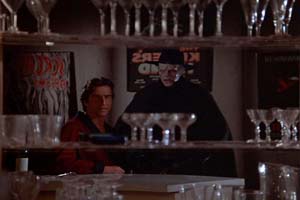
its darkest and most serious. • "Fine Tuning" And…the quality dips. First, there are dozen plot holes in this one. The timing of the aliens' arrival and our heroes' finding them all rely on coincidence. Furthermore, no one around Hollywood even reacts to these strange, obviously not-human beings wearing lame disguises trying to pass as human? And since when does a teen's bedroom in a suburban house have a perfect view of the Hollywood sign? And what's with the aliens' fake-looking hands? Don't even get me started on the whole "Polaroid" gag. Beyond the dozens of nitpicks, this episode, like many Amazing
Stories episodes, wants to combine the young and the old. It does this by
creating a kid-friendly Spielbergian fantasy, and then adding a bunch of
nostalgic throwbacks to the golden age of television and beyond. It works well
enough in other episodes, but not in "Fine Tuning," which seems to be
aimed at the very young, with its broad, nonsensical humor, but also for older
viewers, with its constant references to 1950s television, not to mention the
parade of old-time vaudevillians doing their routines for the aliens. It's the
show's first big misfire. Skip it. • "Mr. Magic" Sid Caesar is really likeable in this one, so that you really care about his
character and what he's going through. By the time the "amazing" part
of this Amazing Story shows up, it's almost a distraction, because we're so
invested in Caesar's character and what he's going through. That being said, the
special effects here are created with the best tech the '80s had to offer (with
a few strings here and there). • "Guilt Trip" This odd episode, in which emotions have magical human personas, is also one
of the jokier ones, with DeLuise constantly making wisecracks every chance he
gets. Fortunately, once his unconventional romance begins, he gets to show some
heart as well. Anderson does a variation on the "hot, but nice"
character she always plays, and she too gets a few moments to shine, even if the
romance between the two is a little rushed, mostly thanks to the show's
30-minute format. It's too bad this episode never got a follow-up. It would have
been interesting to see Durning bossing around some of the other living emotions
out there. • "Remote Control Man" Directed by Bob Clark (A
Christmas Story), this is another comedic episode, offering viewers a free
game of "spot the '80s-era celebrity." That being said, a lot of the
humor in the early half of the episode comes across as a little too
mean-spirited. Walter's Mitty-ish life is a played very broadly, and with a
little restraint the episode could have been funnier and a little less cruel. As
it is, this one's more a nutty piece of pop culture craziness than it is a
well-thought-out story. • "Santa '85" This is another one that, with a little tweaking, could have been stretched
into a feature film pretty easily. It's a simple concept—Santa sets off a
burglar alarm—and the creators run with it. Pat Hingle (Batman) plays the Sheriff who doesn't
believe in Christmas, offering a mean-but-not-frightening antagonist for good
old Saint Nick. A lot of Amazing Stories episodes are aimed for kids, and
this a better one of those. I mean, come one, it's Santa! • "Vanessa in the Garden" Spielberg gets a rare "written by" credit for this one, and
Eastwood gives it a similar look to his later film Midnight in the Garden of Good and Evil, even
if that one has a totally different subject matter. Harvey Keitel throws himself
into the role, as he always does, and his sadness at losing his wife is
palpable. Some might feel that the solution to his misery is too simplistic, but
with the story coming straight from Spielberg's pen, perhaps that's to be
expected. Overall, though, this is a dark and serious episode, book-ended by
some romance. There's certainly nothing else quite like it among the rest of the
Amazing Stories. • "The Sitter" What could have been a wild ride ends up too watered down for its own good.
I went into this one expecting an outrageous, supernatural take on Home Alone. Instead, despite a few
otherworldly high jinks, this one is mostly a sugary-sweet "message"
episode about understanding the differences of others and kids learning to use
the power of their own imaginations. It's not a bad episode, exactly; it just
doesn't have that extra Spielbergian touch to make it a standout. • "No Day at the Beach" Although this one was written by Mick Garris (Masters of Horror) and
directed by prolific TV director Lesli Linka Glatter (Twin Peaks),
Spielberg's style is all over it. This is a similar mood he would later take to
Saving Private Ryan, with its
dark WWII heroics. This episode is also filmed in gritty black and white,
recalling the look Spielberg would later use in Schindler's List. The relationship
between the guys is played fairly down-to-Earth, unlike the goofy comedy antics
in other episodes, and the battle might not be as elaborate or intense as the
opening of Saving Private Ryan, but it's plenty thrilling in its own
right, with gunshots and explosions everywhere. This episode also guest stars
Charlie Sheen (The Chase). He's barely in it, though, so try not to
blink. • "One for the Road" This exercise in dark comedy features James Cromwell (Babe) and Joe Pantoliano (The Matrix), as well as a bunch of other
character actors putting on their best Irish-by-way-of-New-York accents. It's
amusing enough, and reminds history buffs about the legends regarding Rasputin
and his alleged invulnerability. Like most episodes of Amazing Stories,
this one doesn't offer much in the way of explanation as to how the
"magical" part of the story happens—that's just the way it is.
In most cases, that's fine; you just go with the flow. But the ending of
"One for the Road" is just ambiguous enough that it leaves viewers
wondering just what powers were at work to make this happen. The deleted scene
for this episode offers a hint that, yes, there is a bigger picture to it all.
As it is, though, it leaves a lot of questions unanswered. • "Gather ye Acorns" This one is competently-made and all, with a performance full of quirks from
Mark Hamill, and an overall sense of warm nostalgia, which fits nicely with the
subject matter. What bothers me, though, is the "message" the episode
attempts to deliver. Jonathan is promised riches beyond galore if he never gives
up on his childhood, and yet he nonetheless spends the majority of his life in
destitution. Mother Nature Jr. talks on and on about the importance of
"being a dreamer," but does hanging onto all your old toys and comics
really count as "dreaming?" It's not like Jonathan is an artist with a
vision worth fighting for; instead, he sacrifices everything, his entire life,
for his collection. I'm a toy and comic book collector myself, so you'd think
this is the one episode that would really speak to me. Instead, there's
something about it that's just "off." Sure, there's a happy ending
(that's not really a spoiler; this is a Spielberg production, after all) but
when that happy ending comes at a cost of a lifetime of loneliness and misery, I
have to wonder if it's really that happy. And here's a thought, why can't
Jonathan keep all his childhood mementos and go to college and get a good job at
the same time? Why does it have to be an "either/or" situation? I
would have enjoyed this episode much more if I had a better handle on what it's
trying to say. • "Boo!" Yes, the plot here is remarkably similar to Beetlejuice, a movie that
would come along a few years later. Only this ghostly couple doesn't have a
"ghost with the most" to do their scaring for them. This one continues
the trend of bringing out old-time Hollywood legends to play roles, with veteran
comedians Eddie Bracken and Evelyn Keyes playing the kind, elderly ghost couple.
Watch Bracken's various facial reactions throughout the episode for a few bonus
laughs. Jim Carrey wishes his face was as elastic as Bracken's. Overall, Dante
plays this one strictly for laughs, but the various sex jokes seem a little out
of place in what is mostly a family-friendly series. Still, it's just quirky
enough to make it better than some of the other comedy episodes this season. • "Dorothy and Ben" Break out your Kleenex, because this one has nothing to do with special
effects, and everything to do with tugging at your heartstrings. We spend the
entire episode inside the hospital, with a little girl's life on the line, and a
kindly old man doing everything he can think of to bring her back from the
brink. Spielberg is often criticized for being overly sentimental in his work,
and although he didn't direct this one (that would be Thomas Carter, director of
Save the Last Dance), Spielberg's trademark sentimentality is here in full
force. Does it try too hard to elicit tears from viewers? That depends how close
each individual viewer feels to these characters. Fortunately, Joe Seneca
carries the episode nicely, and his performance alone saves the episode from
descending into pure cheese. • "Mirror, Mirror…"
During the opening credits, film geeks will be beside themselves when Martin
Scorsese's directing credit appears immediately following images of zombies
rising from the grave. That's right, fans, Marty is directing supernatural
horror. Although this one isn't quite as dark as "The Amazing
Falsworth," it's the season's other entry in the horror genre. Scorsese
makes the most of this one, wringing every bit of suspense he can out of the
story. Waterson's descent into madness and paranoia happens quickly, but that's
expected when every mirror shows someone trying to kill him. And, yes, that is
Tim Robbins (The Shawshank
Redemption) as the homicidal spirit in the mirror. This one has another
ambiguous ending, but in this case it works, giving just enough information for
viewers to debate among themselves about what's really happening here. • "Secret Cinema"
What…the…hell?!? This is one strange, twisted 30 minutes. Not only does it open the door to the freaked-out weirdness that would later dominate the second season of Amazing Stories, it also foreshadows where the media would later go, hinting at future works such as Peter Weir's The Truman Show and the current reality TV craze. Like The Truman Show, this one is better watched as a metaphor than as a sci-fi story. The overall dreamlike atmosphere of "Secret Cinema" is the best thing going for the episode, as it provides a disconnection from viewers' reality. This allows viewers to steep themselves in the metaphor and not worry about connecting the dots of the head-scratching narrative. Where did this episode come from? Turns out it's a remake. Writer-director
Paul Bartel (Eating Raoul) based
this entire episode on his own 1968 short film of the same name. If any episode
in this set could benefit from more bonus features, it's this one. How did a,
let's face it, weirdo like Bartel get involved with Amazing Stories? How
was it decided to remake his original Secret Cinema? Just what was going
through Bartel's head when he dreamed up this craziness? As it is now, all these
questions go unanswered. • "Hell Toupee" Of all the comedy episodes in this season, this is one of the funniest.
Aside from the constant bald jokes, we get an evil hairpiece sneaking around the
sets like some sort of fashionable rodent, not to mention the goofy antics of
the world's most hapless right-out-of-college lawyer. There's no moralizing
here, and there's no magical sense of wonder. This one's strictly about the
laughs. Also, the effects team deserves much praise for bringing the titular
toupee to life. I can only imagine how much work went into making something so
lifeless appear so lifelike. • "The Doll" Lithgow won an Emmy for his performance in this one, and it's a popular
favorite among Amazing Stories fans. So, therefore, it pains me to be one
who goes against the grain, because I fail to see what all the excitement is
about. The majority of the episode is just Lithgow talking to a girl's doll.
Many might see this as childlike whimsy, but instead it struck me as just a lot
of whining. Add to that the predictable ending, and the whole affair strikes me
as less than impressive. But, as I said, mine isn't the opinion of most fans, so
if you've enjoyed the series up to this point, you'll likely enjoy this one a
lot more than I did. • "One for the Books" Although this is one of the less interesting episodes, it gets bonus points
for offering a partial explanation as to how and why this week's magical event
happens, thanks to an out-of-nowhere surprise at the end. Beyond that, the
script is fairly routine, with a janitor getting unnaturally smarter and
smarter, and his wife gets more and more worried. Again, the ending saves it
from being an utter bore, but it's still not up there with the series' best. • "Grandpa's Ghost" Here's another heartbreaker episode, carefully calculated to elicit tears
from viewers at just the right moments. First we see the family react to the
loss of a loved one right after it happens, and then we're with them through the
long, difficult process of letting go. Even after the titular ghost appears,
this remains a weepy, melancholy episode. It seems a strange choice to close the
season, although I find it interesting that the season premiere and the season
finale both deal with grandsons and their grandfathers. Overall, Amazing Stories collected together a wide variety of talented folks, both up and comers as well as Hollywood old-timers, in front of the camera and behind, all giving it their best. Therefore, it's a crushing disappointment that the only extras we get are a handful of deleted scenes. Most of these are brief, and wouldn't have contributed much to their episodes, with the exception of the one from "One for the Road." On the tech side of things, the video is soft, but with little defects. The 5.1 audio is solid, making the most of the music and the sound effects during the few action scenes. The Rebuttal WitnessesIf you like Spielberg, you'll like this. But if you think the guy's veins are flowing with nothing but pure sap, you might want to think twice. Closing StatementEven though it wasn't the highest-rated show on TV, which is what both the networks and the creators hoped for, it's well worth watching. Sure, some episodes are standouts while others aren't that exciting, but, when taken as a whole, Amazing Stories remains a solid piece of fantasy filmmaking, and a landmark of '80s nostalgia. Now, bring on the insanity that is season two! The VerdictSteven Spielberg and everyone else involved are not guilty and free to go. They were just telling some stories, after all. Give us your feedback!Did we give Amazing Stories: The Complete First Season a fair trial? yes / no Other Reviews You Might Enjoy
• Arabian Nights (1999) |
|
DVD | Blu-ray | Upcoming DVD Releases | About | Staff | Jobs | Contact | Subscribe | | Privacy Policy
Review content copyright © 2006 Mac McEntire; Site design and review layout copyright © 2015 Verdict Partners LLC. All rights reserved.