| Home | About | Blu-ray | DVD Reviews | Upcoming DVD Releases | Contest | Podcasts | Judges | Jury Room | Contact |
|
|
|
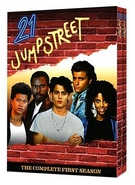
All Rise...Judge David Johnson says "your friends will be there when your back is to the wall" and that "you'll find you need them cause there's no one else to call." Editor's NoteOur reviews of 21 Jump Street: The Complete Second Season (published April 6th, 2005), 21 Jump Street: The Complete Third Season (published September 28th, 2005), 21 Jump Street: The Complete Fourth Season (published December 21st, 2005), 21 Jump Street: The Complete Fifth Season (published April 12th, 2006), 21 Jump Street (2012) (published June 29th, 2012), and 21 Jump Street: The Complete Series (published August 18th, 2010) are also available. The ChargeI said jump!!! Down on Jump Street! Opening StatementBefore Fox became the home to The Simpsons, COPS, and an onslaught of moronic reality shows, it was a struggling network somewhere on the dark side of the UHF band. But this, its flagship show, managed to break through and, simultaneously, act as the breeding ground for scores of familiar faces, including one actor who would later find superstardom. 21 Jump Street stormed onto the TV landscape in 1987 and brought with it an amalgam of gravity-defying coiffures, teenage angst, gunplay, and Tiger Beat coverboys. Now, 17 years later, the crew of the Jump Street chapel is going undercover once more, thanks to DVD—but is this a series powered mainly by nostalgia, and the novelty of a pre-phenom Johnny Depp, rather than actual quality? Facts of the CaseThe Jump Street program was a radical approach to preemptive law enforcement. Its goal: to intercept criminals in their gestation stage, as high school students. To do so would require the insertion of undercover, young-looking police officers posing as teens into local high schools. As such, crimes were generally of the After-School Special variety, involving drugs, extortion, gang violence, and the rest of the happiness that made high school life such a fun period of existence for most people. 21 Jump Street rolled into town in 1987 and cruised for five seasons. With Johnny Depp (Pirates of the Caribbean) as the headliner, the show was a success for Fox, and became one of the frontrunners of "edgy" television. Now the series brings its hybrid of high school antics and cop drama to your living room, with this presentation of the 13-episode first season. Here are the players: Officer Tom Hanson (Depp): This play-by-the-book recent Academy grad found himself unable to succeed as a baby-faced cop on the streets. Faced with placement at a desk position until his features aged, he chose a new assignment—as one of the elite cops in a new high school undercover program. Officer Doug Penhall (Peter Deluise): The stocky comic relief, Penhall supplies the tension-lightening wisecracks. Officer Judy Hoffs (Holly Robinson): Perennial ABC TGIF-er Robinson gets her start as the token female in the Jump Street precinct, and as the winner for "Largest Mass of Hair on Prime Time." Officer H.T. Ioki (Dustin Nguyen): The more "in-the-background" player, Ioki mainly plays second fiddle to the exploits of Hanson and Penhall, breaking free once in a while to showcase his martial arts skills. Captain Richard Jenko (Frederic Forrest): The original head of the squad, Captain Jenko was "killed by a drunk driver" (translation: creative conflicts with the producers) after the sixth episode. Jenko was an easy-going ex-hippie who was later replaced by… Captain Adam Fuller (Stephen Williams): Fuller was everything Jenko wasn't: disciplined, surly, organized and African-American. And he had sweet-ass sunglasses. The Evidence21 Jump Street will always hold a special place in my heart. It was the first show where I heard the word "ass" used. Talk about edgy. So I was a little apprehensive about taking a look at the show some 17 years later, and finding out how unkind the years had been. While certainly nostalgic—dig Ioki's bitchin' outfits!—the show surprised this jaded, older version of Dave: it is indeed pretty good. However, this being the first season, it took some time to find its footing. And while future episodes would be considerably more "hard-hitting," this set features a solid collection of old-school high school malfeasance and the baby-faced cops that combat it. It is obvious to me when the show started to pick up steam. By no coincidence, it was right after the big change of captains. While Frederic Forrest is an appealing actor, his work on 21 Jump Street was irritating; it couldn't be soon enough to jettison his Captain Jenko. With the addition of Fuller, the show took a dramatic new turn, pumping up the gravity of the situations while moving toward more of a cop-show mentality. Under Jenko's command, the Jump Street chapel housed only the four undercover cops and the captain, who yukked it up and played baseball with their police batons more than anything else; it was less a precinct and more a treehouse. Fuller's addition—love it or hate it—brought the show more legitimacy as a cop show, and, to me, markedly improved it. A show like this would require much suspension of disbelief, but the most blatant bending of reality comes from the show's premise. There must be an infinite number of schools in Jump Street's jurisdiction for the same four kids to go undercover and not be spotted. You would think word would spread about a new police initiative placing young-looking narcs in schools. Oh well, maybe news didn't travel as fast without blogs and Instant Messenger. Anyway, let's jump! to the episodes: • Pilot (Parts 1 and 2) • America, What a Town • Don't Pet the Teacher • My Future's So Bright I Gotta Wear Shades • The Worst Night of Your Life • Gotta Finish the Riff • Bad Influence • Blindsided • Next Generation • Low and Away • 16 Blown to 35 • Mean Streets and Pastel Houses There is little Anchor Bay can do with the audio/visual transfer here. The show is presented in its original 1.33:1 aspect ratio. As I mentioned before, the first few episodes look far worse than the later batch. However, all of them suffer from varying degrees of pixellation, from atrocious to mildly okay. The 2.0 mix doesn't suck, but don't expect much. New interviews with creator Stephen J. Cannell (that guy at the typewriter at the end of every episode that grabs the piece of paper and throws it into the air and it becomes a drawing), Holly Robinson Peete, Dustin Nguyen, and Steven Williams offer insight into the particular characters. Fun Fact! Robinson sings the enigmatic title song, with Depp and Deluise providing the background vocals! The niftiest extra is an animated, anecdotal commentary by Deluise. Want the Depp scoop? Or the inside info on the mid-season captain swap? He's got it. It's a good track and Deluise is verbose; he's even cut off mid-sentence at the end of the episode. Closing StatementIn the end, I'd say 21 Jump Street holds up against the unforgiving test of time. The music and the fashions are laughable, but the season taken as a whole—the uneven first half and reality-based idiosyncrasies aside—transcends the realm of novelty nostalgia and can be considered as a viable, decent show. The VerdictGuilty of awful hair, but acquitted of all other charges. Give us your feedback!Did we give 21 Jump Street: The Complete First Season a fair trial? yes / no Other Reviews You Might Enjoy
• The Europeans |
|
DVD | Blu-ray | Upcoming DVD Releases | About | Staff | Jobs | Contact | Subscribe | | Privacy Policy
Review content copyright © 2004 David Johnson; Site design and review layout copyright © 2015 Verdict Partners LLC. All rights reserved.