Punishment: DVD Verdict interviews Steven Grant, comic book writer
Judge David Gutierrez
January 30th, 2006
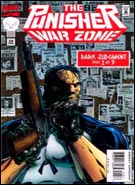 Steven Grant knows crime and punishment. Most importantly, he knows how to write it. Partnered with artist Mike Zeck, Grant wrote the monumentally successful The Punisher mini-series, a book that created a mania around a former C-list character. Since the mini-series, the Punisher went on to become the main character in a number of series, video games, and two major motion pictures.
Now living in Nevada, Grant continues writing comic books for a number of companies, as well as writing prose and screenplays. Grant took some time off from his schedule to answer a series of questions with DVD Verdict staff writer David M. Gutiérrez via e-mail.
DG: How did you end up working on The Punisher?
SG: It wasn't easy. Actually, it started in 1976, when I was at a comics convention in New York City over Christmas break. I was in the middle of college then. I was staying with a guy named Duffy Vohland, who was then working in Marvel's production department. (He has since died, sadly.) I wasn't prepared to, and hadn't even considered it, but Duffy exhorted me to pitch to Marvel and got me an interview with then-editor-in-chief Marv Wolfman, who I've since become pretty good friends with and who doesn't remember it at all. I sat at Duffy's typewriter for a day and knocked out three ideas; one involved the Black Knight and one was the Punisher, since those were characters I liked that not much was being done with then. Except the Punisher was being used at the time, before I knew it, as the lead character in a black and white magazine. Archie Goodwin was writing it. Marv pretty much just said, well, they're using them, and that was that. I didn't really expect Marvel to hire me as a writer then, so I wasn't terribly disappointed, since I still had to finish college and this was when people in comics were concentrated around New York rather than spread all over like they are now. A couple years later I did start writing for Marvel after another friend, Roger Stern, became an editor there and asked me for something. A year after that, '79 I think, Marvel started talking about doing mini-series, something I'd been pushing for a long time. I started pushing a Punisher mini-series then, but nobody was interested. The Punisher wasn't considered a character anyone would care about. So every time a new editor would come in, I'd run the pitch -- it was essentially the same pitch as I'd hit Marv with back when -- and they'd just sort of look at me and eventually mumble no, and that'd be the end of it. Along the way, I did a Marvel Team-Up with Mike Zeck but didn't really have any personal contact with him due to it, we met in the offices once or twice. In the meantime, Mike became artist on Marvel's first big crossover series, Secret Wars, which, though he hated drawing it, made him a valuable commodity in the offices. At the time, editors were thinking in terms of "stables," talent that worked for them alone.
A new editor, Carl Potts, was looking for projects and I wanted to do the Punisher, so I got the bright idea of asking Mike, who had just finished Secret Wars, if he wanted to draw it, since I thought his style would be perfect for the character. I called him, he remembered me, and when I brought up the Punisher he just started laughing; he and his friend and inker John Beatty had been sitting in his living room trying to figure out a project to do next and not seconds before I called one of them had said, "Hey, how about The Punisher?" We tossed the package at Carl, who snapped it up (though I've always suspected his main objective was to get Mike into his stable, but I don't really care), and that was pretty much it. Carl was very strong supporter of the book, over much objection from Marvel management, which ended up telling him okay, he could do a Punisher mini if he wanted, but he bore responsibility for it. And that was that. Nine or so years in the making. What we ended up with was considerably different plotwise from what I began with, but the underlying concept never changed.
DG:How did your initial plot for The Punisher mini-series change from its initial concept? What was it?
SG:Remember, the initial concept came about 10 years earlier. At that point, the Punisher hadn't been packed off to prison, so that had to become our starting point, to get him out of prison. We didn't beat continuity to death, just started with him being dumped in a place where he was totally surrounded by enemies. It seemed a good way to introduce him, his gimmick, his character and his toughness for those who were unfamiliar with him. As I recall, and it's been awhile since I thought about it, the original concept was simply to have him in an all out gang war with the Mob. That didn't change so much as mutate, and a lot more elements were added in: there was the organization who decided to recruit and support him, the non criminal kid hunting the Punisher to avenge the death of his mobster father, things like that. The character was fleshed out more philosophically and became a much darker character spiritually than he had been to that point. (Though not as dark as in Return to Big Nothing.) There's a big difference between conceiving an idea and developing it, and that's basically where the changes came in, while developing it. Conception is usually a burst of mad inspiration, but it's only in development that you really figure out both the limitations and the previously unseen possibilities of the concept, and you have to work with all of that.
DG:How did The Punisher mini-series go from four issues to five and how did Jo Duffy factor into writing the final issue?
SG:Five issues, right. Originally I wanted to both begin and end it with a double-sized issue, but Marvel decided the latter wasn't cost effective, so I re-broke it down into five issues. It was always meant to be five issues. But mainstream comics had only just begun doing mini-series, and then four issues was the norm. We read Marvel production the riot act after they put a four issue mini-series on the first issue. They got it right, under duress, on the second issue, then reverted on the third and fourth. Mike and I had a bet that the fifth issue banner would read "#5 IN A FOUR-ISSUE MINI-SERIES." I wasn't there for it, but I was told it almost did, and they caught it just as the book was leaving for the printer.
As for the fifth issue, that's a scab that's no longer worth picking. The short version is that originally the book wasn't on schedule and we were being given all the time we wanted to finish it. Then some other book dropped out of the schedule and marketing went running through all the editorial departments looking for something to fill the hole with. Over the editor's objections, The Punisher mini-series was thrown in there, and suddenly we were six weeks late. Mike was very lovingly penciling the book, and he's not all that quick a penciler to begin with. As a result, issues two through four slipping further and further behind, and retailers and readers were screaming for the book. Mike was removed as artist on the final issue, and I went with him, as I felt it was our project, a joint effort, and if one of us wasn't there the other wouldn't stay either. We actually made that pact before we started work on the project; I always figured it was me who'd get thrown off if anyone was. In retrospect it probably wasn't my swiftest career move, but what are you going to do? Jo was brought in to dialogue over my plot, which had already been done. Typical comics experience, really.
DG:What did you find appealing about the character -- especially considering his second/third tier status at the time?
SG:Those are always the best to start with if you're trying to make a name for yourself. Anyone can write a passable Spider-Man story. Nobody even bats an eye at that. But create something successful from a character nobody thought was worth anything. The Punisher at the time was considered a third-rate clown at Marvel. I had one of the marketing people tell me, a week before our first issue came out, that Marvel's readers aren't interested in the adventures of a psychotic murderer. I just said okay. But I'd always liked the character. I liked his real moral ambiguity, all his glaring self-contradictions. I liked his surety of purpose, even if he was wrong. I always viewed the Punisher as a villain. Certainly he's a criminal, he breaks the law regularly without thinking twice about it. He's a fascinating character. And I wanted to write crime comics, I wanted to write a story about a villain. Villains are much more interesting than heroes, particularly heroes as they generally are in comic books. I wanted to do a style of story and narrative that you didn't see in Marvel Comics (at the time), very terse, with a particularly philosophical viewpoint. Mix all that together and it was a character I couldn't walk away from until I'd done something with him.
DG:What sort of editorial barriers did you meet in trying to make a "villain" a star of his own mini? Did you have take a stance that he's a hero since he's killing villains?
SG:Well, I never told them that was my take on the character, that was between me and Mike. Telling Marvel I viewed him as a villain would have been asking for trouble. So I was perfectly willing to let them view him as the hero, which he was, by default. And he is a hero, too. He's sacrificing himself doing a job that had to be done but there was no one else to do it. That's a heroic stance. Except that he was doing very bad things. That's where the moral ambiguity comes in. The Punisher doesn't think he's doing very bad things, but from our perspective he's obviously making himself judge, jury and executioner. Of course, the conceit of the character is that he never kills anyone who isn't guilty. But that's obviously a moral convenience.
DG:Was the "street-level" aspect of the character appealing to you?
SG:I liked that he didn't have superpowers or any nonsense like that. It gave him an urgency, left him with all the normal frailties and vulnerabilities we're all prey to. In many ways, he's much easier to identify with than many comic book characters, which amused me because, like I said, he behaves like a villain.
DG:What did you think of the two The Punisher films?
SG:I've only seen bits and pieces of the first one. Dolph Lundgren wasn't my idea of the Punisher, and the changes they made seemed designed to bland the character out completely, which I gather was the case. I liked a lot of things about the second, and thought Tom Jane was really good, but he really wasn't the Punisher until the end of it, the rest of it is origin story, his transition to the character. The second film had annoying plot weaknesses, and Travolta made an empty villain but it wasn't really his fault since it was an "eh" character who just folded in the clinch, which surprised me. Jane was good enough, though, and so much in character by the end of it, that I wouldn't mind seeing him in a Punisher film where he's the Punisher throughout. They made one crucial character mistake in both of them, shifting him from being a soldier to being a cop in the first and FBI agent in the second. While I can understand Vietnam's a bit dated, the military background is crucial because that's how he operates. I once wrote that he's a point man with no platoon coming up behind him. Take that away, the whole idea of him being a soldier in a war he's fighting solo, and you lose something.
DG: Did you ever see the Punisher becoming this successful? How does it feel being part of the team responsible for a "definitive" version of the character?
SG:I always knew he had the potential to be a big character. Similar men's adventure characters were very big in the trade paperback market, which meant he was potentially a tool for cracking that market, if nothing else. Comics companies just don't do enough to go after new markets. And by the time I got the mini-series off the ground, films like Rambo were very hot. So I definitely knew there'd be a market for the character, if Marvel would just play him straight. As for being "definitive," it was sort of hard not to be. The basics of the character aren't all that complex; he's a far more straightforward character than is common in comics. All you have to do to be definitive with the Punisher is figure out the logic of the character, play fair with it, and run with it. If you can get into the Punisher's head, the character basically writes himself. I suspect pretty much anyone willing to go to the trouble could've done it, but I was the one who was willing to go to the trouble.
DG:What brought you back to write the Punisher in the graphic novel Return to Big Nothing?
SG:I was living in Los Angeles by then. I think it was Mike who heard that Epic would start producing graphic novels featuring the mainstream Marvel characters, with a slightly more adult tone. I don't recall if Mike knew Archie Goodwin, who ran Epic, then or not, but I knew him fairly well and used to hang out in the Epic offices a lot when I lived in New York and I'd done some writing for him. A The Punisher graphic novel freed from the restraints of Marvel proper sounded like a good idea to me, sort of a redemption after the mini-series ended, so I called Archie to feel him out. He was very excited about it, and that was pretty much that. I know there was some resistance from Marvel, but Archie, who was usually very affable and mild-mannered, could turn into a pit bull when he really wanted something, and he wanted our The Punisher graphic novel. We knew it was probably the last time we'd do the character, so then, as opposed to the mini-series, we pretty consciously did set out to do the definitive version of the character. My views on the character had also evolved considerably, in those ways that only come from actual experience working with the character. I still think it's one of the best things Mike or I ever did. There are lines from the graphic novel that, amusingly, pop up in the recent Punisher film. For many years, we tried getting Marvel to let us do a third Punisher project, a sort of bookend that would end with the character's death, but they didn't want anything to do with it. If Archie had stayed with the company, I think we probably could have done it, though a story featuring the actual death of a big franchise character will always be a hard sell.
DG:You came back to the character again later. How was it being involved in what supposed to be his gimmick death during the "Suicide Run" arc going through all of the books in the '90s?
SG:Unpleasant. First, the Punisher himself wasn't in much of it, and we were focusing on a slew of wannabee Punishers, which I thought was a bad idea and derivative of what they had done with Superman just before that. You don't have what's supposed to be an edgy character imitate Superman, sorry. The idea was to have him "killed" at the end and go underground, operating from the anonymity of the shadows, which, in theory, isn't a bad idea, but he had "died" so many times by that point I didn't see anyone in his world (or ours) buying it for a second, and, regardless, I knew Marvel would never let it last, which they didn't. But that was what Marvel wanted; when you're work for hire you do your best within the parameters the client sets down. There was one issue in there I really loved, where I had a focal character in the series get very nearly beaten to death. I wanted to have him beaten to death, but that was a bit much for Marvel. I wanted to make it very clear that this wasn't a fun world to be in, it was a very brutal, dangerous world, and anyone setting out to imitate the Punisher was really risking his life. And I liked a character I introduced in it, a renegade Mob scion named Jimmy Pierce, who ends up being recruited by his family against his will to become "the new Punisher" as a smokescreen to wipe out their competition, and I did a few backup stories with him after "Suicide Run" ended. But we sat down in a conference and mapped out the whole "Suicide Run" thing -- and then the other writers kept arbitrarily changing elements or adding new ones as they went along and the thing kept getting wildly behind or off-point and it got to the point where I felt like I was spending all my time forcing the story back on track. I didn't think the end result worked very well at all. But I still like some of the things I managed to do in it, though when writers say things like that it rarely speaks well of the results.
DG:Despite the critical and commercial success of The Punisher, many consider Badlands and Damned as your best works to date. Tell us a little about them.
SG:They really both spun off of The Punisher in various ways. Mainly both are crime novels, doing things I wanted to do with the Punisher but which just wouldn't fit. I wrote The Punisher originally to move away from the superhero world, and I did a self-created series called Whisper that moved even further away, it was really a very political crime series where the heroine wore a costume, and eventually I tried to get rid of the costume. Then I did Badlands, a historical crime novel that extended certain themes from Whisper; it was set in 1963 and starred the man who really killed John Kennedy. It was rife with Kennedy assassination conspiracy lore. (Funny, now that I think about it, that I should be answering this question on the anniversary of his assassination, and a royalty check for Badlands arrived on the same day. Life's little weirdnesses.) It was very well received and the first thing I ever wrote that I did absolutely to my own tastes. I don't know who else cites it as my best work, but it's still my personal favorite. Unfortunately, it came out at a time when every company in the business was going whole hog back into superheroes, so I wasn't able to capitalize on it and do the other crime comics I wanted to do. That happened with Damned, a crime novel I did with my Punisher collaborator Mike Zeck. It was a more standard crime story: a paroled killer breaks parole to ferry a deathbed message from his old cellmate, which lands him in the middle of lethal underworld intrigue in a strange, corrupt city. It was a little fable about honor among thieves -- our hero, Mick Thorne, is the last honorable man. Again, it was well received by those who read it, but it wasn't very well publicized. In a way that worked out in our favor; Mike and I added a six page coda for the trade paperback collection a couple years ago -- it takes place four years after the end of the story -- that completely spins the story in an unexpected direction. It was a lot of fun. I'd like to do lots of crime comics, but it's hard convincing publishers they'd be profitable, since most publishers still market solely to the superhero audience, so they probably wouldn't be. I think you need a critical mass of them, and until that arrives it'll be a struggle to get an audience for them.
DG:What's your approach to writing? You've described using a decaying elliptical approach to your characters' lives and interactions with one another.
SG:I don't know that I have a specific approach. I think about it a lot when I'm not writing, but I tend to be pretty pragmatic when I am writing. I'd rather have the approach fit the story than try to force a story to fit an approach. That said, I find I have an affinity for a story structure that doesn't quite fit the traditional three-act structure. I basically throw in as many characters as the story can bear and set them in decaying elliptical orbits around each other, so that as things progress, characters have different relationships with other characters, and everything intertwines, until, by the end, the orbits have all decayed to the point that characters who have survived to that point all end up at the same place at the same time. That's when the shooting starts, and whoever's the last one standing when it stops becomes the hero of the story by default. I don't get to use it very often. The only other writer I've ever run across who wrote that way was the crime novelist Eugene Izzi.
DG:What is it about the crime genre that keeps, for lack of a better phrase, pulling you back in?
SG: I like the underlying humanity of it -- ultimately, it's about people coming face to face with their limitations and mortality, and how they cope with that -- and I like the opportunity for social and political critique that it allows. An awful lot of things can be addressed in crime fiction, but it keeps it on a human scale, and the spectrum of possible responses to situations is much broader than in many other genres. There are fewer predetermined expectations of characters.
DG: If the Punisher's a villain, how do you perceive the "hero" in film and fiction? Your friend and fellow writer, Howard Chaykin, once said he doesn't trust heroes -- they'll just end up getting him killed.
SG: It depends what you mean by hero. I'm not crazy about guys who throw themselves in harm's way without thinking about possible better solutions to the problem, and I think that's what Howard's talking about. We have a fantasy in our culture -- comics are very big on this -- of the "steady-state hero," someone whose natural condition is heroism. But no one's is. Someone who might do something very heroic under a particular set of circumstances could very easily respond to other circumstances unheroically. Men capable of taking a bullet for a total stranger may very well beat their wives. Heroism exists at the interstice of personality and situation; you don't just wake up in the morning and announce, "Today I'm going to be a hero!" People often make a lot of noise about "heroes" turning out to have "feet of clay," but so what? Everyone has feet of clay sometimes.
DG:What's a good starter book as an introduction to the Steven Grant library?
SG:Either Badlands, currently available from AiT/PlanetLar Books; Damned, from Cyberosia; or The Punisher: Return to Big Nothing, from Marvel. But since I'm not sure Damned is currently in print and I know Big Nothing isn't, I guess Badlands wins by default.
DG:Any projects you'd like to tell us about?
SG:I'm in a funny situation at the moment. I'm working on all kinds of things but there's not much I can talk about. Lots of media projects, in various capacities. I'm currently adapting my Mortal Souls into a screenplay and will be adapting My Flesh Is Cool after that, and I'm involved with a couple other movie projects and possibly a TV project as well. But, you know, it's Hollywood, anything that's not on the screen can easily fall apart. I've been writing some short prose stories, one of which recently surfaced in Kolchak: The Night Stalker Chronicles, from Moonstone Books. I worked on a teen sports manga" that should be coming out in the spring; I'm not sure who the publisher is because I worked through a packager. I'm adapting an unsold screenplay (not mine) into a graphic novel for a producer who thinks it'll be an easier movie sell that way, and he's probably right; it's a good screenplay but it really needs to be visualized to "get" it. All kinds of projects like that. I wrote a CSI mini-series for Idea+Design Works that just got issued in trade paperback, and just signed up for a new one for next summer. I've got a major project in the works for Boom! Studios for the summer. I'm in talks with all sorts of editors about all sorts of projects, but it's really not wise to talk about them. Then there's the Permanent Damage column, of course, and I write a column now in most issues of The Comics Journal called "Fun! Fun! Fun!" And Moonstone's also putting out a graphic novel fairly soon called Pat Novak for Hire, very loosely based on a '40s radio detective show, which I've mutilated horribly but I couldn't help myself. I find it hard to keep track of all of it; once the work has been sent I'm on to the next thing and forget all about what I've done. But I'm trying to be more ambitious in my newer work.
DG:You're a film buff. What's your favorite film?
SG: Touch of Evil. But there's a very close dozen-way tie for second.
DG:This being a DVD site, I have to ask -- what's in your DVD player?
SG:Right now? Episodes of the Christopher Eccleston Dr. Who. Oh, and Blackadder's Christmas Carol, which I watch every year at Christmas. I'm looking forward to the expanded Sin City that just came out.
DG:What are you currently reading?
SG:I don't have a lot of time to read these days. Magazines, mostly, and a lot of computer manuals since I just rebuilt a computer and now I'm trying to rebuild and customize all my software. Though someone just sent me a book for Christmas, I don't know what it is yet but it'll be next on my reading list, as soon at it gets unwrapped. The last book I read was Greg Rucka's novel Private Wars, to review it.ra
DG:I know you're no stranger to music. What are you listening to these days?
SG:That's more like what am I not listening to, I think the list would be shorter. I'm very eclectic. I don't have any particular obsession at the moment, but lately I've been listening to Dave Alvin (probably my current favorite), Bob Dylan, Can, Richard Thompson, Elvis Costello, Dan Hicks, Diamanda Galas, The Kinks, Shane McGowan, early King Crimson. I listen to the Killers relentlessly when driving, and The Black Eyed Peas are very good, very funny. I stumbled across some CDs by the Third Ear Band recently, so lately I've been getting back into them as well. But that's really only scratching the surface. I listen to all kinds of things.


