| Home | About | Blu-ray | DVD Reviews | Upcoming DVD Releases | Contest | Podcasts | Judges | Jury Room | Contact |
|
|
|
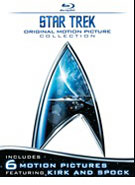
All Rise...Who wants to sit around the campfire and sing "Row, Row, Row Your Boat" with Judge Clark Douglas? Editor's NoteOur reviews of Star Trek: The Motion Picture (published November 12th, 2001), Star Trek II: The Wrath Of Khan (published July 19th, 2000), Star Trek II: The Wrath Of Khan: Director's Edition (published September 16th, 2002), Star Trek III: The Search For Spock (published April 19th, 2000), Star Trek III: The Search For Spock: Collector's Edition (published November 12th, 2002), Star Trek IV: The Voyage Home (published March 10th, 2000), Star Trek IV: The Voyage Home: Collector's Edition (published March 4th, 2003), Star Trek V: The Final Frontier: Collector's Edition (published October 21st, 2003), Star Trek VI: The Undiscovered Country (published December 4th, 2000), Star Trek VI: The Undiscovered Country: Collector's Edition (published February 13th, 2004), and Star Trek: The Original Motion Picture Collection (published October 19th, 2009) are also available. The ChargeIn which our beloved characters confront an alien menace, battle an old enemy, find an old friend, travel back in time, go searching for god and attempt to make peace with the Klingons. Opening StatementThe first six Star Trek theatrical films come to Blu-ray for the very first time. Is this new set a must-own or should potential buyers wait for an inevitable double-dip down the road? Facts of the CaseIn Star Trek: The Motion Picture, some sort of incredibly powerful alien force is headed towards earth. Whatever this thing is has all ready destroyed allied and enemy ships without any trouble whatsoever. Admiral James T. Kirk (William Shatner, Boston Legal) determines to take the situation into his own hands, taking control of the Enterprise once again and bringing his original crew with him. Star Trek II: The Wrath of Khan shows us an Admiral Kirk suffering from a mid-life crisis. He is feeling the need to return to action once again. He finds the life of an admiral dull and tedious; he yearns for nothing more than to be helming the Enterprise again. He gets more than he ever hoped for when the deadly Khan (Ricardo Montalban, Escape from the Planet of the Apes) returns with a vengeance. Is the entire crew of the Enterprise doomed? Star Trek III: The Search for Spock picks up precisely where the previous film left off. In the wake of their devastating encounter with Khan, Kirk and the crew of the Enterprise head home to earth. However, when they arrive, something very strange happens. Strange events begin to take place that all seem to point to the same thing: Spock (Leonard Nimoy, Invasion of the Body Snatchers) may very well still be alive somewhere. The crew of the Enterprise eventually finds Spock, but when they do, he is not as they remembered him. Star Trek IV: The Voyage Home finds the crew of the Enterprise in a bit of trouble. Klingon leaders are demanding that the "reckless" captain be imprisoned and all of the crew members may be in some sort of trouble for breaking regulations in the previous film. Thankfully for the crew (if not humanity), a crisis has come up that demands their attention. A strange probe from outer space is transmitting an unusual noise to earth: the call of a humpback whale. Unfortunately, the whales have been extinct since the 21st Century, meaning that nothing can respond to the probe's calls. If a whale is not found, the probe will destroy the world. In a desperate attempt to save the world, Kirk, Spock, Bones and the other members of the U.S.S. Enterprise (forced to use a beat-up Klingon vessel in this adventure) head back to 1987 in search of humpback whales. In Star Trek V: The Final Frontier, everyone is simply trying to relax and enjoy some nice shore leave. Alas, the pleasant vacation is interrupted when the crew of the Enterprise is called upon to rescue some hostages who have been kidnapped by a renegade Vulcan (Laurence Luckinbill). Little do they know that they will soon become involved in a reckless mission to find The Almighty himself. In Star Trek VI: The Undiscovered Country, Captain Kirk finds himself in a particularly unpleasant situation. The relationship between the Federation and the Klingons has become particularly tense, and Kirk has been called upon to help keep the peace. Of course, Kirk has long held a grudge towards the Klingons due to the fact that they were responsible for the death of his son, and has no passionate desire to keep the peace. When a Klingon vessel is seemingly attacked by the Enterprise, the Klingons are quick to point a finger at Kirk. Can war be avoided? The EvidenceLet's tackle these one at a time, shall we? Star Trek: The Motion Picture The transfers on this set vary somewhat drastically, but I was generally impressed with this theatrical version of Star Trek: The Motion Picture. The image here is crisp and clean, offering the rich visuals with depth and clarity. There are very few scratches or flecks here. They appear on rare occasions, but aren't any sort of significant problem. There is some minor evidence of DNR, but it's also fairly subdued and there's very little noticeable grain throughout the film (with the exception of a few special effects-heavy sequences). Blacks are nice and deep and flesh tones are accurate. Some of the images seem rather soft, though these scenes appear to have been shot that way in the first place. I was very pleased with the 7.1 audio, which allows Jerry Goldsmith's classic score to dominate with booming resonance. The music here sounds simply spectacular, which is more or less a requirement for this film. More than any other Trek installment, this one cuts back on sound design and dialogue and often lets Goldsmith's score carry the film. Tell me your spine doesn't tingle when you hear that magnificent blaster beam instrument created for the film. Each Blu-ray disc offers a blend of older special features in standard-definition and new special features in hi-def. Here, there are three new featurettes. "The Longest Trek: Writing the Motion Picture" (10 minutes) offers a quick history of how the original motion picture came to be, and includes thoughts from screenwriter Harold Livingstone. "Special Star Trek Reunion" (9 minutes) offers interviews with a group of dedicated Trek fans who speak about getting the opportunity to participate in the film. The group receives an introduction from William Shatner. Cool stuff. "Starfleet Academy: The Mystery Behind V'Ger" (4 minutes) is a brief futuristic "educational" film offering a bio of the film's mysterious antagonist. You also receive an audio commentary featuring Michael & Denise Okudo, Judith & Garfield Reeves-Stevens and Daren Dochterman. The disc is also equipped with a feature called "Library Computer" that offers text trivia as you watch the film, and BD-Live equipped viewers are given the opportunity to test their "Star Trek IQ." This disc has the smallest amount of older material included: just some deleted scenes, storyboards, trailers, and tv spots. Star Trek II: The Wrath of Khan The Wrath of Khan is the only film in the set to receive a full restoration (the other hi-def transfers are remasterings of the previous DVD transfers). The film was in less pristine condition that The Motion Picture to begin with, so don't be terribly disappointed when I tell you it doesn't quite top that transfer, but it surely looks pretty darn fantastic anyway. There are virtually no flaws or scratches here, and the image has very satisfying depth. As with The Motion Picture images here and there are a bit soft now and then, and a few effects-heavy scenes do contain a good bit of grain. Otherwise, the image is very satisfying and about as strong as we can ever expect The Wrath of Khan to look. The audio is spectacular, offering engaging distribution and a very satisfying balance between dialogue, sound design, and James Horner's tremendously exciting original score. Though it lacks the bombastic power of The Motion Picture, the audio is slightly more nuanced and immersive here. Four new featurettes have been included here. "James Horner: Composing Genesis" (9 minutes) offers a new interview with composer James Horner, who talks about the experience of scoring the film. I really enjoyed hearing his thoughts, particularly when he speaks about attempting to follow Goldsmith's impressive effort from the first film. "Collecting Star Trek's Movie Relics" (11 minutes) is a fun little piece spotlighting a serious Trek collector who has gathered bits and pieces from the films. "Starfleet Academy: The Mystery Behind Ceti Alpha VI" (3 minutes) is another brief "educational" piece, pretty lightweight stuff. "A Tribute to Ricardo Montalban" (5 minutes) is a sweet but brief tribute to the actor from Nicolas Meyer. You also get a new audio commentary from Meyer and Manny Coto in addition to an older commentary featuring Meyer exclusively. Older featurettes include "Captain's Log," "Designing Khan," "A Novel Approach" and "The Visual Effects of Star Trek II: The Wrath of Khan." Storyboards and a theatrical trailer are also included, in addition to the "Library Computer" and BD-Live I.Q. features. Star Trek III: The Search for Spock I find it curious that the three earliest films in the series are arguably the best-looking on the set, but that's the way it goes, I suppose. The Search for Spock receives a very stellar transfer boasting excellent background detail and even less grain than the previous two films (though the DNR level may be slightly higher here, if the slightly lacking facial detail is any indication). Blacks are nice and deep and the darker scenes manage to avoid being murky. The film is less of a visual feast than its predecessors, but I have no significant complaints about the transfer here. The audio is a bit quieter on this film than on any of the others, and as such it's a bit less noticeable than the films that come before or after. Even so, the sound here is clean and detailed, and the distribution is stellar. Four new featurettes have been included on the disc. "Industrial Light and Magic: Visual Effects" (14 minutes) is a quick look at some of the niftier sfx moments from all of the films, "Spock: The Early Years" (6 minutes) features interviews with actors playing the younger versions of the character, "Star Trek and the Science Fiction Museum and Hall of Fame" (16 minutes) gives us a tour of some Star Trek memorabilia and features some cool stories, and finally we get another quick Starfleet Academy briefing, "The Vulcan Katra Transfer" (2 minutes). There is a new audio commentary from Ronald D. Moore and Michael Taylor, and an older commentary featuring Leonard Nimoy, Harve Bennett, Charles Correll and Robin Curtis. Old featurettes include "Space Docks and Birds of Prey," "Speaking Klingon," "Klingon and Vulcan Costumes," "Captain's Log," and "Terraforming and the Prime Directive." You also get a photo gallery, storyboards, a theatrical trailer, the "Library Computer" feature and BD-Live. Star Trek IV: The Voyage Home The transfer of The Voyage Home is just barely weaker than the previous installments, seeming soft and faded with more frequency than the other films and suffering from slightly more minor flecks and scratches. Still, this transfer is far from falling into anything resembling unacceptable, offering vivid colors and considerable depth. Background detail is excellent despite the fact that facial detail suffers a bit once again due to DNR. Fortunately the audio offers nothing to complain about whatsoever, offering some of the busiest sound design of this set with well-distributed clarity. This installment does rely a bit more on sound design in general than the others, not giving composer Leonard Rosenman the same opportunity to dominate that were given to Jerry Goldsmith and James Horner. That's just as well considering that Rosenman's score is arguably the most disappointing of the franchise, a surprisingly hokey and recycled effort from a generally intelligent and complex composer. Four new featurettes have been included on this disc. "Pavel Chekov's Screen Moments" (6 minutes) provides a quick look at some of the character's theatrical highlights, "Star Trek: The Three-Picture Saga" (10 minutes) talks about the relationship between films 2, 3 & 4, "Star Trek: For a Cause" (5 minutes) discusses the political themes of the film, and another Starfleet Academy featurette called "The Whale Probe" (3 minutes). You also get a new audio commentary from the writers of the new Star Trek film, Roberto Orci & Alex Kurtzman, in addition to an older commentary from William Shatner & Leonard Nimoy. Older featurettes include "Future's Past: A Look Back," "On Location," "Dailies Deconstruction," "Below the Line: Sound Design," "Time Travel: The Art of the Possible," "The Language of Whales," "A Vulcan Primer," "Kirk's Women," "From Outer Space to the Ocean," "The Bird of Prey," "Roddenberry Scrapbook," and "Featured Artist: Mark Lenard." You also get a series of interviews with the cast, a production gallery, storyboards, a theatrical trailer, the "Library Computer" feature and BD-Live. Star Trek V: The Final Frontier The transfer is also the most disappointing of the six films included in this set. The image here is softer than any of the other films included here, and the darker scenes lack the depth and detail of the previous films. DNR seems to be more an issue here than it is on any of the other films, and the level of detail is slightly less satisfying overall. Perhaps I'm making it sound a bit worse than it is, because the film actually doesn't look awful, but it's certainly the weakest of the six transfers. Audio is very well-distributed, giving viewers more rear speaker action than the previous films. The action scenes generate a good bit of subwoofer action and Jerry Goldsmith's score (another strong installment from the composer) has been remarkably well-preserved. Three new featurettes have been included. "Star Trek Honors NASA" (10 minutes) features astronauts speaking about their personal relationship with the franchise, "Hollywood Walk of Fame: James Doohan" (3 minutes) is a very brief look at the actor being honored back in 2004, and another quick Starfleet Academy piece, "Nimbus III" (3 minutes). You also get a new commentary from Michael & Denise Okuda, Judith & Garfield Reeves-Stevens and Daren Dochterman in addition to an older commentary from William and Liz Shatner. Older featurettes include "Harve Bennett's Pitch to the Sales Team," "The Journey: A Behind-the-Scenes Documentary," "Makeup Tests," "Pre-Visualization Models," "Rock Man in the Raw," "Star Trek V Press Conference," "Herman Zimmerman: A Tribute," "Original Interview: William Shatner," "Cosmic Thoughts," "That Klingon Couple," and "A Green Future." Also included are deleted scenes, storyboards, a production gallery, trailers & tv spots, "Library Computer" and BD-Live. Star Trek VI: The Undiscovered Country The film receives a stellar transfer that is more in line with the transfers given to the first three films. The image has a vibrancy that was lacking in the fourth and fifth installments; with vivid colors during the daytime scenes and impressive depth and detail during the darker scenes (this film has quite a few of the latter). Flesh tones are accurate and facial detail is not too badly affected by DNR. Background detail is excellent, and the softness that afflicted some of the other features is not an issue here. The sound is simply superb, arguably offering the best audio of any film included here. The busy sound design is quite immersive at times; just take a listen to some of the scenes in which Bones and Kirk are trapped in the mining prison. Cliff Eidelman's excellent score is much different from its predecessors, offering dark and grim thematic material that holds back on major-key jubilation until the conclusion. It's very effectively used here, and retains a good deal of clarity despite the active sound design here. Three new featurettes have been included on the disc. "Tom Morga: Alien Stuntman" (5 minutes) is a brief bio of a fellow who has worked on all six films here, "To Be or Not to Be: Klingons and Shakespeare" (23 minutes) offers a behind-the-scenes look at a performance of Hamlet in Klingon, and you get a final Starfleet Academy bit called "Praxis" (2 minutes). You also get a new audio commentary from Larry Nemecek & Ira Steven Behr in addition to an older one from Nicholas Meyer & Denny Martin Flynn. Older featurettes include "The Perils of Peacekeeping," "Stories from Star Trek VI," "Conversations with Nicholas Meyer," "Klingons: Conjuring the Legend," "Penny's Toy Box," "Together Again," and "DeForest Kelley: A Tribute." You also get some archival interviews with the cast, a convention presentation from Nicholas Meyer, a production gallery, theatrical trailers, storyboards, "Library Computer" and BD-Live. Bonus Disc The Rebuttal WitnessesIt's hard to ignore the fact that this set seems like little more than a set-up for an inevitable double-dip. Only the theatrical versions of the films are included here, which will undoubtedly irritate those who prefer the director's cuts of The Motion Picture and The Undiscovered Country. Would it have been that difficult to include both versions here? Alas, the lack of these versions seems to suggest that we will probably see them in some sort of deluxe edition box set down the road. I also suspect that at that time the rest of the films will receive the same restoration treatment as The Wrath of Khan. While I personally don't really see myself upgrading to another set now that I all ready have this one, I imagine that some Trek fans will be rewarding for waiting a year or two (maybe even less). Also, is it really necessary to have the words, "6 Motion Pictures Featuring Kirk and Spock" featured prominently on the front of the package? It's a bit obnoxious. Oh, and one more minor annoyance: every single disc opens with trailers for the new Star Trek and Season 1 of Star Trek: The Original Series. Was it really necessary to include these on each and every disc? Closing StatementIf you want to own the films in hi-def right now, this set is impressive enough to be worth owning. Still, I'd advise waiting a while to see what Paramount has in store for these films down the road. The VerdictThe original films as a bunch are not guilty, and this set is released thanks to a satisfactory blend of stellar transfers and new supplements. Still, Paramount is reprimanded for failing to provide definitive releases for these films the first time around. Give us your feedback!Did we give Star Trek: The Original Motion Picture Collection (Blu-Ray) a fair trial? yes / no Other Reviews You Might Enjoy
• Star Trek IV: The Voyage Home |
|
DVD | Blu-ray | Upcoming DVD Releases | About | Staff | Jobs | Contact | Subscribe | | Privacy Policy
Review content copyright © 2009 Clark Douglas; Site design and review layout copyright © 2015 Verdict Partners LLC. All rights reserved.