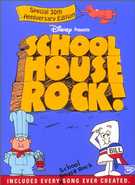
The Evidence
To date, there are a total of 52 episodes of Schoolhouse Rock. Only one
episode did not make it onto this DVD—and that's only because nobody seems
to know where it is. Here's the breakdown…
Multiplication Rock
My Hero, Zero [1973]
Soft and soothing, the music and voice of
Bob Dorough and the simplistic designs of Tom Yohe skillfully convey a young
boy's tribute to his favorite number.
Grade: A
• "Elementary, My Dear" [1973]
This tale utilizes
the animals on Noah's ark to express the power of two. Be careful—you'll
have a hard time shaking this Dorough tune. Designed by Jack Sidebotham.
Grade: A
• "Three, is a Magic Number" [1973]
The very
first Schoolhouse Rock song ever recorded. Another beautifully touching Bob
Dorough performance. Designed by Tom Yohe.
Grade: A
• "Four Legged Zoo" [1973]
Inspired by a Dorough
family trip to the zoo. Daughter Aralee sings backup on the song. Cute, but not
as good as I remember. Designed by Bob Eggers.
Grade: B
• "Ready or Not, Here I Come" [1973]
This classic
game of hide and seek was inspired by a Dorough family reunion . The first
evidence of Jazz influence in the series. A great tune and a personal favorite
of mine. Designed by Tom Yohe.
Grade: A+
• "I Got Six" [1973]
One of the things I love
about the series is its ethnic diversity. Very few cartoons of the time showed
this kind of social maturity. Performed by renowned Jazz drummer Grady Tate. Tom
Yohe displays a sketchier, more engaging style.
Grade: A
• "Lucky Seven Sampson" [1973]
A rabbit takes
center stage and creates havoc with his antics. The tune is not one of Dorough's
more memorable pieces. Designed by Rowland Wilson.
Grade: C
• "Figure Eight" [1973]
A dreamlike performance
by cabaret singer Blossom Dearie, this episode stands with "Three is a
Magic Number" as the most beautiful in the series. Designed by Tom Yohe.
Grade: A
• "Naughty Number Nine" [1973]
The censors had a
problem with this tobacco-laden billiard episode. Jazzy vocals by Grady Tate
with a nod to The Hustler by Tom Yohe
and Bill Peckmann.
Grade: A
• "Good Eleven" [1973]
Angelic simplicity and
agency in-jokes dot this Jack Sidebotham designed episode. My least favorite of
the Multiplication Rock songs. Left off the original ABC video release.
Grade: C
• "Little Twelvetoes" [1973]
My favorite
Multiplication Rock tune, this often forgotten episode features a digitally
challenged alien who apparently had a thing for The Cat in the Hat. Also left off
the original ABC video release. Designed by Rowland Wilson.
Grade: A+
Grammar Rock
• "Conjunction Junction" [1973]
The most beloved
episode in the entire series. The first performance by legendary horn player and
jazz singer Jack Sheldon, whose voice will be forever identified with
Schoolhouse Rock. Designed by Tom Yohe and Bill Peckmann.
Grade: A+
• "A Noun is a Person, Place, or Thing" [1973]
The first episode composed by singer and songwriter Lynn Ahrens (Broadway's
Ragtime), who went on to create 15 more songs for the series. Note the
"bubblegum pop" influence. Designed by Jack Sidebotham.
Grade:
A
• "Verb: That's What's Happening" [1974]
Another
personal favorite of mine. Dorough cuts loose with the jazz riffs and Zachary
Sanders provides the soulful vocals. Designed by Yohe and Peckmann.
Grade:
A+
• "Lolly, Lolly, Lolly, Get Your Adverbs Here"
[1974]
A fan favorite, Dorough provides the vocals for all three Lolly's
courtesy of Chipmunks-esque speed variations. Designed by Jack Sidebotham.
Grade: A
• "Unpack Your Adjectives" [1975]
The amazing
thing about designer Tom Yohe is the emotion he could generate with such simple
character designs. The first song composed by producer George Newall. Another
great performance by singer Blossom Dearie.
Grade: A
• "Rufus Xavier Sarsparilla" [1977]
Agency
copywriter Kathy Mandry wrote the lyrics to this Bob Dorough tune. Another great
performance by singer Jack Sheldon. But the rudimentary design style of Paul Kim
and Lew Gifford takes away from its enjoyment.
Grade: B
• "Interjections" [1974]
This Lynn Ahrens tune
combined with more great work by Tom Yohe and Phil Kimmelman's animation team
make this another personal favorite. Performed by singer Essra Mohawk, with
support from Tom Yohe's children, son Tom Jr. and daughter Lauren, who voiced
the classic line "Darn! That's the end."
Grade: A+
• "Busy Prepositions" [1992]
In a
word…yuck! One of the first new episodes for the series relaunch does not
fit the style or stylings of its predecessors. Music by Bob Dorough and Jack
Sheldon. Designed by Bill Peckmann. I never liked prepositions anyway.
Grade: F
• "The Tale of Mr. Morton" [1992]
Closer in style
and tone to the originals, but something is still lacking. The Lynn Ahrens song
is forgettable and the slicker computer animation takes away from the nostalgia
feel of the originals. Although I do remember now what a predicate is. Designed
by Tom Yohe Jr.
Grade: D
America Rock
• "No More Kings" [1975]
These episodes were
created to honor the country's bicentennial celebration. This particular Lynn
Ahrens tune tells the tale of the Pilgrims coming to America and our later fight
to free ourselves from the rule of King George. Designed by Paul Kim and Lew
Gifford.
Grade: B
• "The Shot Heard Round the World" [1976]
Bob
Dorough returns to form with one of the series more memorable tunes, as the
rebel colonists take on the British in the battle for America's freedom. In the
very last shot of the people-filled country, look for designer Jack Sidebotham's
naked woman in Southern California. Who said this series was just for kids?
Grade: A
• "The Preamble" [1976]
Thank you, Lynn Ahrens,
for helping me pass my eighth grade Constitution exam—although I think I
screwed up by writing down "welfarence." The first song Ahrens wrote
for the series. Designed by Tom Yohe and George Cannata.
Grade: A+
• "Fireworks" [1977]
Trying to do for the
Declaration what "The Preamble" did for the Constitution, this Ahrens
tune falls a little short. You still have to enjoy Tom Yohe's designs.
Grade: B
• "Elbow Room" [1976]
Who knew the Louisiana
Purchase and the population's migration west could be this much fun? Ahrens
provides another great tune, this time with vocals by Sue Manchester. Designed
by Paul Frahm and Lew Gifford.
Grade: A
• "The Great American Melting Pot" [1977]
The
best of Lynn Ahrens' work on the series, standing with Bob Dorough's
"Figure Eight" and "Three is a Magic Number" as beautiful
and compelling. Designed by Tom Yohe, who outdid himself on this one as well.
Grade: A+
• "Mother Necessity" [1977]
Now it gets fun. Bob
Dorough and Jack Sidebotham's tribute to the innovative American spirit, the
song is performed by four of the series' most recognizable voices—Jack
Sheldon, Blossom Dearie, Essra Mohawk, and Dorough himself. I especially like
the bit with the Wright Brothers.
Grade: A
• "Sufferin' Til Suffrage" [1976]
A unique
episode in that artist Tom Yohe wrote the lyrics to this Bob Dorough tune. The
resulting performance of Essra Mohawk is hands down the most rousing of the
series. Designers Paul Kim and Lew Gifford's deft use of historical photographs
to drive the action make this a treat to watch.
Grade: A
• "Three Ring Government" [1979]
To be honest, I
don't even remember this one. Lynn Ahrens provides the music and Arnold Roth the
designs for this bastard child of the series. I get the concept of likening the
three branches of government to a circus, but on the whole the episode goes
nowhere.
Grade: C
• "I'm Just a Bill" [1975]
Next to
"Conjunction Junction," the second most beloved and recognized episode
in the series. Composed by LA songwriter Dave Frishberg, Jack Sheldon and the
band recorded this tune on the same day as "Conjunction Junction."
Coincidence? Something unique was going on in that studio. Sheldon's son John
provides the voice for the little boy. Tom Yohe's classic character designs will
live on forever.
Grade: A+
• "I'm Gonna Take Your Vote to College" [2001]
I
didn't think it possible, but this new episode recaptures everything great about
the original series, with the team of Dorough and Sheldon back in rare form. The
most pleasant surprise of all are the near identical design styles of Bill
Peckmann and Tom Yohe Jr. who steps in to fill the shoes of his late father. Tom
Yohe passed away in late 2000 after losing his battle with cancer. A fitting
tribute to a man who gave so much to so many.
Grade: A+
Science Rock
• "Telegraph Line" [1979]
Once again, Tom Yohe's
simple yet comical designs put this episode among the best. Apparently, even
medical schools use it to teach students about the nervous system. Another great
Ahrens composition, with vocals by newcomers Jamie Aff and Christine Langer.
Note Yohe's nod to Butch Cassidy and the
Sundance Kid at the end.
Grade: A
• "Do the Circulation" [1979]
Eh…a nice
attempt at explaining the circulatory systems, but there is really nothing
memorable about this Ahrens/Yohe episode. They can't all be home runs.
Grade: B
• "The Body Machine" [1979]
On the other hand,
here's one that works on all levels—musically exceptional work by Ahrens,
Dorough, and Sheldon—and artistically by Yohe and Kimmelman.
Grade:
A
• "Them Not-So-Dry Bones" [1979]
Yet another fun
and jazzy tune composed by producer George Newall and performed by the great
Jack Sheldon. Tom Yohe's images continue to teach and entertain.
Grade:
A
• "A Victim of Gravity" [1978]
Lynn Ahrens and
Tom Yohe pay tribute to the styles and sounds of the 1950s with this episode,
performed by the Tokens, who hit it big with their recording of "The Lion
Sleeps Tonight." Some classic images, but nothing special.
Grade:
B
• "The Energy Blues" [1978]
It surprises me,
watching this socially conscious episode, just how little progress the world has
made in implementing alternative fuel sources. This George Newall, Jack Sheldon,
Tom Yohe collaboration is as fresh and relevant today as it was 24 years ago.
Note: Biz Markie did a dead on version of this tune for the 1995 Schoolhouse
Rock! Rocks tribute album.
Grade: A+
• "Electricity, Electricity" [1979]
Bob Dorough's
jazz stylings and Zachary Sanders vocals once again drive the action.
Entertaining designs by Paul Kim and Lew Gifford.
Grade: B
• "Interplanet Janet" [1978]
Another of the
series' most memorable episodes, Lynn Ahrens and Jack Sidebotham helped many
kids remember the order of the planets in our solar system. Worked for me!
Grade: A
• "The Weather Show" [1978]
This episode got hung
up in court over the use of the line "The Greatest Show on Earth." It
seems a certain family circus had a problem with lyric, but now it has been
returned to its rightful place in SCIENCE ROCK. The episode itself was not one
of the best anyway.
Grade: B
Money Rock
• "Dollars and Sense" [1992]
This new group of
episodes help relaunch the series in the early '90s, recapturing the original
style. The first Dave Frishberg tune with a country twang teaches kids the
importance of saving your cash. Designed by Tom Yohe.
Grade: A
• "$7.50 Once a Week" [1992]
As my wife pointed
out, did anyone ever get an allowance that was not a whole dollar amount? I know
I didn't. In any case, this catchy Dave Frishberg tune shows just what you can
accomplish by using that allowance money wisely. Designed by Jack Sidebotham.
Grade: B
• "Where the Money Goes" [1992]
This Rich Mendoza
song, sung by the great Jack Shelton, shows a kid just where his parents spend
all that money he claims they make. Designed by Bill Peckmann.
Grade:
B
• "Tax Man Max" [1992]
Similar in style to the
missing "Weather Show," this Stephen Flaherty/Lynn Ahrens episode
teaches kids not to listen to their parents complain about paying taxes. Just
look at all the things that money pays for. Like that's going to stop people
from complaining. Designed by Phil Kimmelman.
Grade: B
• "Walkin' on Wall Street" [1992]
Just what is
this place called Wall Street and what do people do there? Dave Frishberg
explains in this somewhat unique episode. There's a certain maturity here that
hasn't been seen since the best episodes of AMERICA ROCKS. Designed by Bill
Peckmann.
Grade: B
• "This for That" [1992]
Ever wonder how the
barter system got started? Did you know it's still in use today? Does anyone
care? This George Newall/Bob Dorough episode falls somewhere in the middle of
the pack. Designed by Phil Kimmelman.
Grade: C
• "Tyrannosaurus Debt" [1992]
The best of MONEY
ROCKS, Tom Yohe composed and designed this episode tackling the ever-increasing
problem of government spending with comedic style and grace. A true gem!
Grade: A+
• "The Check's in the Mail" [1992]
Bob Dorough
and Luther Rix show us just how to pay our bills through the mail. Designed by
Bill Peckmann. By this point, the idea engine was running out of fuel.
Grade: C
Scooter Computer And Mr. Chips
A stepchild of the Schoolhouse Rock series, these episodes were commissioned
in the mid-1980s by ABC program executives who felt children would be afraid of
using computers. Yeah, right! These are extremely dated and not very
entertaining. There were four original episodes, but the very first
one—Introduction—has been lost and no one can seem to find it.
• "Software" [1983]
Oy…no offense to
composer Lynn Ahrens or designer Tom Yohe, but these shorts are just bad. The
only educational value I can see here is helping kids understand the difference
between Bits and Bytes.
Grade: C
• "Hardware" [1983]
Oh the pain, the pain of it
all. Composer Dave Frishberg had to pore through textbooks to understand just
what computers were. Do yourself a favor and skip through this one.
Grade:
D
• "Number Cruncher" [1984]
Today's lesson is all
about data processing. It should be on how Scooter could find a way to unplug
Mr. Chips and find something else to do with his time. My apologies to composer
Dave Frishberg.
Grade: D
Okay, that covers the meat of the disc. Now onto the extras—and there
are a lot of them. First and foremost, the menus, introductions, and bumpers are
all brand new, courtesy of George Newall, Bob Dorough, Bill Peckmann, and Tom
Yohe Jr., who has captured his father's style perfectly. The first disc takes
place in the Conjunction Junction Diner, where the menu consists of all 46
original series episodes (including the '90s relaunch) as well as the new
"I'm Gonna Take Your Vote to College." There are a variety of ways in
which you can play the selections, including the diner's jukebox, which has the
series Top Ten. The second disc takes place in the little schoolhouse from
"Figure Eight" and contains a wealth of special features, including
several Easter eggs. I'll separate the extras into three categories—Must
See, If You Have Time, and Don't Bother…
• "Must See"
• The lost episode
"Weather Show"
• New episode "I'm Gonna Send
Your Vote to College" in Dolby 5.1
• Behind the Scenes of
"I'm Gonna Send Your Vote to College"
• Emmy Awards
Featurette
• Audio Commentaries by George Newall, Tom Yohe Jr,
Phil Kimmelman
• "If You Have Time"
• Top 20 episode
countdown
• Schoolhouse Rock trivia game—"Earn Your
Diploma"
• Puzzle game for the kids—"Arrange a
Schoolhouse Rock Song"
• "Don't Bother"
• The three episodes
of "Scooter Computer and Mr. Chips"
• Nike
Commercial—"Three is a Magic Number"
Amid all this reminiscing, I almost forgot the physical evidence. This
two-disc set, as a whole, is beautiful. The new animation done specifically for
this release captures every nuance of the series. In fact, looking at the
grainy, faded 1.33:1 full-frame presentation of the original 1970s and '80s
episodes might make you wish they would have reanimated everything. Despite the
somewhat poor quality of the transfers, these classics were on the shelf for
many years. I don't know if more time and money spent on additional restoration
would have improved my enjoyment of this series one bit. The audio remains
surprisingly good, although you can tell the difference between the original
mono tracks and the recently recorded 5.1 track for the new episode. I cannot
fault Disney for anything on this project, except perhaps for subjecting us to
those damn "Scooter Computer" shorts.