| Home | About | Blu-ray | DVD Reviews | Upcoming DVD Releases | Contest | Podcasts | Judges | Jury Room | Contact |
|
|
|
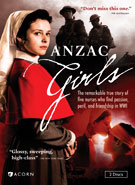
All Rise...Judge Jason Panella sings, "She was an ANZAC girl." The ChargeSoldiers aren't the only ones who go to war. The CaseWar films tend to keep a tight focus on the frontlines. This makes sense—after all, it's where the lion's share of conflict, internal and external, is happening. Some of the best war films look elsewhere, of course, but I've always been intrigued by the experiences of the support personnel; they witness the horrors of war along with the soldiers on the front, but often in a drastically different way. The Australian Broadcasting Corporation's six-part miniseries ANZAC Girls gives a fresh and well-crafted look at the role of combat nurses during the First World War, and it's an altogether excellent series. ANZAC Girls concerns the lives of five nurses during World War I, all of them historical women who were members of the Australian Army Nursing Service. Over the course of the war, these women tend to the wounded from the Australian and New Zealand Army Corp (ANZAC), and their exploits over the next few years take them from the doomed Gallipoli Campaign to the Western Front. Even though they're not always serving together, the five still share their experiences with letters. The nurses begin their journey in Egypt, where they quickly come to grips with the grisly effects of battle. Matron Grace Wilson (Caroline Craig) is the experienced and compassionate leader, the voice of wisdom and the moral compass for the group. The other four are drastically different personalities joined by friendship and trust. Sister Alice Ross-King (Georgia Flood) is a plucky young woman whose enthusiasm is belaid by her naivety. Sister Hilda Steele (Antonia Prebble, Power Rangers Mystic Force), the lone New Zealander of the group, is an incredibly talented nurse, though her lack of confidence would make you believe otherwise. Sister Olive Haynes (Anna McGahan, Miss Fisher's Murder Mysteries) has an unflappable sense of whimsy and joyfulness. Sister Elsie Cook (Laura Brent, The Chronicles of Narnia: The Voyage of the Dawn Treader) is trying to keep a serious secret: she's married to the former Prime Minister's son, which could put her position in danger. (Nurses in the AANS were supposed to be unmarried or widowed.) I spent a little more time than usual describing the five leads because they're the heart and soul of the miniseries. The show spends most of the first episode with Ross-King as the focal character, which concerned me that the rest of the series would ignore the other characters. Thankfully this isn't the case—each of the six episodes zeroes in on one or two of the nurses, giving them ample time to develop as fascinating characters. The nurses are nothing short of heroic—a quick search online shows the incredible accomplishments Matron Wilson and her nurses. ANZAC Girls spends a lot of time showing how normal and human the characters are, which I found captivating. The show is based primarily on Peter Rees's non-fiction workThe Other ANZACS, but also on scores of letters and journals from the war. The cast seems to hone in on their characters' normality, letting their fears and dreams bubble to the surface. All five of the actors have stand-out moments, though I found McGahan's Olive Haynes the most magnetic—her goofy sense of humor and winsomeness are utterly infectious. I also loved how ANZAC Girls was willing to avoid the typical scenes of combat and bloodshed. This is still a fairly bloody show—these are combat nurses we're talking about—but the creators showed an impressive amount of restraint. Writers Niki Aken and Felicity Packard's scripts are quite good, though there are a few rough spots. There's some painfully overwrought exposition from time to time, and first episode hinges on an unnecessary in media res entry point that just complicates the story's flow. The final episode also feels tonally off from the previous five in a way that doesn't feel justified. And the score is uniformly bland, especially the muddle title theme. But these are nitpicks, really; ANZAC Girls is an exceptional miniseries. Acorn Media's release of ANZAC Girls features all six hour-long episodes on two discs. The 1.78:1 anamorphic transfer looks great for standard definition. I didn't notice any artifacts or problems, and the contrast in particular is excellent. The show lucked out in getting Geoffrey Hall (Chopper) as the cinematographer; this is a frequently gorgeous-looking show. The Dolby Digital 2.0 stereo track is good as well; dialogue is clear, and the range of background noise—from distant explosions to the clamor of the operating room—sounds full but never overpowering. Acorn includes over a half hour of featurettes and close to 20 minutes of interviews, but there's a cost: each little segment has the same lengthy intro, which cuts down on the meat of the extras significantly. The VerdictNot guilty. ANZAC Girls is an excellent historical drama about the
female experience of World War I. The cast does marvelous work with their
characters, and I was so taken with the miniseries that I was ready to start it
all over again at the end. Give us your feedback!Did we give ANZAC Girls a fair trial? yes / no Other Reviews You Might Enjoy
• Nickelodeon / The Last Picture Show |
|
DVD | Blu-ray | Upcoming DVD Releases | About | Staff | Jobs | Contact | Subscribe | | Privacy Policy
Review content copyright © 2015 Jason Panella; Site design and review layout copyright © 2015 Verdict Partners LLC. All rights reserved.